
Twenty-seven years of waiting, in this case, can justify a few thousand dollars for a seat.
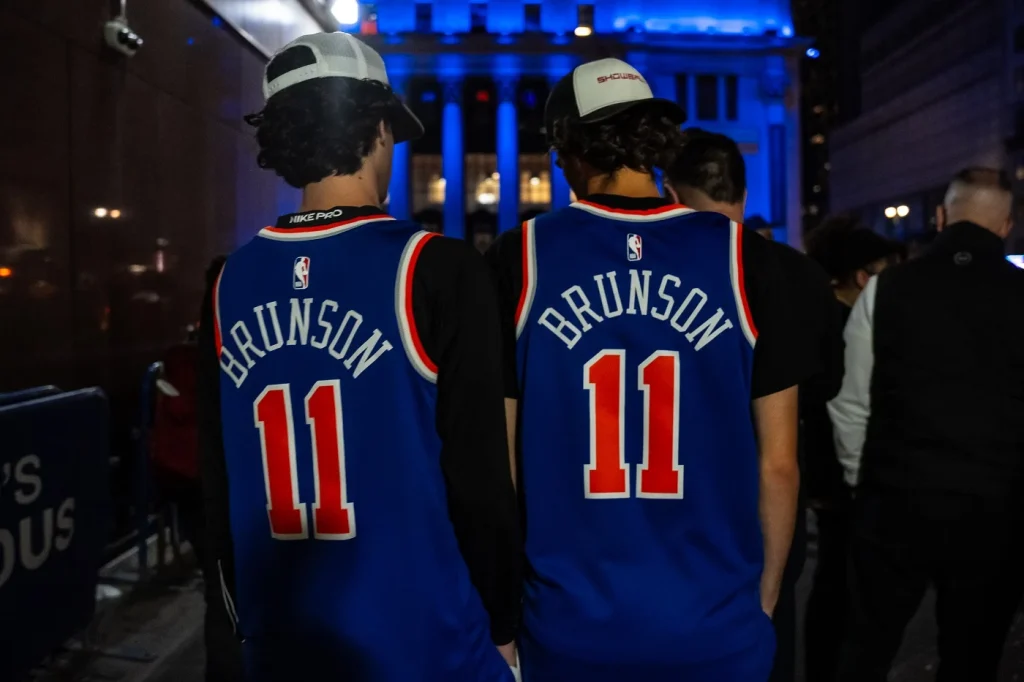
The New York Knicks are back in the NBA Finals for the first time since 1999. For some fans, it will be the first time full stop. Back then, they were not even born.
Demand has followed the timeline without hesitation. For Games 3 and 4 at Madison Square Garden, and potentially Game 6 against the San Antonio Spurs, the cheapest available tickets have already moved into a different category of pricing: between $3,500 and $4,900. And those figures are not fixed. They move with the series, and with the possibility that a title could be decided in New York.
A decade ago, during the Finals between the Cleveland Cavaliers and the Golden State Warriors, the average ticket sat around $880. Last year, for Thunder–Pacers, it was just over $1,100. The gap now feels less like inflation and more like a different market entirely.
It tends to happen here. In New York, scale behaves differently.
The Knicks have tried to respond in their own way. Through their charitable arm, the Garden of Dreams Foundation, the club has set aside 500 tickets for young people from under-resourced parts of the city. According to reporting from The Athletic, 250 will be distributed for Game 3 on June 8, and 250 for Game 4 two days later, with a possible extension to 750 tickets if the series reaches Game 6.
“We are proud to create meaningful and once-in-a-lifetime experiences for young people from our local communities,” said Rich Constable, executive vice president and head of global government affairs and social impact at MSG Entertainment. “It is extremely important for the Knicks that young people from less advantaged backgrounds can be part of this Finals run, ensuring the next generation of fans can be part of this story.”
City Hall has also moved into the frame. Zohran Mamdani, already involved in discussions with FIFA around the World Cup, has spoken about expanding access for fans beyond the arena itself. Public watch parties are being organised across the city.
“We will organise watch parties across the city. We are very excited about these events,” Mamdani told reporters during a briefing on housing policy.
He also outlined a broader aim: making it easier, and safer, for New Yorkers to gather and follow the Finals together in public spaces.
For those holding the 500 or so tickets distributed through the Garden of Dreams Foundation, the equation is simpler. No resale platforms, no fluctuating prices, no secondary markets that drift further away from reach with each game. Just entry into a building that has been part of the city’s sporting geography for decades.
The Knicks have often been described as something closer to a civic institution than a franchise. The pricing around these Finals sits alongside that identity, rather than replacing it.
Inside the arena, the same team that has waited 27 years will try to close the distance between expectation and outcome. Outside, screens will be set up across the boroughs. Folding chairs, late June air, and a game that still belongs to the same city even when the seat does not.