
It is not easy — in fact, it is almost impossible — to tell the story of new generations using the same tools and language we used for those who came before them. This is always true, and even more so when it comes to athletes: we are living through an extraordinarily complex moment, in which the average age of elite athletes has dropped dramatically, so training, mental preparation and the relationship athletes have with the media and the public inevitably overlap with things young people everywhere experience, from the formation of a personality that is still taking shape to learning how to handle success, pressure and the sacrifices required to perform at the highest level.
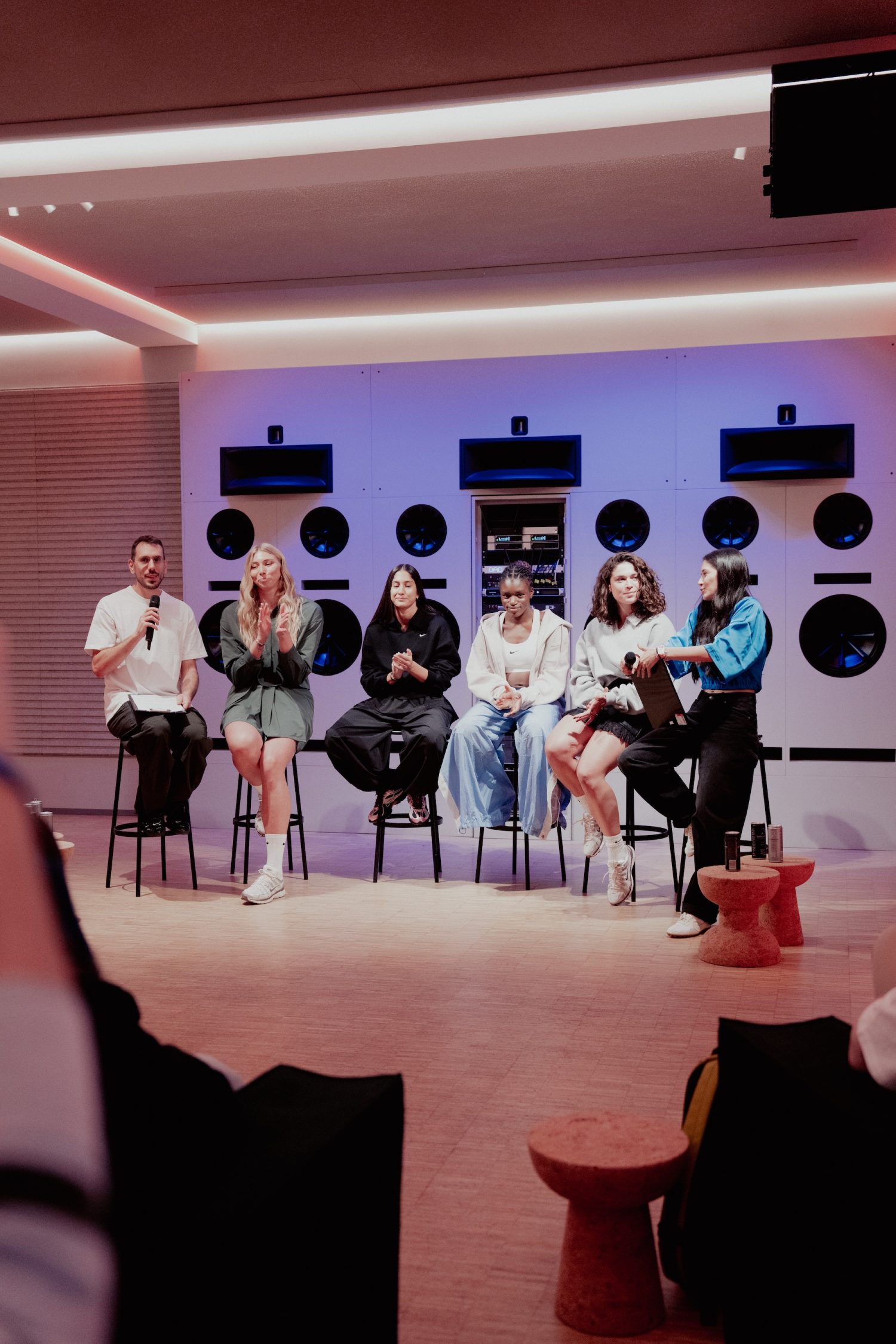
That was the starting point for Generazione Futuro, a live podcast powered by Nike, held at Milan’s Triennale, inside Spazio Voce, as part of FUORI AURA — the programme of events organised around the evening that brought the 2026 edition of the Aura Sport & Cultura Award to a close, the prize created by Undici to celebrate the people who best represent Italian sport. Today, in fact, the best of Italian sport is increasingly found in a new generation of athletes who are still, in many cases, very young: Chiara Beccari, Kelly Doualla, Sarah Fahr and Benedetta Pilato, already at the heart of four of the country’s most followed sports — football, athletics, volleyball and swimming.
Joining them, in what became a genuine conversation between friends, were Francesco Paolo Giordano, managing editor of Undici, and creator Lisa Offside. Over the course of the live podcast, their stories offered a different view of sport, one in which it is experienced, understood and told in ways that are very different from the past: athletes are more aware of themselves and of the place they occupy, social media plays a decisive role in making their lives more accessible — but also more exposed — and reaching the elite, and above all remaining there, means working on mental wellbeing, self-esteem, self-awareness and the ability to accept mistakes, without losing sight of the person behind the athlete, of an identity that exists beyond the pitch, the track, the court or the pool.
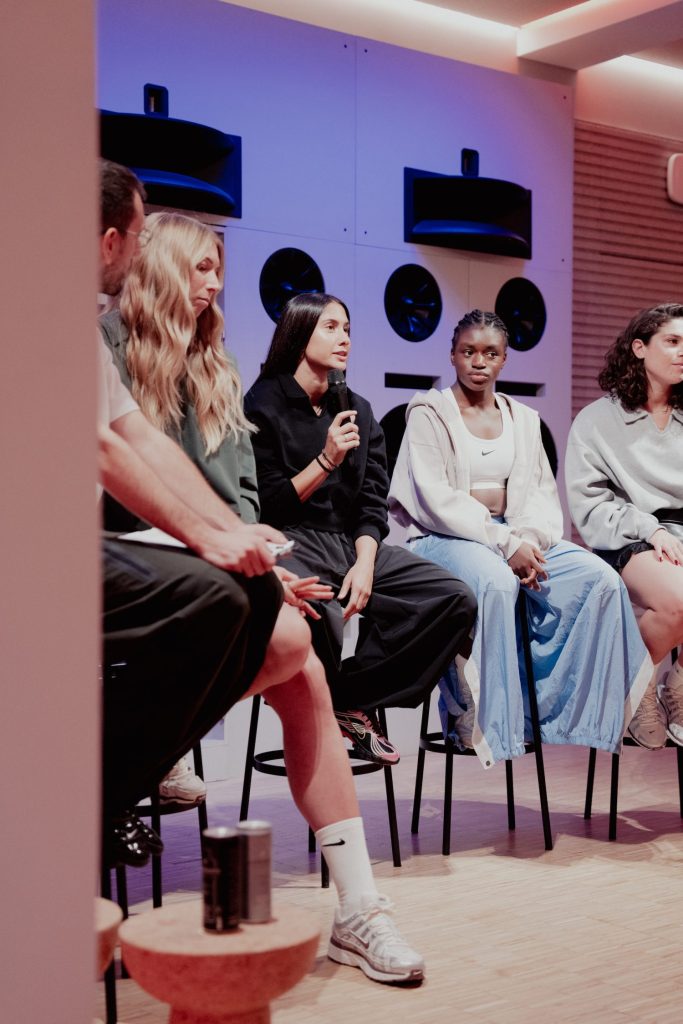
“I’ve been playing volleyball at this level since I was 13,” Sarah Fahr said. “I started in Serie C when I was still a child, then I worked my way up to the top division. This allowed me to adapt gradually before making the national team at 16. Getting there so young was actually an advantage: you come up against reality, you see where you are and what steps you still need to take.”
Kelly Doualla is only 16 — she turns 17 on November 20 — and yet she has already experienced the moment when “agents, social media managers and sponsors started arriving: that’s when you realise that maybe you’re taking an important step in your career. Learning to deal with certain pressures, on the track and away from it, when you’re so young, is difficult: during races I’m often afraid that I won’t be able to match what I managed to show in the past. But I’m learning to take things in the right way. I’ve realised that I just need to enjoy myself and do what I love most. Being myself allows me to win and to do it with a smile.”
Benedetta Pilato told a similar story: “At first, dealing with the pressure was easy because I simply didn’t realise what was happening. I came back from the World Championships with a silver medal around my neck and, a few months later, I started high school. After breaking the world record in the 50-metre breaststroke, though, things became harder: I was still very young and had to get into the pool and come to terms with being the greatest ever in that event. There were many difficult moments, and although they often made me feel like there was something wrong with me, I never gave up on who I am.”
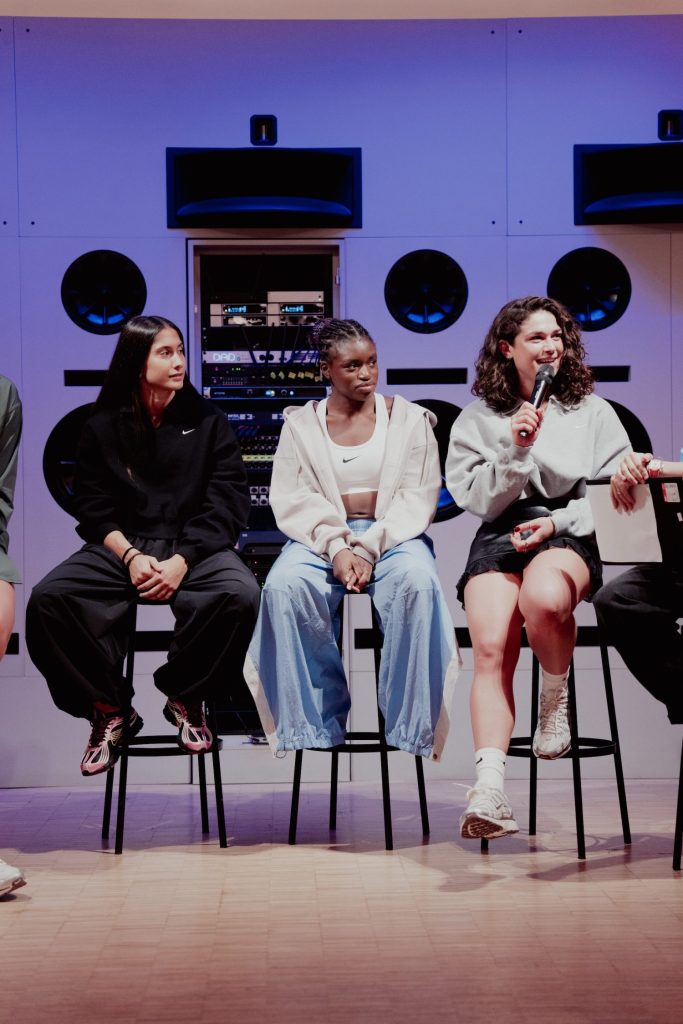
For Chiara Beccari, meanwhile, the most difficult moment is the one she is going through now: she made her Serie A debut at 16, at 18 she was named the league’s best Under-21 player and made her Italy debut, and now she has been sidelined for five months with an ACL injury. Yet “I’m not letting it get me down, quite the opposite. I’m using this time to find some balance in my life away from the pitch. Suddenly finding yourself with all these empty months, with every weekend free, can leave you feeling lost. Nike has been a huge support in that respect too: they look after every athlete as a whole person and make you feel heard. You could say I’ve grown up with them, because they came into my life when I was still very young.”
Over the course of the conversation, it became clear that Nike’s commitment to Beccari, Pilato, Doualla and Fahr is about accompanying and supporting them throughout their careers, particularly in the more difficult moments, and the work being done with women’s football is a significant example. In recent years, the new generation of players has been listened to more closely than ever, the solutions developed for them are shaped around clear feedback, and the game becomes a way to tell stories that go beyond the products, stories that say as much about style and culture as they do about sport, and that speak to an entire community — a generation looking towards the future while already having an enormous impact on the present.