
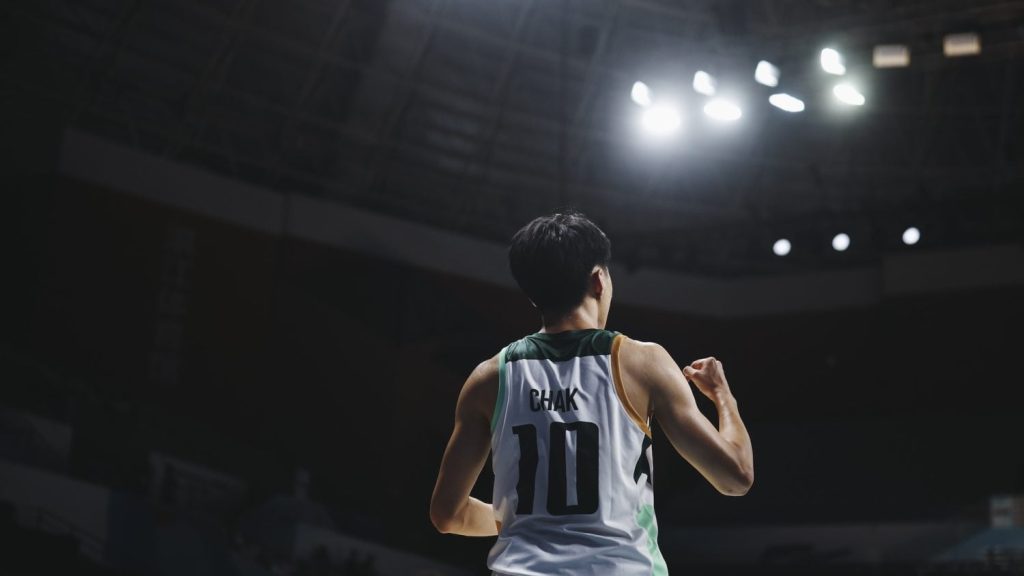
In Hong Kong this year, a basketball team from the city won a continental trophy while the men’s national team was left out of the Asian Games. In May, South China Athletic beat Taiwan’s Taoyuan Pauian Pilots 113-103 in the BCL Asia-East final in Johor Bahru, winning the first continental title in the club’s history. South China had won just one of its first four games in the tournament, then beat the Chinggis Broncos in Ulaanbaatar to reach the Final 6, and from there changed pace, winning four straight games to take the title. At the centre of the turnaround was Glen Yang, the Canadian guard who had returned to the club where he began his professional career at 19. He finished the tournament as MVP.
On the day of the final, the interesting part was not simply that a Hong Kong team had won in Asia, but what it meant in the context of the city’s basketball. South China is a club that has been around for almost a century and is the most decorated in the history of Hong Kong’s A1 Division. Its return to the continental stage was already a story before the trophy arrived: by qualifying for the 2026 Basketball Champions League Asia, South China became the first Hong Kong club to reach Asia’s top club competition since Winling in 2002.
At the same time, the city’s basketball was going through a very different moment. Hong Kong’s men are 26th in the FIBA regional rankings and will not be at September’s Asian Games in Japan. It will be the first time in more than 30 years that the men have missed the Games. In March, the South China Morning Post spoke to players and people around the game and found sadness, but also a certain resignation. The difficult part was not only the exclusion; it was understanding how a movement with international ambitions had reached that point. For years, the dream in Asian basketball was easy to describe: get a player into the NBA. Yao Ming, Jeremy Lin, Rui Hachimura. Whenever someone made it across the Pacific, the achievement became something larger than the player himself, a symbol and a reference point for a basketball culture trying to measure its distance from the American game. But the success of a movement cannot be measured only by how many of its players manage to leave the continent. If basketball is to become part of sporting life across Asia, it also needs games that matter before the NBA: clubs people know, rivalries, away trips, players who become familiar beyond their own country.
It needs a competition that allows a Japanese team to become familiar to a fan in Hong Kong, a Taiwanese star to build an audience in Manila, a young Korean player to have a road game he has been looking forward to for months. Some of that competition already exists. EASL has grown from eight teams and 28 games in its inaugural season to 12 teams and 42 games in 2025-26, and it is not only a matter of numbers. Yudai Baba, the Japan international with NBA G League experience, is another example of this regional dimension: EASL treats him as one of its reference players, not simply as an Asian player who spent time in America.
There is another interesting reversal here. EASL published a video of former NBA All-Star Baron Davis reacting to Heo Hoon, one of the KBL’s best players. It is a small shift in perspective, but a telling one: an American star watching an Asian player. The attention does not always have to move in the other direction. EASL, meanwhile, is finding a place inside the wider structure of Asian basketball. From 2026-27, three teams from the league will be able to qualify for the Basketball Champions League Asia according to their results during the season. It is becoming a route into the top level of the continental game.
That also changes what some of the fixtures can become. Hong Kong Eastern, for example, are preparing for their third consecutive EASL season. In 2025-26 they faced Utsunomiya Brex, Taipei Fubon Braves and Seoul SK Knights, names that still mean little outside Asia but are becoming part of a shared calendar within the region. Rivalries do not arrive fully formed. They take time. A game against Seoul today can simply be a game against Seoul, until it becomes the one a fan remembers because Eastern won at the buzzer, or because a Korean player scored 40 points, or because it was the first Asian away trip for a group of kids from Hong Kong.
Maybe the next step is simply to stop treating the NBA as the centre of the story. That does not mean stopping looking towards America. It means being able to look sideways as well: towards Tokyo, Seoul, Taipei, Manila, Hong Kong. The games are already there, and so are the reasons to keep coming back.