
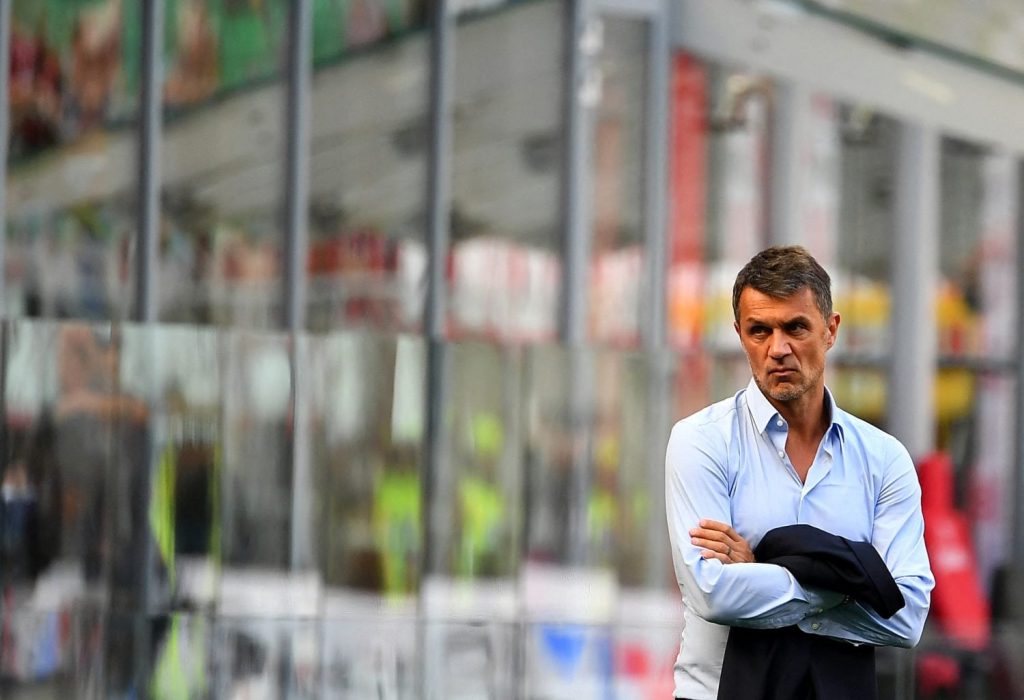
Only a few days ago, Paolo Maldini’s arrival at the Italian Football Federation had sparked enormous enthusiasm. It was inevitable: there were all the reasons to believe that his appointment as technical director (and president) of Club Italia could be the perfect move. His career as an executive, although brief, had been a positive one; and then there was the weight of the person himself. An absolute legend, a myth, a man of principle carried even beyond the limits of rigidity, difficult by nature but fair — or at least that was, and remains, the image that has always surrounded him. Maldini, put simply, was the most authoritative figure possible to begin a real, profound revolution of the Italian federation — and therefore of the entire football system. Now that Paolo Maldini himself has resigned, together with his friend and advisor Leonardo de Araujo, after two weeks and a few hours of work, one question naturally emerges: how did everything fall apart in such a short time? The answer is that Paolo Maldini’s consistency, or perhaps his intransigence, as a man and as an executive, did not fit the role he had taken on. It did not fit the environment he entered when he accepted Giovanni Malagò’s offer after his election as president of the FIGC.
That, however, is only the surface of the matter. The reasons go in several directions. The first is political, because the Federation itself has to be considered. Giovanni Malagò was elected with the support of different, sometimes distant components: groups with different interests, different priorities, different internal balances, all of them needing to find a way to coexist within the same institution. And that institution is not simply a sporting body. It is a public one, inevitably connected to politics — real politics, not only sporting politics. The FIGC is not a club. It cannot be lived in, or managed, like a private association or company. Public opinion has its weight, as do the reactions surrounding every decision made by those in charge. Perhaps this should not be the case, at least in an ideal world, but it remains the reality. Even Paolo Maldini could not change it, certainly not in a few days.
Then there is the way Maldini worked and spoke during his time as technical director and president of Club Italia. In short: announcing negotiations with Carlo Ancelotti and Pep Guardiola and then taking an uncompromising position — literally — over the appointment of Andrea Pirlo as national team coach was a difficult move to understand. First from a communication point of view, then from a technical one. It was, and remains, a strange sequence. After speaking publicly about talks with Ancelotti and Guardiola, expecting Pirlo’s arrival to be welcomed positively was always going to be complicated. Not because of Pirlo himself, but because of the circumstances around the choice: a coach whose career on the bench has so far been modest, a close friend of Maldini, and a figure also linked, controversially, to a Russian company. The reaction was always going to come from the wider football world: from within the Federation, from public opinion, from the media that follow and amplify those reactions, and from Malagò himself.
Finally, there is Paolo Maldini’s temperament. His way of being, and therefore his way of working. Once the Guardiola option had disappeared — also because the situation had not been handled perfectly — it seems Maldini decided not to accept any kind of compromise, remaining fixed on Pirlo. Until the point where, once that possibility disappeared, he resigned. There may have been other problems between him and Malagò, other misunderstandings, and it is almost certain that the complex political reality inside the Federation would have struggled to accept — or perhaps even simply to understand — the revolution imagined by the former captain of Milan and Italy: his reforms, the new structure, a different idea of how the technical side of the national team should work. In the end, though, one thing remains. Maldini placed everything, absolutely everything, on himself, on his authority, on a project that carried his name and therefore could not allow compromises or changes of direction. A project that was supposed to exist independently of outside influence, that had to begin with Ancelotti, Guardiola or Pirlo, or with nobody else. Perhaps one day we will discover that he was right. For now, the only thing we know is that Paolo Maldini could not work as technical director of the national team. His consistency remains a value, naturally. But there are roles and environments where refusing compromise becomes a limitation. Especially when mistakes are made.