
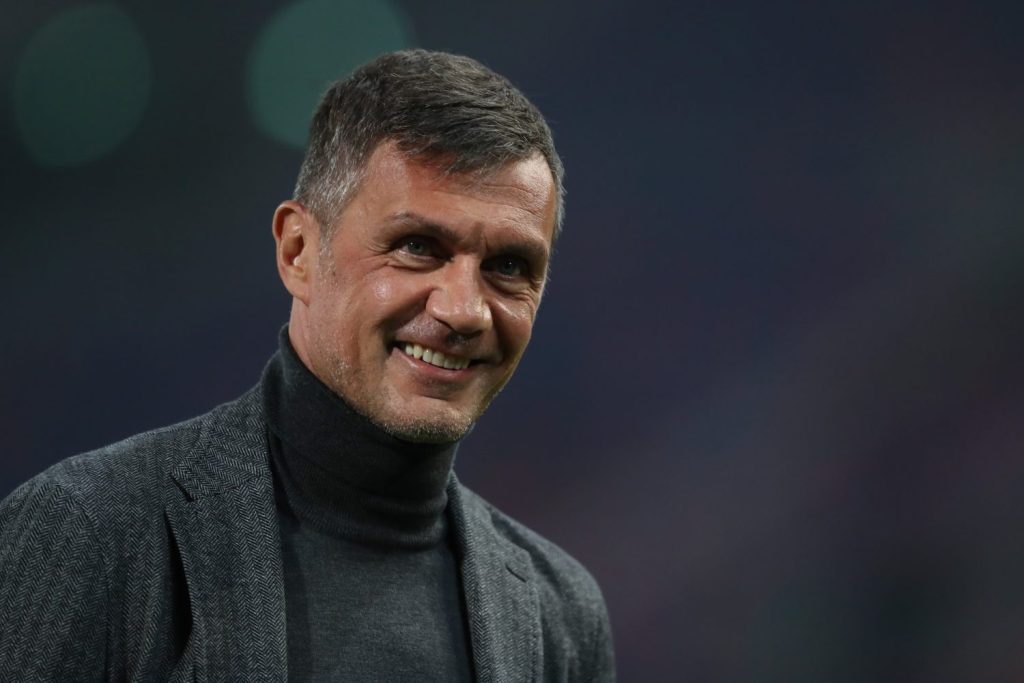
For Paolo Maldini, there has never been a third option: “It’s Milan or the National Team.” Everything else would have seemed awkward, out of place, forced, much like the recent campaign that saw him alongside his friend Hakan Safi, the Fenerbahçe presidential candidate who wanted to bring him in as sporting director of the Turkish club. In the end, the relationship between the two came to an end during the election campaign itself, because for Maldini a third path has never truly existed.
That is why, after months of negotiations, contacts, optimism that later turned into doubt and a series of discussions that seemed at times close to a conclusion and at others destined to collapse, Malagò eventually succeeded in his mission. Paolo Maldini has been appointed technical director of the National Team and president of Club Italia for the next four years, with Leonardo de Araújo alongside him, the trusted companion of so many previous adventures and one of the very few people to have earned the absolute confidence of the former Milan captain. Leonardo will take on the role of consultant for the National Team and Maldini’s closest collaborator.
Perhaps, for the first time in the history of the Azzurri and even of Italian football itself — with football so often acting as a reflection of the country around it — there is widespread agreement and no serious objection seems capable of challenging the decision. Maldini represents a choice of rare common sense, one capable of bringing together supporters, observers and those within the game.
There is, however, one element that when discussing Paolo Maldini can sometimes interfere with an objective assessment of his value as a professional, including in his role as an executive: the almost sacred aura that surrounds him. The respect he receives throughout football is extraordinary, almost unique, and precisely because of that there is a risk that any discussion of him becomes trapped in admiration for the figure rather than attention to the quality of his work.
His charisma, his reassuring presence, the credibility he projects without ever needing to insist on it are all undeniable. Yet Malagò’s decision is also a choice based on technical judgement, above all because Maldini has already demonstrated that he possesses the competence required for such a role.
For that reason, beyond the more abstract dimension of the Maldini mythology, it is necessary to look at the more concrete reality of his work as a director at Milan. The only Italians who may have welcomed the news with a degree of melancholy are, paradoxically, Milan supporters themselves, because if the possible paths were always only two — Milan or the National Team — many of them continued to hope that, sooner or later, Paolo might choose the road back to Milanello.
The comments beneath his Instagram posts are filled with messages from Milan fans asking him to return. They represent an extraordinary display of affection, recognition and gratitude. Yet for three years now, more precisely since that bitter breakfast with Gerry Cardinale that led to his dismissal, a decision that still struggles to find a convincing explanation, Maldini has remained almost entirely away from public view, in a way that seems consistent with the mystery that has always surrounded his figure.
There have been no television appearances, only a handful of interviews and little involvement in football events. For Maldini, absence has always been a form of presence, much like Lenny Belardo, Sorrentino’s Young Pope, suggests in his own way.
His last public intervention came after Milan’s owner described him as a “one-man show”. Maldini’s response was brief: “He answers himself.” It was enough to trigger another wave of support from the Rossoneri supporters.
The evidence of the quality of his work at Milan can be found in the timeline of the club itself. After his arrival in 2018, Milan returned to the Champions League within two years, won a Scudetto that had been missing for eleven years and reached a Champions League semi-final. Since his departure, by contrast, the decline has been clear, culminating in the difficulties of the last two seasons.
In his new role with the National Team, Maldini will once again work alongside Leonardo, just as he did when he first entered Milan’s management structure. In the summer of 2018, Leonardo was appointed technical director, while Maldini officially became “Director of Strategic Development of the Sporting Area”. Their responsibilities were different: Leonardo handled negotiations, while Maldini acted as the connection between the squad and Gattuso and was responsible for identifying the club’s transfer targets.
That season was not a success, as Milan missed out on Champions League qualification, but it proved fundamental in the development of Maldini as an executive. He acknowledged this himself in a 2022 interview that remains striking for the honesty with which it revealed a more fragile side of him, an unusual word when associated with a figure like Paolo Maldini: “When I signed for Milan, I didn’t feel ready or adequate, Leonardo taught me so much, about football and about life.”
It was precisely after that season, once Leonardo had left, that Maldini inherited greater responsibility and, together with the quiet competence of Frederic Massara, began laying the foundations for Milan’s return. That Milan, much like today’s National Team, was coming from a period of repeated failures, and the presence of a symbolic figure alone, regardless of how charismatic, would never have been enough to change its direction.
Maldini restored a winning sporting culture at the club, beginning with the choice of players — many of whom he personally convinced to believe in the project — and extending to the daily management of Milanello. Even in dealing with the more complex personalities within the squad, above all Theo Hernández and Rafael Leão, two players who looked to him almost as footballing sons, Maldini always appeared capable of finding the right balance between protection and discipline.
To understand the influence he had on them, it is enough to listen to their own words, often revealing a certain difficulty in expressing the level of respect they feel for him. But perhaps an even clearer indication can be found simply by looking at the direction their careers took after his departure.
It was in these details, in the spaces that cannot be measured but require sensitivity and emotional intelligence, that Maldini built his success as a director at Milan. The same was true when, during the Scudetto-winning season, he opposed the club’s position and pushed for lower ticket prices for the final decisive home matches, wanting to bring the traditional core of the Rossoneri support back into the stadium at the most important moment.
Building a cycle with a National Team, especially in an era of limited talent, remains a far more complicated challenge than doing the same at club level. Maldini and Leonardo will not be able to buy players; at most, they will be able to choose the coach most suited to carrying out the vision they have in mind. But Maldini’s presence already represents something valuable: experience, competence and reliability.
Because he has never accepted the role of a figurehead, and has always demanded genuine authority — which was also at the heart of the tensions with Cardinale — there is little doubt that he will be granted significant autonomy. His task will not concern only the senior team: he will have to coordinate the different levels of the federation, work with the technical staff and question a model that currently struggles to produce and develop talent.
It is a huge undertaking, far more complicated than the one he faced at Milan, but also one of extraordinary appeal. The work will have to be judged over time, although some early indications may already arrive from the choice of the next coach, where surprises should not be excluded.
For now, those who had looked at the fate of Italian football with a sense of resignation can allow themselves a different feeling. The image of Paolo Maldini, the calm way he speaks, the care with which he chooses his words and the almost timeless expression that seems untouched by the years are enough to offer a certain reassurance.
Paolo Maldini is now at the centre of the project. And after everything that has happened to Italian football in recent years, that alone changes the atmosphere around it.