
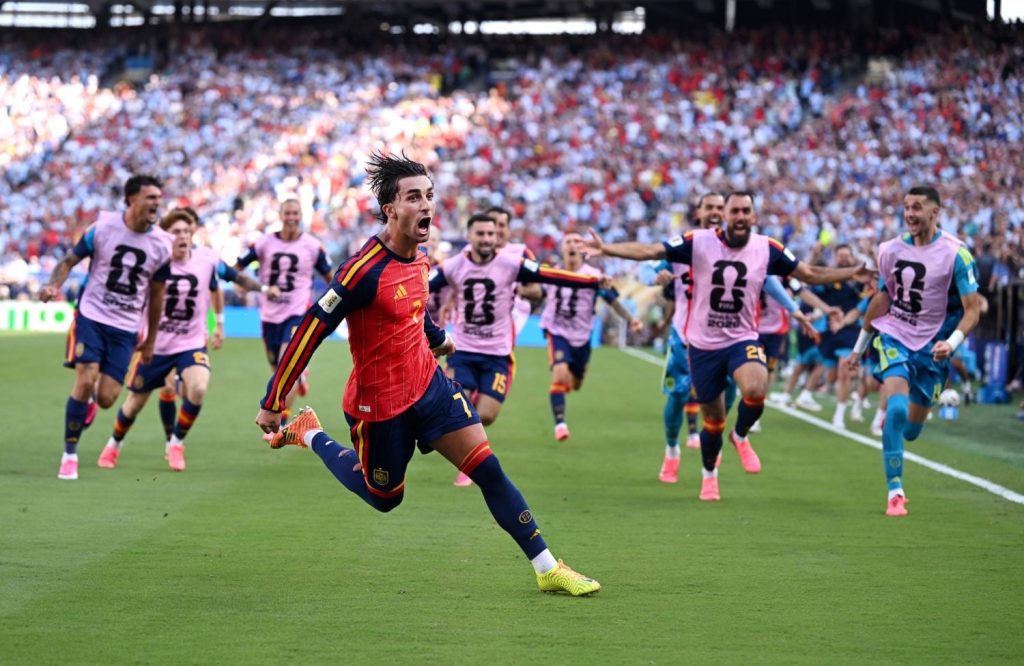
At Valencia’s Oceanogràfic, there is now a shark named Ferran Torres. It is a grey shark, almost two metres long, a male Carcharhinus plumbeus swimming in one of the tanks at one of Europe’s largest aquariums. The name might sound like a football joke, but there is more behind it than a nickname. Torres and Oceanogràfic have built a relationship over time, connected by the forward’s roots in Valencia and his support for projects focused on protecting marine ecosystems. The link with sharks was already there. Since the early years of his career, Torres has been known as “El Tiburón”. The shark. A nickname from football has now followed him somewhere far removed from the pitch. Oceanogràfic’s decision also brings attention to the species itself. Sharks are often seen through the lens of fear or fascination, but their role in the oceans is far more important. They are part of the balance of marine ecosystems, and giving one of them the name of a player recognised around the world offers a different way into that conversation.
Torres has never been far from Valencia. Born in Foios, just outside the city, he has kept a close relationship with the place where he grew up. Between 2024 and 2025 he was an ambassador for the Oceanogràfic Foundation, supporting work in conservation, research and environmental education. The collaboration began two years ago, when he visited the aquarium and spent time with the researchers and staff working behind the scenes. Through the Oceans area and the underwater tunnel, he learned more about shark biology, the dangers facing their populations and the efforts being made to protect them. The relationship continued the following year, when more than one hundred young people from the Ferran Torres Summer Campus visited Oceanogràfic. The day was built around marine biodiversity, the animals that inhabit the oceans and the effect of human activity on their environment. A football campus, for once, leading somewhere beneath the surface.
By then, Torres was already one of the defining figures of Spain’s national team. He had won the European Championship in 2024 and later scored the goal that secured victory for La Roja at the latest World Cup. His name had moved well beyond football — appearing among newborns, repeated by children in parks, attached to the players they grow up watching. The shark that now shares his name belongs to a species with a difficult story of its own. The grey shark (Carcharhinus plumbeus) grows slowly and reproduces at a cautious pace. Females have long gestation periods, give birth to relatively few young and do not reproduce every year. It is a cycle that leaves populations vulnerable when numbers fall. Bycatch, overfishing, the decline of coastal habitats and the trade in shark products all add pressure. The International Union for Conservation of Nature (IUCN) lists the grey shark on its Red List of Threatened Species, where it is classified as “Endangered”. Somewhere in Valencia, a shark now carries the name of a footballer. The two worlds do not often meet. Here, they do.