
It has been only a few hours since the 2026 World Cup final, since Rodri lifted the trophy into the sky above East Rutherford, New Jersey, after Spain’s 1-0 victory over Argentina. The triumph in America has opened the door for Spain to become the first World Cup-winning nation to host the following edition, but another long football battle is already beginning with Morocco: the fight to stage the final. On one side are the proposals put forward by the RFEF (Real Federación Española de Fútbol), with the Bernabéu as the obvious candidate. On the other is Morocco’s rapid rise, both on the pitch and away from it. A country that, for the past two years, has been working on the Stade Hassan II, a stadium designed to become the largest in the world.
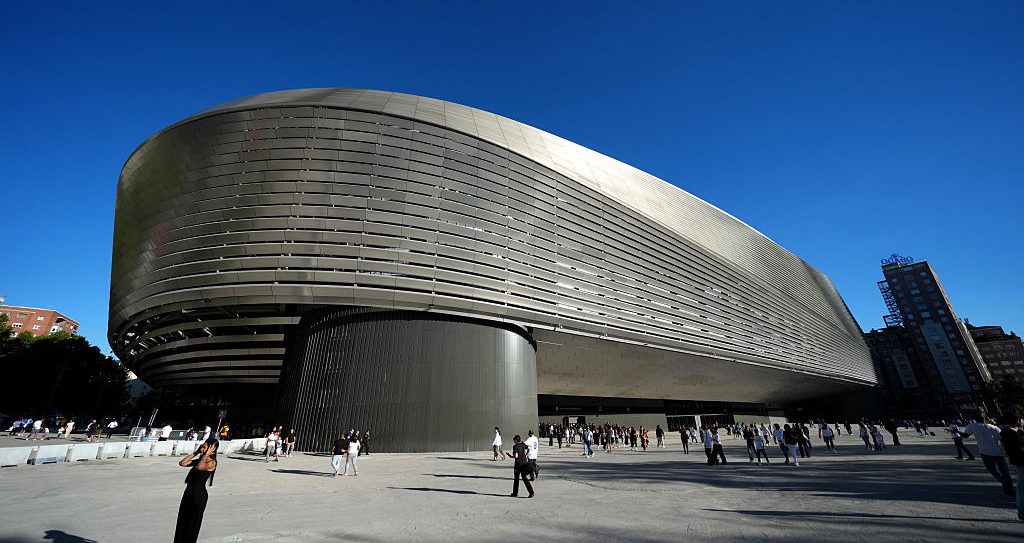
As The Athletic has reported, many details of the 2030 World Cup are still to be decided. The choice of venue for the final is among the most delicate, partly because the competition is between two very different symbols of football power. The future largest stadium in the world, with an architecture inspired by traditional Moroccan tents. And the Bernabéu: a football institution, a venue that has grown beyond the idea of a stadium, a place that functions almost like a commercial machine in its own right, generating multimillion-euro revenues and emerging from one of the biggest renovations in its history, with Florentino Pérez investing €1.5 billion. A stadium with an aura of its own. The only one in the world to have hosted a World Cup final (1982), a European Championship final (1964), a Champions League final and a Copa Libertadores final.
The battle that will unfold over the coming years is, naturally, also – perhaps above all – economic and political. FIFA’s commercial partners are believed to be strongly in favour of holding the final in Madrid. At the same time, several anonymous sources told The Athletic that Morocco’s moves and investments have impressed FIFA and “have reopened the question of whether the final should be played at the Bernabéu”. But what exactly has changed? What has Morocco done to alter its position within the global football landscape so dramatically? The answer starts with the stadium, but it goes much further. New infrastructure will be built to meet FIFA’s requirements, including new rail and motorway connections linking the venue with Casablanca city centre and Rabat, the capital. Then there is the political side. Fouzi Lekjaa, president of the Moroccan Football Federation, is considered one of Gianni Infantino’s closest allies within FIFA. The RFEF, meanwhile, has gone through difficult years at an institutional level. The Hermoso-Rubiales case is the most obvious example, alongside the problems that have surrounded the presidency of Rafael Louzan, who succeeded Rubiales.
The final decision will belong to FIFA. When it came to the 2026 World Cup, the organisation took its time before announcing the stadium that would host Spain-Argentina: the official decision arrived in February 2024, two years and five months before the match. According to reports surrounding the selection process, it was Infantino and a small group of executives who favoured MetLife Stadium. The Bernabéu’s status as a privately owned stadium could prove relevant. The Stade Hassan II, by contrast, is closely tied to the Moroccan royal family. Madrid, however, still has the advantage when it comes to infrastructure and experience: organising events of this scale is something the city knows well. For now, no major developments are expected before the next FIFA Congress, scheduled for March 2027. Where will it take place? Rabat, Morocco. Obviously, that is not a coincidence.