
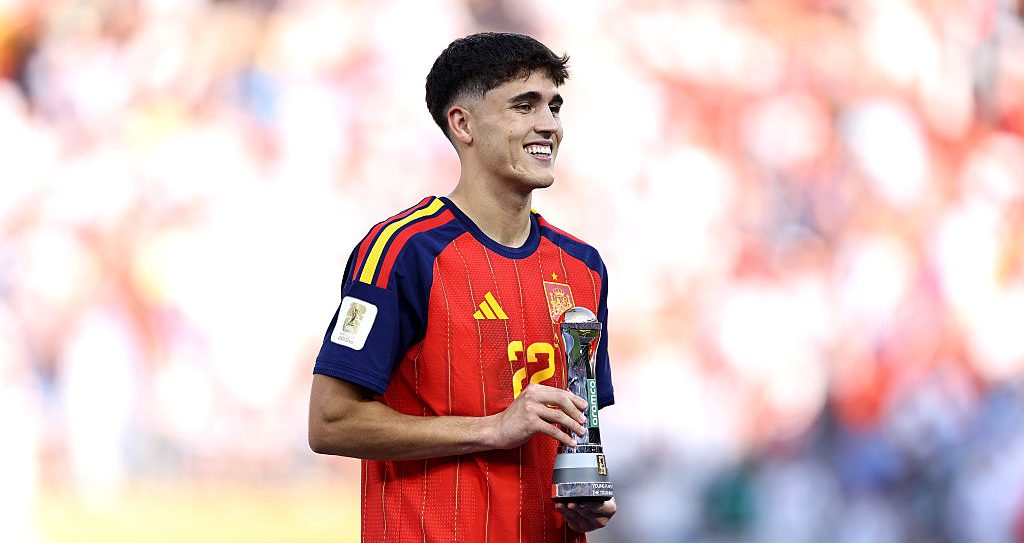
There was a moment on Sunday evening when Spain became world champions. 119 minutes on the clock, the Scaloneta throwing everything forward, Leo Messi’s last charge: he takes on his man, reaches the byline and from the same square of grass that had punished England sends in the cross. This time it is low, hard, no less dangerous. The difference is that there is no Lautaro in the six-yard box. There is Pau Cubarsí. The 19-year-old of La Roja – nineteen, again – bursts between the white-and-sky-blue shirts and, with the calm of Cannavaro in Germany 2006, gets there first. He throws himself at the ball, accepts the risk of an own goal and puts it behind. The celebration is instinctive, almost physical. A defensive action carrying the same weight as Ferran Torres’ winning goal. Before the final, there was one possible doubt surrounding Spain: the inexperience, the pressure, the emotional weight of a World Cup night. The answer came in the last seconds, with the trophy still hanging in the balance.
Not just from Cubarsí. Not just against Messi and an Argentina side suddenly out of ideas. At full time, he was named the tournament’s best young player. The history of the award makes the achievement even more striking. Since it was introduced in 2006, it had never belonged to a defender. Podolski. Müller. Pogba. Mbappé. Fernández. Now Cubarsí is part of that list, and there is no sense of exception about it. A centre-back with the mind of a veteran, the authority of a leader, the presence of someone who has been there before. Spain conceded once in eight matches. Unai Simón set a record for minutes unbeaten. In the final, Argentina went more than 110 minutes without putting a shot on target. There is one kind of young phenomenon we already know. The Mbappé, the Yamal. Talent arriving without warning. Acceleration, instinct, invention. Players who seem to exist outside the usual limits. A defender has a different burden.
The game has to be read before it happens. The spaces have to be closed before they open. Every movement has a consequence. Every mistake stays behind you. Cubarsí did it all. Quietly. Naturally. The morning after, Spain was celebrating him. Marca quoted a former coach from La Masia who worked with both Yamal and Cubarsí, praising the defender’s understanding of the game: “He already knows where the ball will go before anyone else. He does it because he anticipates the striker’s movements. And he has extraordinary control of the ball, which allows him to build from the back.” A defender without a missing piece. Raised on Piqué, he has spent this summer moving beyond the shadow of his predecessor. “Pau can change the course of a match because from his position he sees everything clearly: he is calm and knows how to find the right pass for his teammates.” Mundo Deportivo – a newspaper with obvious Barça sympathies, worth stating – has already placed Cubarsí “in pole position for the Ballon d’Or”.
The comparison leads naturally back to Cannavaro, the last defender to win the award. In Germany in 2006, the Italy captain built his legend through aerial dominance above all: 31 duels won, compared with Cubarsí’s 14, and 29 recoveries, the same number reached by the teenager today. But Cubarsí adds another dimension. A 96% passing accuracy. Seven clean sheets. A defence that has remained untouched on seven occasions and will go down as the least threatened in World Cup history. So yes, there is a line between Cannavaro and Cubarsí. The game has changed. The role of the defender has changed with it. That does not mean the position has become less important. A 19-year-old centre-back delivering a performance like this, in a World Cup final, had never happened before. Spain found its extra weapon there. In the last line. In the youngest player on the pitch who looked like he had already lived through it all.