
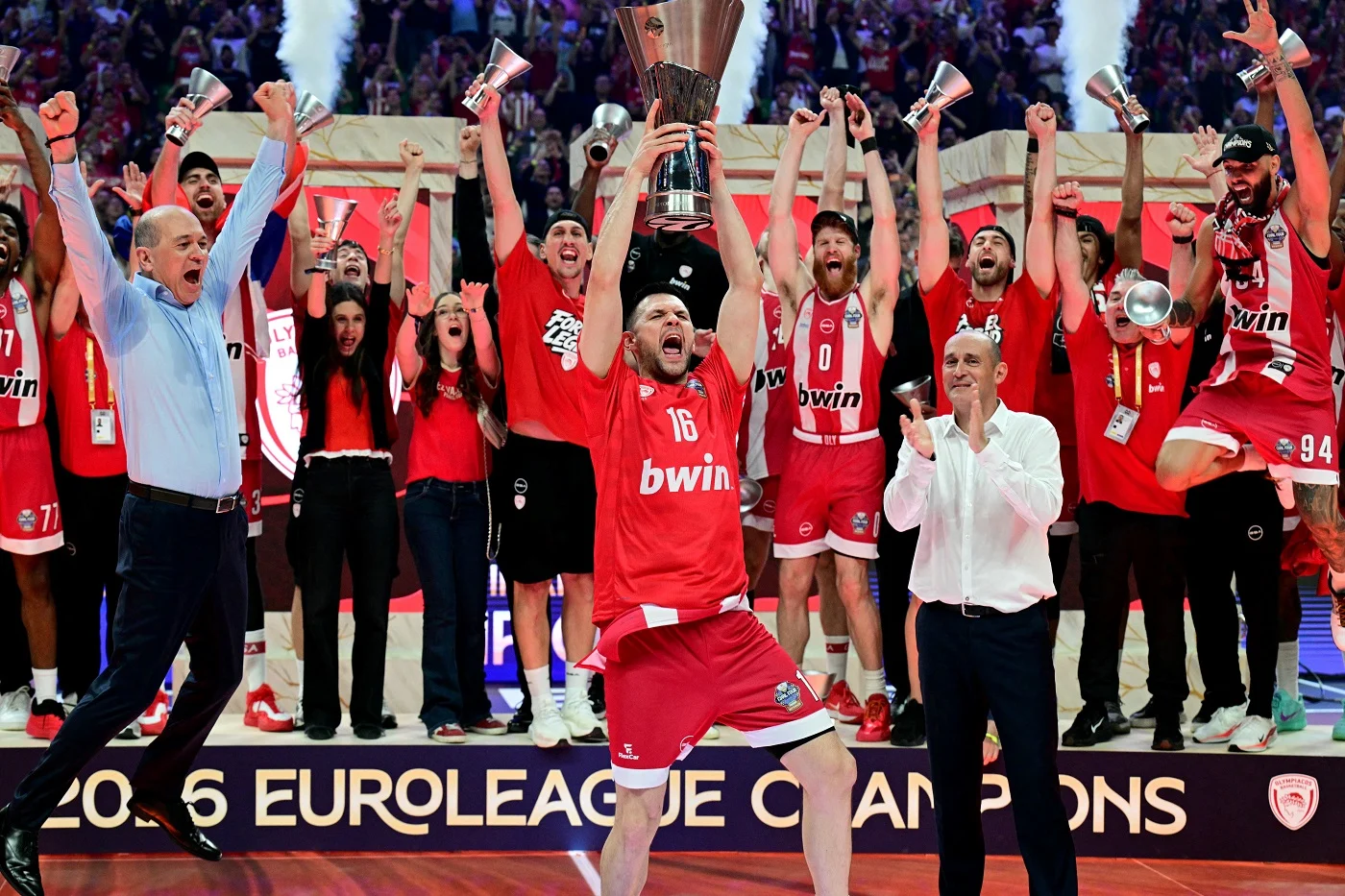
The EuroLeague Final Four has just concluded, and after 13 years, Olympiacos has returned to lift the most important trophy in European club basketball, defeating first Fenerbahce in the semifinal and then Real Madrid in the final. Moreover, the triumph was celebrated at OAKA, the arena of their rivals Panathinaikos. After the nights in Athens, however, beyond the great plays of Fournier, Vezenkov, Dorsey, and teammates, it is interesting to note the economic impact behind such an event. In an era where continental basketball is crunching the numbers, where most clubs are not sustainable except through continuous capital increases, where the arrival of NBA Europe next October will completely revolutionize the market, the EuroLeague shows that it has learned almost nothing, has not created a stable financial system, and above all, has not aimed for competitive balance. In practice, if you want to win you have to spend, which is true for almost all team sports in Europe, but to conquer the EuroLeague you have to spend a lot, perhaps too much.
In this sense, the Spanish newspaper El País has made a very thorough analysis, observing how the EuroLeague becomes more expensive every year. At the end of the final, Madrid’s coach, Sergio Scariolo, highlighted the value of his players’ performance, but above all, he issued a warning about the future of the European competition. “There are more and more clubs investing huge amounts to win. We must be aware that every year it will be more difficult. If we don’t understand this, we will make a mistake,” the Italian coach declared.
Scariolo’s words capture the radical change that the EuroLeague is undergoing. The great historical powerhouses, such as Olympiacos, Panathinaikos, and Fenerbahce, continue to increase their investments in the market, while new emerging projects are transforming the competition into a true sporting and economic jungle. An increasingly unstable balance that this season has already led ten of the twenty participating clubs to change their head coach. Among the fastest-growing realities is Valencia, which reached a Final Four for the first time and is now engaged in negotiations to consolidate its stable place in the European elite. The EuroLeague general manager, Chus Bueno, confirmed in Athens the organization’s desire to tie the Spanish club to the long-term project.
Valencia represents a model built with patience thanks to the financial support of Juan Roig. The team’s star, Jean Montero, has already become one of the most coveted names in the European market, with Olympiacos among the clubs interested in buying him. Alongside the projects that grew gradually, however, new protagonists are also emerging, driven by enormous financial availability. This is the case of Dubai Basketball, the new club from the United Arab Emirates that debuted this year in the EuroLeague despite having no connection to Europe. The company signed an agreement until 2030 thanks to a very strong economic investment, the details of which remain confidential.
With a budget of 16 million euros and a 17,000-seat arena, the Coca-Cola Arena, Dubai represents the symbol of the competition’s new expansion. To accommodate it, the EuroLeague went from 18 to 20 teams and is now evaluating a further enlargement up to 22 or 24 clubs, with the hypothesis of introducing two different Conferences. Chus Bueno himself revealed that the organization has received requests for 17 new licenses, while talks also continue with the NBA for a possible sporting and economic partnership. In the meantime, salary pressure is also growing. Hapoel Tel Aviv shook up the market by securing the Serbian Vasilije Micic with a contract worth 5.6 million euros per season, becoming the highest-paid player in Europe ahead of Nunn of Panathinaikos and Vezenkov of Olympiacos.
Precisely Panathinaikos, Hapoel Tel Aviv, and Efes were sanctioned in April for exceeding the salary cap provided by the league’s new economic control system. The Greek club was the biggest spender, exceeding by over three million euros. The great continental powerhouses no longer seem to fear investing gigantic figures, fueling an inflation that makes it increasingly difficult for historic clubs like Real Madrid and Barcelona to remain competitive solely with their sporting tradition.
The market, however, continues to expand. Abu Dhabi has already paid 25 million euros to host last year’s Final Four and is expected to repeat the investment for the 2027 edition as well. In this constantly evolving scenario, Real Madrid remains the only big club not to have renewed its agreement with the EuroLeague yet, while the NBA closely observes European basketball and evaluates the creation of franchises linked to the continent’s big football clubs. More money, more investments, more competition. Scariolo’s message is clear: winning the EuroLeague is becoming an increasingly difficult and increasingly expensive feat.