
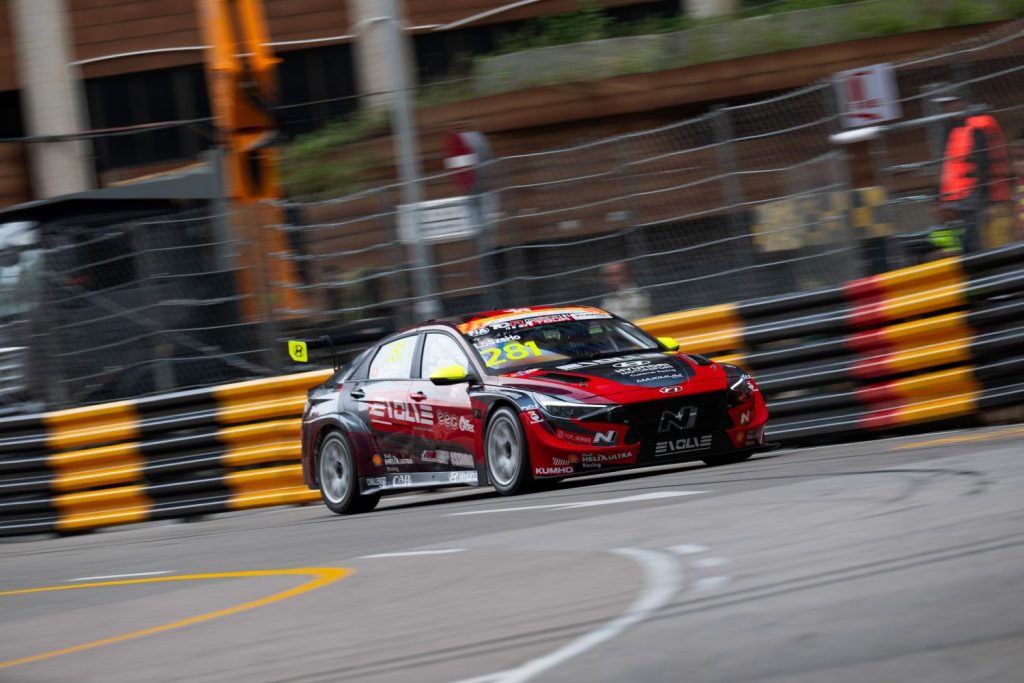
For decades, Las Vegas was a place that hosted big sporting events rather than a sporting city in its own right. Boxing had long been one of its sporting signatures, the Ultimate Fighting Championship (UFC) grew up there, and other sports came and went. But over the past decade, the city’s relationship with sport has changed fundamentally.
The NHL’s Vegas Golden Knights arrived in 2017, followed three years later by the NFL’s Raiders. Formula One now races down the Strip, and Major League Baseball’s Athletics are preparing to relocate to the city. Las Vegas has not abandoned the casinos, shows and restaurants that made its name; it has simply added sport as another pillar of its identity. Across the Pacific, Macau is another city that has long been defined internationally by gaming, entertainment and tourism, but is now assembling an increasingly ambitious sporting portfolio of its own. And the scale of the shift has been striking. In 2019, Macau staged seven major sporting events; by 2025, that figure had risen to more than 20. Recent years have brought NBA pre-season games, UFC fights, elite international table tennis, Volleyball Nations League competition and golf, while Macau was also a co-host of China’s National Games in 2025. Then there’s the Macau Grand Prix, the street race that has been woven into the fabric of the city for more than seven decades. Taken together, it’s a sign that sport is becoming more than an events strategy for Macau; it is central to the way the city is reinventing itself.
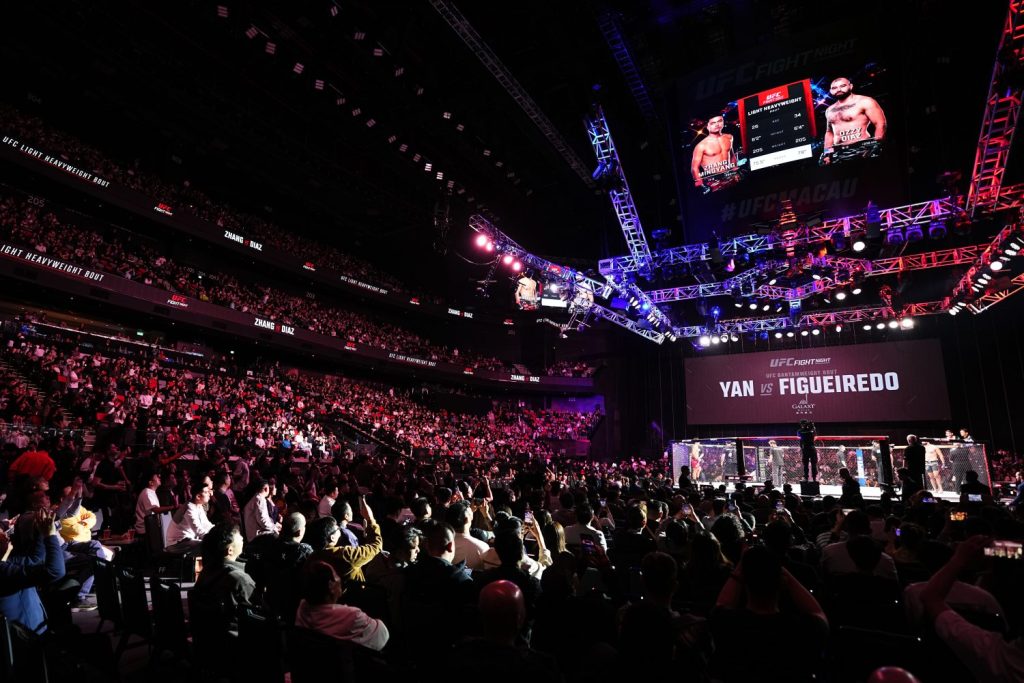
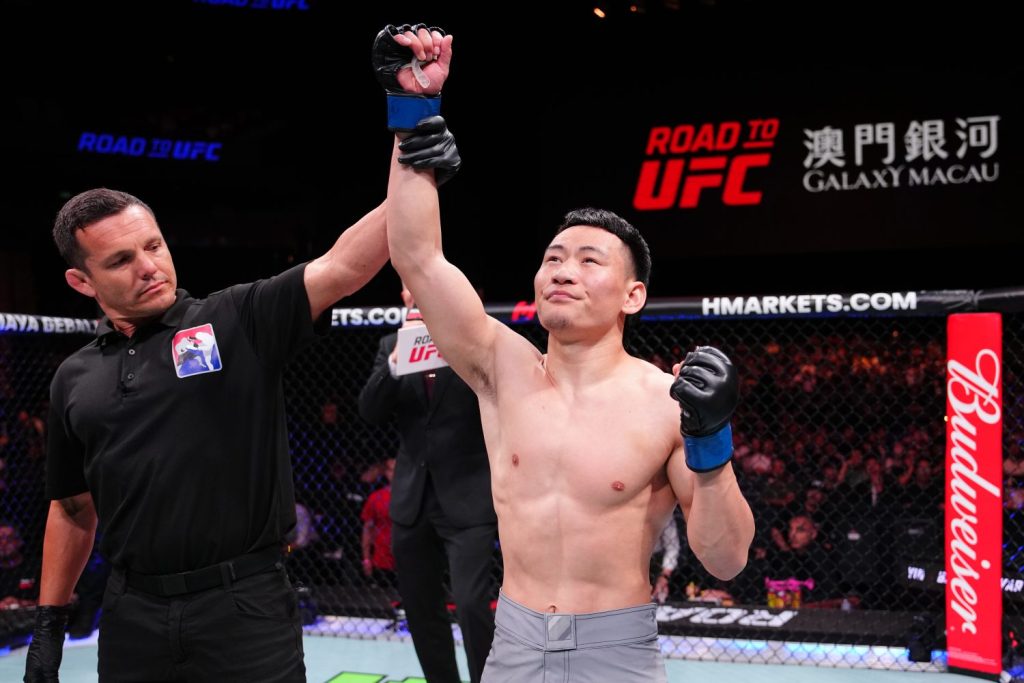
“The city is really branding itself as a sports and entertainment destination, and that’s coming from the top down,” says Kevin Chang, senior vice-president and head of Asia at UFC, which first staged an event in Macau in 2012 and now returns regularly. “They’ve said we’re not going to just be big on gaming. We’re going to be something that carries forward into sports and into rare experiences that people come to from around the world. And we’re happy to be coming along for the ride.” The comparison with Las Vegas is an obvious one, and not simply because both cities are synonymous with gaming. Each is a tourism-driven destination that has had to broaden its appeal beyond what happens on the casino floor. “Macau has what people found in Vegas very early on,” says Chang. “People associate the city with the gaming aspect but visitors also associate it with dining, going there and having a night out and enjoying the entertainment.”
When it comes to sport, however, there remains a fundamental difference between the two cities. Las Vegas now has sporting institutions of its own: teams that play in the city week in, week out, build rivalries and fan bases, and create shared points of sporting connection. Macau, by contrast, remains predominantly a city that hosts major sporting events, albeit an increasingly ambitious one, bringing the world’s best athletes and competitions to town rather than building major professional teams of its own. Hosting a packed NBA game, a UFC card or a major table tennis tournament can attract visitors and generate international exposure. Becoming a true sports city requires something deeper: repeat events, local participation, emotional attachment and a sense that sport belongs to the place rather than simply passing through it.
The recent sporting push sits within Macau’s wider effort to reduce its economic dependence on gaming. Under the current concession framework, the city’s six casino operators have collectively committed billions of dollars to non-gaming investment, with sport emerging alongside entertainment, culture and other tourism-related attractions as an increasingly prominent part of that strategy. For Dr Ubaldino Couto, co-ordinator of the Tourism Event Management Programme at the Macao University of Tourism, the goal is to build a broader and more varied events economy as Macau pursues its official ambition of becoming a “World Centre of Tourism and Leisure”. “To be truly an ‘eventful’ destination, it is important we offer a variety of event types at different scales,” he says. “Sports events not only add to the vibrancy of the event industry but form an integral component of the economy.”
And the crowds drawn by Macau’s growing sporting calendar suggest there is certainly an appetite for sport. In table tennis, this spring’s ITTF Men’s and Women’s World Cup drew close-to-capacity audiences at the 16,000-seat Galaxy Arena, according to local reports, while around 20,000 spectators attended three days of activity around the latest UFC event at Galaxy Arena in May. International rights holders, meanwhile, have good reasons to look at Macau. Beyond its hotels, arenas and entertainment infrastructure, Macau sits within the Greater Bay Area, home to more than 88 million people, giving it access to an enormous potential audience on its doorstep.
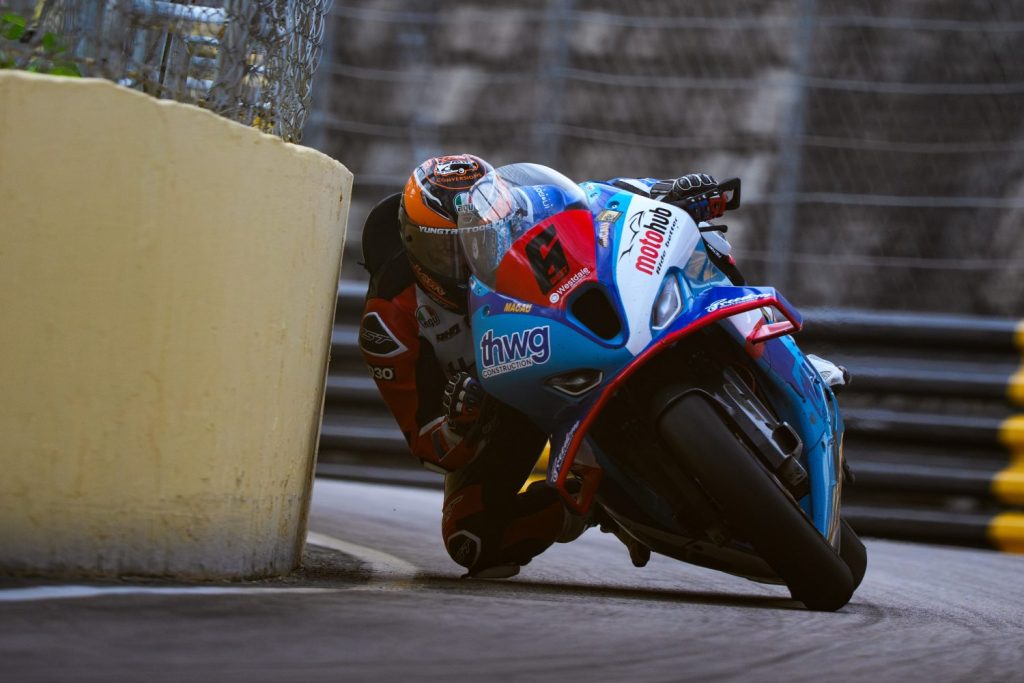
For all the focus on Macau’s new sporting ventures, however, the city already possesses an event that is far more deeply rooted. First held in 1954, the Macau Grand Prix has been a fixture in the city’s sporting calendar for more than 70 years. Its famous Guia Circuit runs through the city itself, turning everyday roads into one of motorsport’s most distinctive street courses, where future Formula One stars including Ayrton Senna and Michael Schumacher have competed. Unlike a tournament or exhibition that could theoretically be staged in any suitably equipped arena, the Grand Prix is inseparable from its setting. “Although Macao has limited land resources, we have consistently shown to the world in more than 70 years that we are capable of turning our city streets into a world stage for the Macau Grand Prix,” says Couto. The race therefore offers both a precedent and a challenge. Macau has already shown that a sporting event can become part of the city’s identity. The question is whether any of the newer arrivals can achieve something comparable, and whether they can help create a sporting culture that extends beyond the spectators filling its arenas.
That is where investment away from the big-ticket events becomes increasingly important. Macau is currently transforming the former Canidrome, once home to Asia’s last legal greyhound racing track, into a major community sports park, with MOP1.34 billion (US$167 million) committed to the first phase, which is scheduled for completion in 2029. Facilities will include swimming pools, basketball and volleyball courts, a skatepark and climbing facilities. Couto also points to school sport and efforts to involve residents in major events as further pieces of the puzzle. “It is as important to establish a sports culture so that we showcase not just the facilities and infrastructure, policy support and economic diversity, but an energetic and vibrant destination that matches the image we wish to portray,” he says. That distinction – between consuming elite sport and participating in it – may ultimately determine how far Macau can travel along the Las Vegas road. As well as helping shape the city’s sporting identity, the permanent teams established in Las Vegas have become tourism draws in their own right. Fletch Brunelle, vice-president of marketing at the Las Vegas Convention and Visitors Authority, recently told Euronews Travel that the city was “evolving into the sports capital of the world”. He added: “It’s often a 50-50 mix of home and away fans – and from a tourism perspective, that’s fantastic.”
That travelling-fan model is particularly interesting for Macau. Like Las Vegas, it does not have the huge local population associated with many traditional sporting cities. But Chang argues that this need not be a major limitation. “Vegas does not have the biggest population so they also rely on people travelling,” he says, pointing to NFL games where large numbers of visiting supporters turn a trip to see their team into a weekend away. “Macau doesn’t have the biggest population but it has Hong Kong nearby, it has the Greater Bay Area and so many people so close – and it has so much potential.” Chang even believes permanent teams could eventually be part of the picture. “It’s very possible,” he says.
Whether Macau ever follows Las Vegas that far remains to be seen. Its constraints are obvious: limited land, a small resident population and no major professional team with a significant regional or international profile. But its advantages are equally clear: extensive tourism infrastructure, major indoor arenas, deep-pocketed operators and an enormous audience within easy reach. Even Macau’s physical limitations may not be fixed forever, with closer integration with neighbouring Hengqin potentially expanding the range of events available to the city. “In recent years, the Guangdong-Macao In-Depth Cooperation Zone in Hengqin also potentially gives us land resources – around triple the size of Macau,” he says. “We are able to explore many more opportunities, to rethink and reinvent our event portfolio of what we can do.”
Macau may therefore discover that becoming a sporting city does not require copying Las Vegas at all; instead its model could be built around a portfolio of recurring international events, one or two sporting properties that become inseparable from the city itself, greater grassroots participation and the ability to draw spectators from well beyond its own borders. Las Vegas has already demonstrated how far a destination once defined overwhelmingly by gaming can broaden its identity through sport. Macau has the investment, infrastructure and institutional backing to follow a similar path. The harder part is making those events feel not merely as though they are happening in Macau, but that they belong there.