
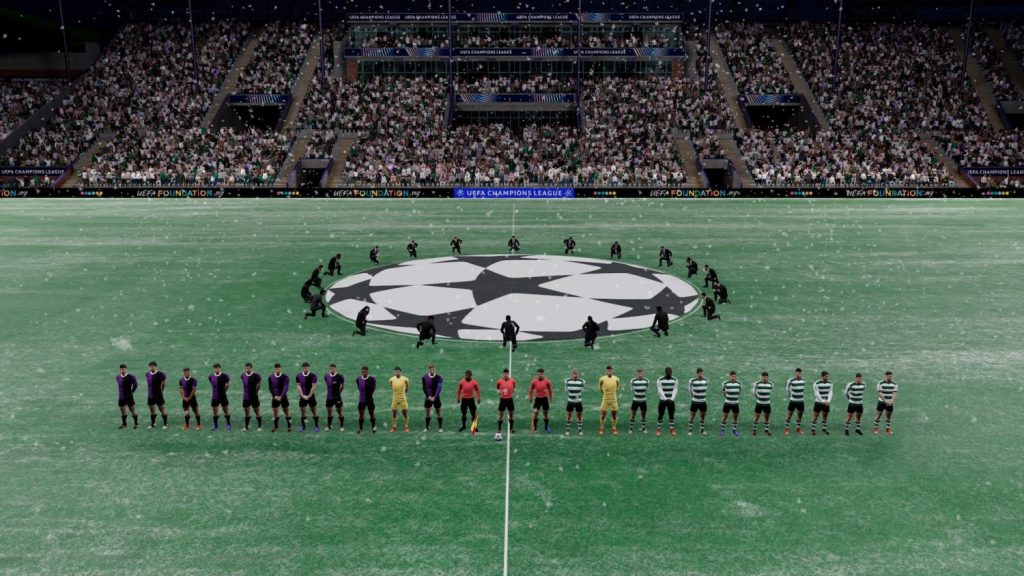
When a much-loved video game undergoes a radical overhaul, not everyone is going to be won over. Few releases have demonstrated that more clearly than Football Manager 2026. After developer Sports Interactive decided to skip the 2025 edition, the next instalment arrived with a new match engine and the introduction of women’s football to the database, both broadly welcomed by players. The revamped tactics system also found favour. The wholesale redesign of the interface was another matter. Many players were left feeling disoriented, particularly those who had followed the series for years. A year on, with FM 2027 published by SEGA and released on Tuesday 10 November 2026, the series looks to have found a way of bringing both camps back together. This is a game that takes much of what worked in last year’s edition and combines it with the qualities that made the franchise what it is.
The official announcement sets out the direction: “The interface and visual presentation have been improved, and navigation is more intuitive. Several features have returned, alongside familiar elements that players will recognise, while a host of new additions include a system for making tactical changes in real time, allowing multiple instructions to be adjusted at once.” For the tactical obsessives, this is the big one. Football Manager 2027 gives players more scope than ever to get under the bonnet, experiment with systems and feel like managers in the fullest sense of the word. Virtual managers, certainly, but managers all the same. The tactics editor offers a level of detail and creative freedom that goes well beyond selecting a formation and a preferred style of play. New movements and patterns can be devised, then watched unfold on the pitch.
Last year brought the introduction of fluid formations, with different shapes in and out of possession. FM 2027 takes the idea further. The tactical screens are more extensive, with considerably more to work with: formations for each phase of play, team and individual instructions, set-piece routines, new measures of tactical effectiveness and of how well a playing style has been absorbed by the squad, as well as instructions that allow the system to be changed on the fly during matches. It is a substantial toolkit. Players looking for something more straightforward, closer to an arcade experience than a detailed simulation, may find much of it excessive. But there is little doubt about the audience Sports Interactive has in mind: those who want their football management game to be as realistic, and as involved, as possible.
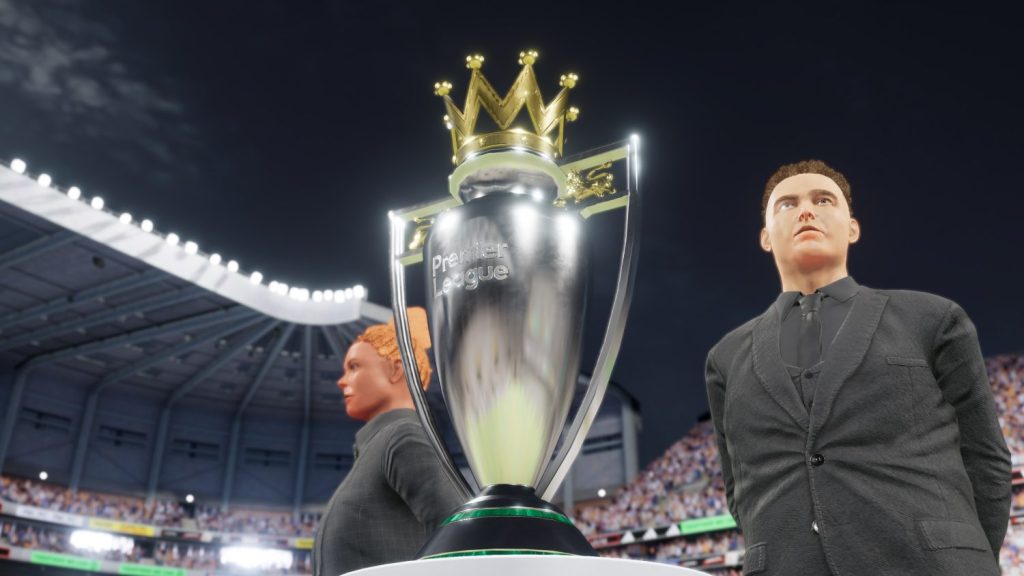
There is a sense of the series coming full circle. After the upheaval of 2026, a return to some of the things that made Football Manager such a fixture for its longstanding audience feels almost inevitable. The wealth of official licences helps, too. The World Cup and UEFA competitions are among the most significant, alongside the Premier League, lending the game an authenticity that makes it easier to forget you are sitting in front of a screen rather than immersed in the real thing.
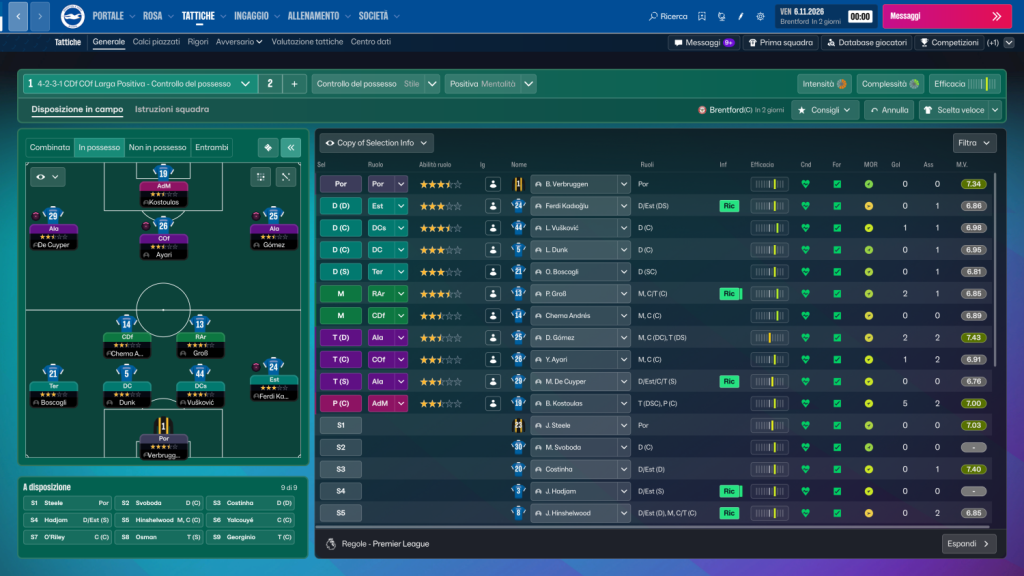
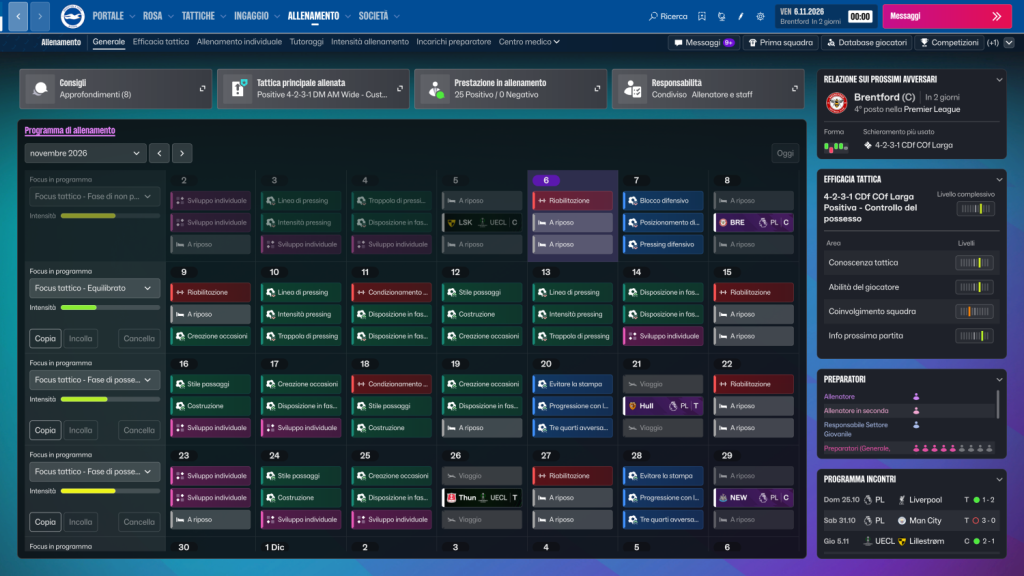
Training has been given a more substantial role. Sessions are now more closely connected to the team’s tactical understanding and to the development of individual players over the medium and long term, including their technical attributes. Much as they are in the real game. It is in the preparation for matches, in particular, that Football Manager 2027 makes its strongest impression. These are the screens where the work is done, where decisions made in advance begin to take shape once the players step onto the pitch. The level of detail is striking. Compared with FM 2026, and even with the editions released before 2025, the progress is considerable, at least in the traditional game mode.
The effort to bring in players who prefer something quicker and less immersive has not been abandoned. That side of the game is now represented by Shuffle Draft, an evolution of the old Fantasy Draft mode. Developed in collaboration with FIFAe, it lets players put together a squad through a draft system before setting up tournaments and leagues, either online against other players or offline against the AI. There is no need to commit to the full management experience or work through all the layers of the game. It is quick, accessible and straightforward. It also offers a useful way into the new features for anyone who wants to get a feel for the game before starting a full career.
There are still frustrations. The transfer market has yet to live up to the scale of the database, which remains one of the game’s great strengths. Deals made by the player and those conducted by the AI can still feel detached from the realities of football, both in the fees involved and in the way negotiations play out. The 3D match engine has its familiar shortcomings, too. Some player animations remain stiff, while certain tactical situations recur with a predictability that can become tiresome. Defenders, for instance, are still slow to react to balls played into the space behind them.
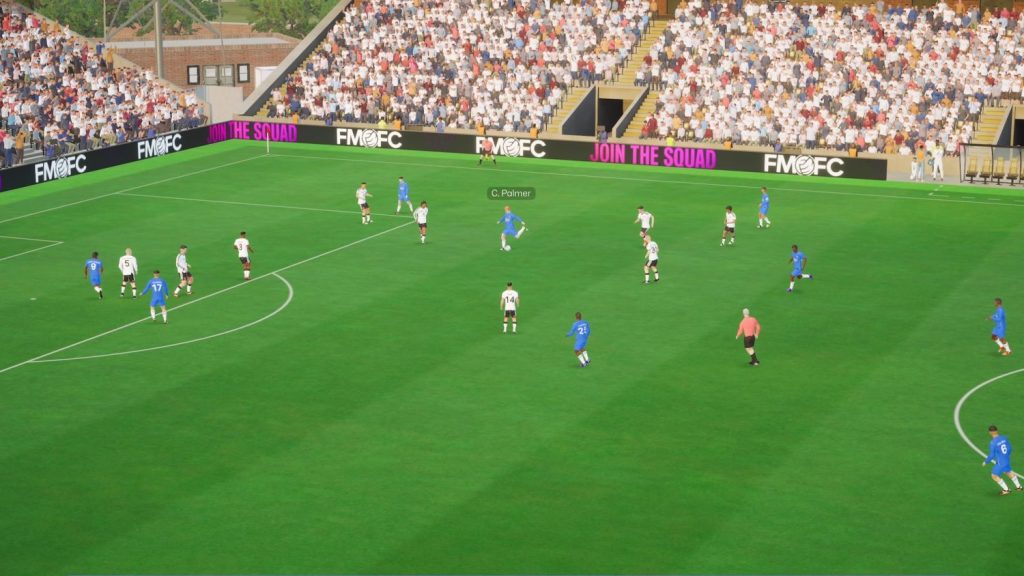
The graphics, meanwhile, have come on considerably, as the images on this page show. That may matter less to the series’ most committed players, many of whom would rather see further investment in the realism and depth of the simulation. But Football Manager 2027 is an ambitious hybrid, bringing together elements of the old game and the new. It wants to win back those who were unsettled by last year’s changes without losing sight of the players the series has yet to reach. The balance is not perfect, and there are still areas that need work. But after a year spent trying to reinvent the game, FM 2027 feels much closer to the Football Manager that so many players know and love. That, in itself, is no small achievement.