
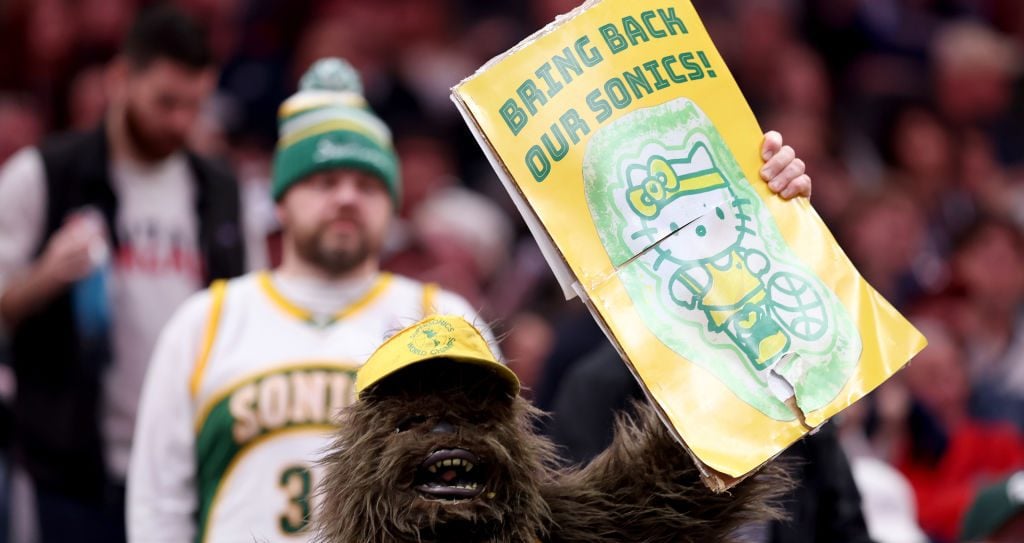
Seattle has been waiting since 2008. And it may have to wait a while longer. The NBA’s expansion plans are gathering pace, but there is no guarantee the SuperSonics will be among the new arrivals. A franchise with a proud history, NBA champions in 1979, the Sonics ultimately fell victim to a change of ownership that paved the way for their departure to Oklahoma City. The Thunder took their place among the league’s 30 teams. The Sonics, meanwhile, disappeared. Only in recent months had hopes of their return begun to gather momentum, fuelled by the NBA’s ambitious plan to expand to 32 franchises. Yet Seattle, the natural candidate for one of the two new spots, could once again find itself on the outside looking in. And this time, Mexico City is not even in the running.
In the United States, one thing is beginning to look increasingly certain: Las Vegas will get one of the two expansion teams. After successfully hosting a string of major events in recent years, the city has made a compelling case for its commercial appeal. Anyone looking to establish an NBA franchise in Sin City is expected to pay at least $10 billion. That would amount to roughly $330 million for each of the league’s existing teams, a figure that exceeds even the most optimistic estimates among industry insiders. Several investment groups are already lining up to compete for the prize.
Seattle, by contrast, has the opposite problem. So far, the only serious interest in bringing back the SuperSonics has come from the investment group founded by Samantha Holloway. Its offer is believed to be in the region of $6–6.5 billion, barely more than half the figure being discussed for Las Vegas.
The doubts surrounding Seattle are growing. One NBA franchise owner, speaking anonymously to Bloomberg, suggested that the financial returns would simply not be there. League executives would have to weigh the proceeds from the sale of a new franchise – around $6 billion in Seattle’s case – against the prospect of television revenues being divided among more teams. There is also the question of talent being spread more thinly across the league. The numbers, in other words, may not add up to a convincing case for bringing the Sonics back. For now, their return remains a very open question.
There is another source of concern for the Sonics’ long-standing green-and-gold faithful. NBA commissioner Adam Silver would apparently be perfectly happy to leave the league with 31 franchises. An uneven number is hardly ideal in a team sport – the NBA last operated with 31 teams in 2003–04 – but it may still be preferable to expanding to 32 with a franchise that does not quite stack up. Las Vegas, in any case, looks increasingly certain to get its team, whatever happens in Seattle.
Even the question of an arena remains unresolved. Holloway already owns the NHL’s Kraken, who play at Climate Pledge Arena, currently the only venue in Seattle capable of hosting an NBA team. That gives her group a considerable head start. Any rival bidder would have to take on the cost and bureaucratic complications of building a new arena, hardly an enticing prospect for potential investors. It is also a factor keeping Seattle’s proposed expansion fee relatively low. And perhaps, in the end, one more obstacle standing between the SuperSonics and a long-awaited return.