
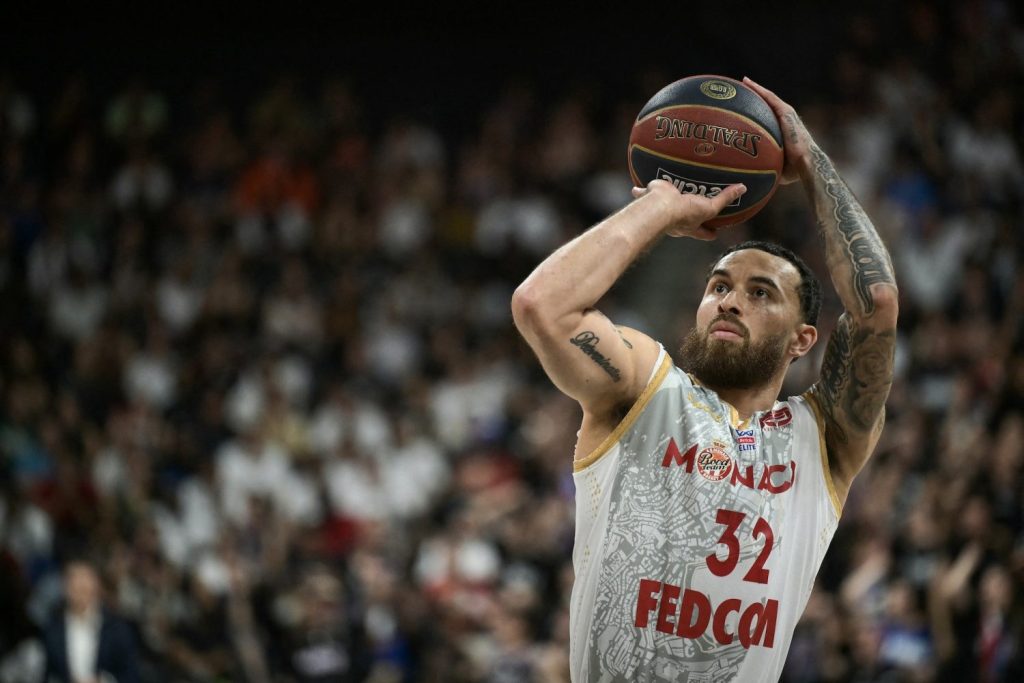
Gone from one summer to the next. Someone, surely, will have to explain to the fans in the Principality what happened: the French basketball champions, coming off the most successful season in their history, with four trophies in the cabinet, no longer exist. Or rather, they will start again in Nationale Masculine 1, the third tier of French basketball, on the brink of amateur level. So, in a sense, yes, Monaco as we knew it has suddenly become a memory. A brilliant one, still fresh in the mind, and yet surprisingly fleeting.
Only a little over a year ago, the red-and-whites were playing in a EuroLeague final. They lost to the more fancied Fenerbahce, but they left their mark, finishing as European runners-up for the first time — and becoming the first French side to do so since Limoges in 1993. Those Final Fours were supposed to be the coronation of a new basketball superpower, and for a very brief spell, perhaps Monaco was one. But the abyss was just around the corner: in the months that followed, reports began to emerge of unpaid wages and an outstanding luxury-tax bill, the financial penalty imposed on basketball clubs that spend beyond a certain threshold.
So what happened? Why did the Principality’s team suddenly come apart? The reason is fairly straightforward: Alexey Fedorichev, the Russian magnate who owns the club, saw his cash reserves suddenly dwindle. For a long time after the invasion of Ukraine, he had managed to absorb the pressure, but the geopolitical situation deteriorated further in recent months, eventually leading to Fedorichev’s financial assets being frozen. From there, things snowballed. Players went unpaid. Agents did not receive their commissions. Debts climbed above €20 million, made worse by the fact that Monaco’s wage bill was by far the highest in France.
By the turn of the year, the cracks were beginning to show. Despite the problems mounting, Monaco continued to operate in the transfer market like a EuroLeague heavyweight — or tried to, at least, without managing to complete its final signings. There was no return to the 2025 Final Four, but the European campaign was still an honourable one. At home, it was something else entirely. Amid a club crisis that was by then out in the open, with Prince Albert himself stepping in over unpaid wages, Monaco reached the French championship finals for the fourth year running. They won an extraordinary series against Paris 3-2, and Paris will now take their place in French basketball, both in sporting and financial terms. In those same days, Monaco were also excluded from the EuroLeague and EuroCup. What followed was a long, hot summer: the club’s hierarchy did everything it could to stave off bankruptcy, but the financial guarantees put forward were not deemed adequate by the Federation. So Monaco will have to start again from scratch, at the end of a surreal episode. And, in its own way, a revealing one. It lays bare the precarious foundations on which European basketball at the highest level rests. So fragile that the 2025 runners-up, in effect, no longer exist.