
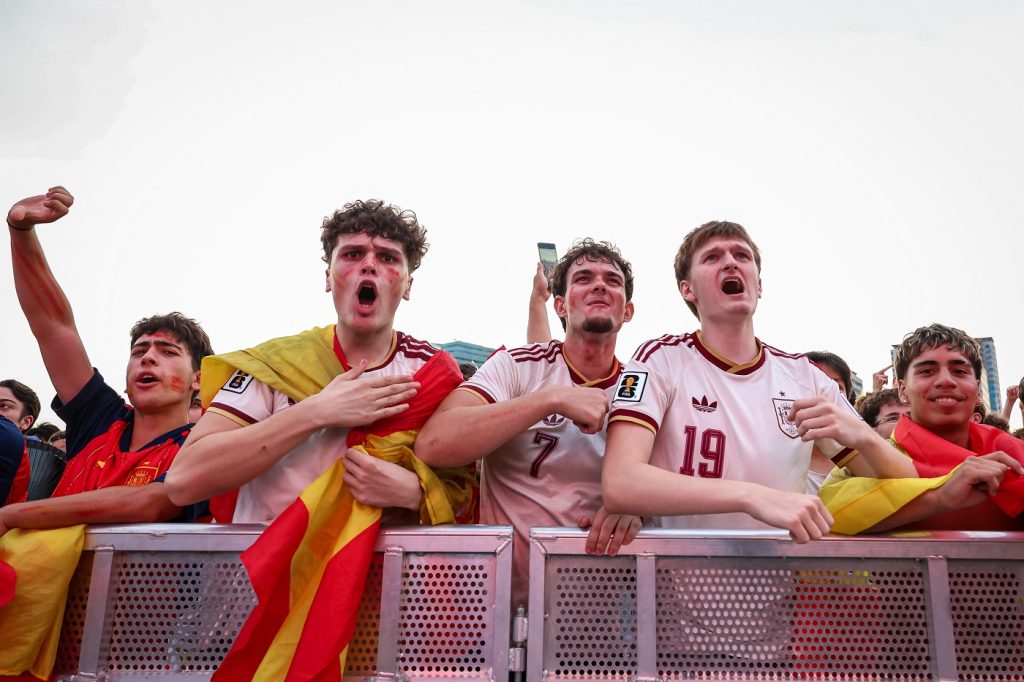
Winning both the European Championship and the World Cup has changed perceptions of Spain’s national team. As a football team, obviously, but even more so as a brand. El Mundo has put some numbers on it: the impact of the victory in the United States increased the commercial value of La Roja by 60%, well above the 35% rise that followed the 2010 World Cup in South Africa. In 2025, the RFEF, the federation, recorded revenues of €387 million, €33.5 million of which came from competitions, largely thanks to the women’s national team winning the Nations League. The World Cup triumph will now bring another €55 million into the federation’s coffers.
Making the most of De la Fuente’s team in friendlies will be more difficult. The FIFA calendar is already extremely crowded, leaving little room for test matches. It is no coincidence that La Roja have played only eight friendlies over the past two years: four before the European Championship, once qualification had already been secured, and another four in preparation for the World Cup. Qualifying for both the European Championship and the World Cup without having to go through the play-offs does, however, open a spring window in years when major international competitions are being played. The room for manoeuvre remains limited.
The RFEF — the Real Federación Española de Fútbol — has therefore chosen to put greater emphasis on matches played around Spain. There are sporting reasons for the move, but institutional ones too: the aim is to take the national team to every corner of the country. Ticket revenue, which brought in €19 million in 2025, including the Copa del Rey final, is also set to grow. In Seville and Oviedo, where Spain will wear the two stars on its shirt for the first time in Nations League matches against Croatia and the Czech Republic, every ticket has already been sold.
Before the World Cup, Spain had played outside the country only once, in Puebla, Mexico, in a friendly against Peru. That match generated €5 million in revenue. La Roja’s appearance fee is now set to rise further, driven by international interest. This is one of the markets the federation is keenest to develop. At present, 62% of the RFEF’s revenues are generated in Spain, while the remaining 38% comes from abroad, where television rights are becoming less important and advertising revenue is taking on a greater share. The national team already has local commercial partners in China, with four brands involved, while sponsorship agreements signed between the European Championship and the World Cup are being reviewed and expanded.
The federation expects to build further on that progress, with revenues from sponsorship set to exceed the more than €80 million raised in the last financial year. Before travelling to Germany in 2024, the national team had 24 brand partners and a single sponsor; it now has 41 partners. Among them are global names such as Google and Loewe. The appeal is not difficult to understand. La Roja represents sporting success, a strong connection with Spanish society and a young squad that, by market value, is the third most valuable in the world behind France and England. It is not only a commercial matter. Ahead of the next gathering in Las Rozas, security staff are preparing for an unprecedented wave of enthusiasm and requests. That too is capital. An enormous amount of it.