
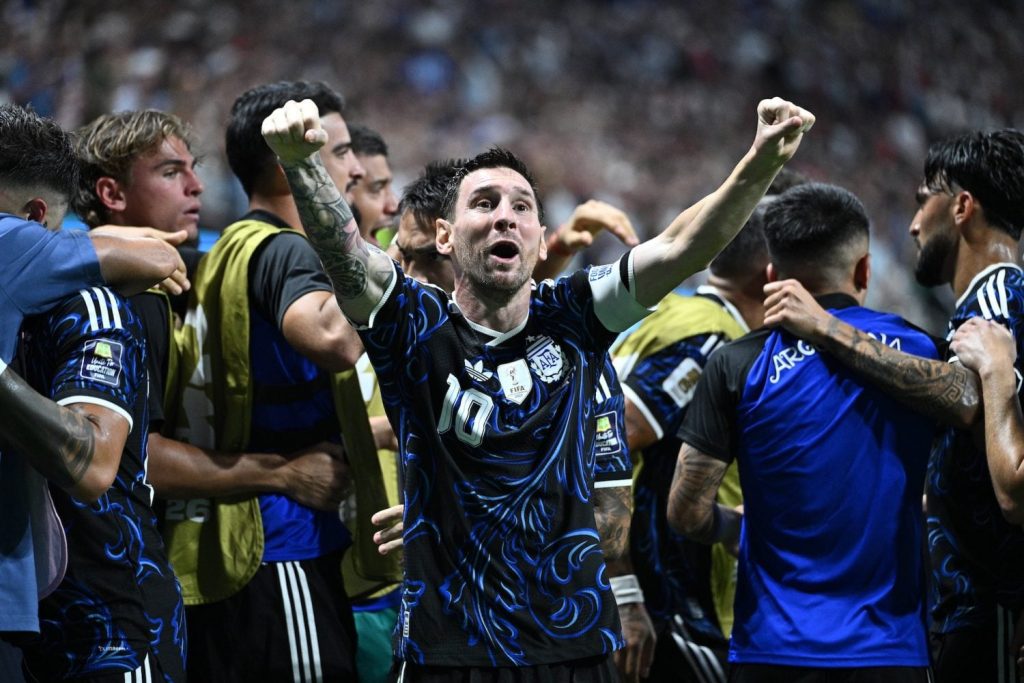
A flash of quality to break the silence in Atlanta. A quick transition, a superb ball from Morgan Rogers to Anthony Gordon — who might have been England’s Mikel Merino, and at times has looked like him — and the Three Lions were ahead from nowhere. It was the 55th minute. From there, England stopped playing. Tuchel’s side dropped deep in front of Jordan Pickford — outstanding with two saves of the highest level — and slowly abandoned everything that had brought them there. They stopped looking for transitions, stopped attacking the spaces, stopped trying to turn the game back into a contest. Argentina understood immediately. The Scaloneta had the energy, the aggression, the feeling that the match was still alive. Messi had everything else. By the end, it was Argentina who were through to the final. It felt right. The meeting with England, carrying all the weight of history between the two teams, produced Argentina’s best performance of the tournament: controlled, convincing, with no need for controversy or fortune to explain it. They earned it in the small moments. Fernández’s strike from outside the box. Lautaro Martínez’s header. Both arriving through the same source, the player who has defined this generation. Lionel Messi. Until Gordon’s goal, there had been little to separate the sides. It was a physical game, broken up by fouls, short on chances. The rivalry had produced exactly the kind of tension everyone expected. England had been slightly better before the break. Argentina began the second half with more urgency. Then came the goal, sudden and unexpected, and for a while it looked as though England had found the opening in a match that had offered them almost nothing.
They had every reason to believe it. With the Albiceleste supporters inside Atlanta’s stadium quiet, the final was suddenly close. England only needed to keep doing what they had done, to continue playing their football and use the spaces Argentina would eventually leave behind. Instead, they retreated. Messi and his teammates responded with the urgency of a team that had been waiting for one sign. Argentina pushed forward, but the collapse was also shaped by Tuchel’s choices. The German coach tried to do what Egypt had attempted before him: hold out, absorb the pressure, make the lead survive. It did not. Gordon, the goalscorer, was taken off after the drinks break and replaced by Konsa. England lost one of their few ways out. Kane and the players around him moved closer to their own goal. Then came Burn and O’Reilly for James and Rice, changes that left England with almost no attacking presence, regardless of the physical problems behind them. By the 82nd minute, they had four centre-backs on the pitch. Three minutes later, Fernández equalised. The penalty area was crowded with white shirts, but the Chelsea midfielder still found the space to finish from outside the box. A player who should have been surrounded, left with the most important moment of the night.
“Tuchel’s changes proved costly,” wrote the BBC. After taking the lead, England became trapped by caution. From a position of control, they handed the initiative back to Argentina and paid for it. Gordon’s goal had brought the dream close, but the response was to defend, to retreat, to invite pressure. Eventually, they could not withstand it. The conclusion was difficult to avoid: England had lost control of the game before they lost the scoreline. That was the strange part. Tuchel had appeared to prepare every detail of this World Cup, from training sessions adapted to the extreme conditions to the identity of a team built around the imagination of Kane and Bellingham. Against Argentina, neither found the space or influence England needed from them. After the extra-time win over Norway, Tuchel admitted his team had been fortunate. This time he asked for one more favour from luck, hoping Messi’s touches would not become decisive, hoping Argentina’s pressure would pass, hoping the final whistle would arrive first. It did not. Twice the ball ended up in England’s net. And England were out. With all the regrets that follow a defeat like this, one question remains: what would have happened if Jude and the others had simply played the game?