
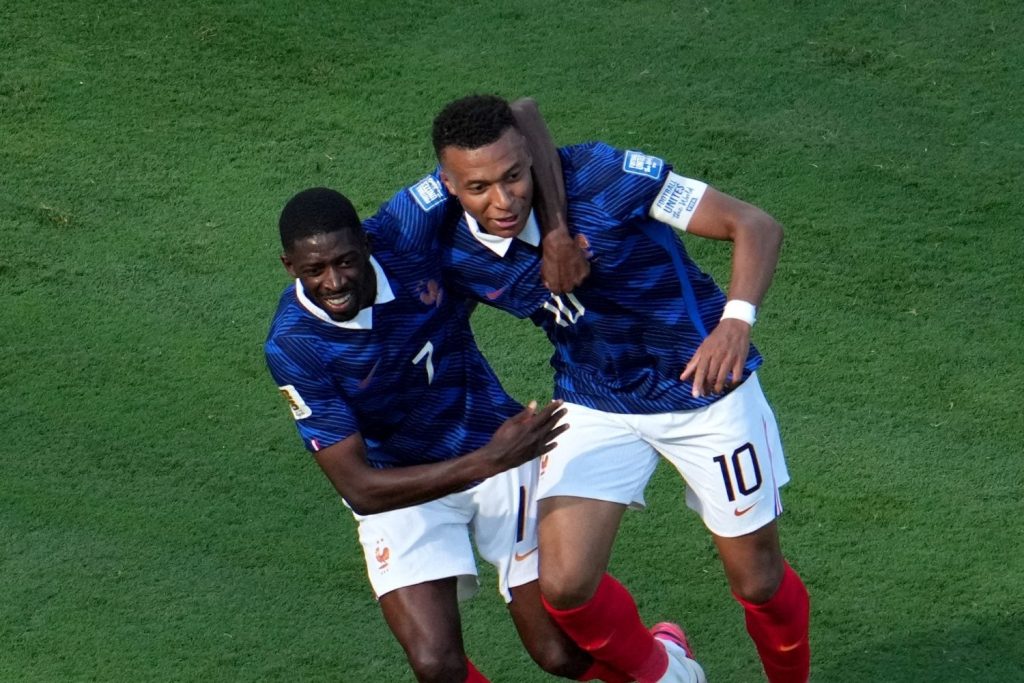
On the eve of Spain-France, the 2026 World Cup semi-final, former Spanish prime minister Mariano Rajoy, a leading figure of the centre-right Partido Popular, claimed that Deschamps’ national team «does not have any French players». The remark immediately sparked controversy, drawing reactions from his political opponents — beginning with Pedro Sánchez, Spain’s current prime minister — as well as from France, both in football and at an institutional level. Beyond the inevitable replies, some of them particularly sharp, and the fact that Spain’s own national team also includes several players with dual nationality, there is another, more substantial issue: Rajoy’s statement was wrong. A glance at Wikipedia or any football almanac is enough to show that almost every player called up by Deschamps was born and raised in France. Their French nationality is not a matter of interpretation, but of fact. A brief legal note, because it matters here: France follows a system of limited jus soli, sometimes referred to as “double jus soli”. A child born in France automatically acquires citizenship if one of their parents was also born in the country. If both parents are foreign nationals, a child becomes a French citizen at the age of 18, provided they live in France and have been habitually resident there for at least five years since turning 11. From the age of 16, citizenship can also be requested earlier, with parental consent.
Back to Deschamps’ squad. Of the 26 players selected for the 2026 World Cup, only three were born outside France: Marcus Thuram, born in Parma while his father Lilian was playing for the local club; Michael Olise, born in London to a French-Algerian mother and an Anglo-Nigerian father; and Brice Samba, born in Congo before moving to France as a child. The other 23 were all born within French borders. Mike Maignan included: he was born in Cayenne, the capital of French Guiana, an overseas department between Brazil and Suriname and part of France itself. The confusion lies in the difference between heritage and nationality. Applied consistently, the same argument could be made about Spain. De la Fuente’s squad includes a player born, ironically, on French territory: Aymeric Laporte. It also includes players with mixed backgrounds. Lamine Yamal and Nico Williams, for example, are both sons of parents from Africa. In recent years, Robin Le Normand, born in France, Thiago Alcántara, born in Italy to a Brazilian father, and several others have worn the Roja shirt despite having roots beyond Spain. Evidently, that was something Rajoy had overlooked.