
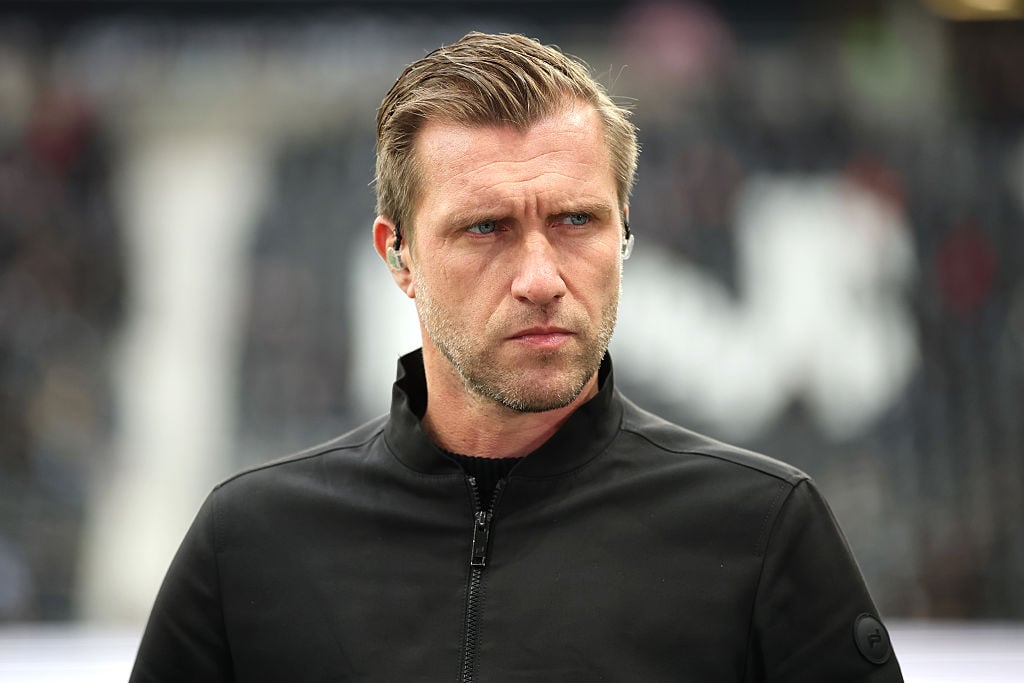
Ask anyone in Frankfurt. If one man has come to embody Eintracht’s rise into the upper reaches of European football, it is Markus Krösche. A sporting director with an extraordinary feel for the transfer market, he has made a habit of finding value where others have yet to look. Marmoush, Kolo Muani, Ekitiké: €265 million in transfer fees from three players alone. The initial outlay was often a fraction of the eventual return. Krösche’s instinct was to identify talent early, bring it to Frankfurt, give it room to develop and sell at precisely the right moment. It became the club’s calling card during his time in charge of recruitment. It is also what made him such an attractive proposition for Milan. They want him to bring some direction to a club that has spent too long looking for it.
There is plenty to put right at Milan. The squad is a curious mixture of excellent acquisitions and decisions that have aged rather less well. Krösche arrives with a reputation for knowing when a team needs rebuilding, and having the conviction to get on with it. His own route into football was hardly conventional. He started out in the car leasing business, acquiring a grounding in business economics that has served him well ever since. His playing career took him to Paderborn, where he operated in midfield until 2014, before a spell as assistant coach at Bayer Leverkusen. It was in the sporting director’s office, however, that he found his natural habitat.
‘It’s mainly about roles,’ Krösche told Sky Sports in an interview ahead of the season that would eventually see him named Sporting Director of the Year in Frankfurt (2025). ‘We’re a club that sits between the smaller sides and what I call destination clubs. We shouldn’t be ashamed of selling our talent to PSG, Barcelona, Real Madrid or Manchester City. Our job is to make those deals possible, studying the players we bring in – and their potential resale value – down to the smallest detail.’
The transformation at Eintracht was swift. Within months of taking charge, Krösche had helped put together a side that would go on to win the Europa League. There was no lengthy period of adjustment, no great appetite for standing still. ‘The most important thing was to reduce the size of the squad and bring its average age down from 29 to 23. And to do it quickly, without being afraid to take risks. When things go well, there always comes a point when it becomes difficult to maintain that level.’ That willingness to make difficult decisions is particularly relevant at Milan. The money has been there; a settled sporting vision has not always followed. Recruitment has delivered some excellent business in recent times – Modrić, Rabiot, Moreira, Gila – but there have been misfires, too. More troubling have been the hurried departures of young prospects who are now making a name for themselves elsewhere. Lontani at Parma is one example.
Krösche thinks in transfer windows, not individual transfers. The distinction is important. Every arrival has to fit into a wider plan; every departure has to make sense on the pitch as well as in the accounts. At Frankfurt, he repeatedly managed to improve the team while leaving the club in a stronger financial position. Milan is a different sort of challenge. The expectations are greater, the scrutiny relentless, and there is little patience for another false start. Yet the appointment has the potential to give the Rossoneri something they have lacked: a clear sporting identity, built around a strategy rather than the demands of the next window. Milan still has the stature, the history and the resources to compete at the highest level. The question is whether it can finally put them to work in the same direction. January is approaching. Krösche’s next piece of work is already taking shape.