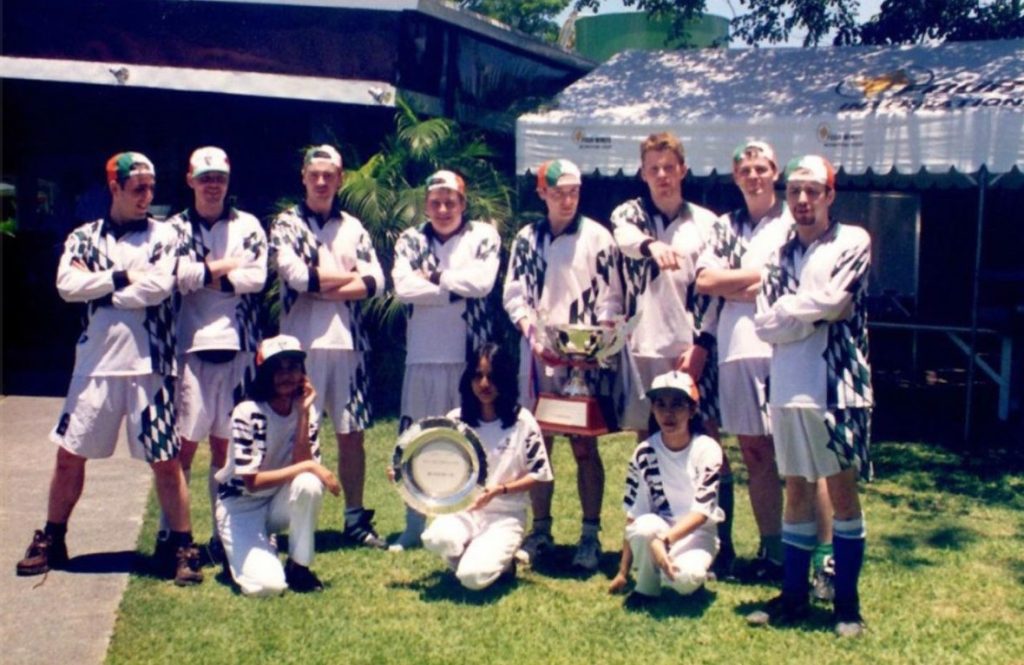
In 1996, eight teams gathered in Manila for the first Asian Gaelic Games. Behind the tournament was a group of young Irish expatriates who had moved to Asia for work but had no intention of leaving the sports they had grown up playing behind. Having watched rugby and football tournaments take root across the region, they began to wonder why Gaelic games couldn’t do the same.
The idea had first taken shape in Taiwan the previous year, among graduates who had arrived in Asia on work placements organised by FÁS, Ireland’s former national training and employment authority. It was a different time. No social media, no established network and very little infrastructure. Organisers relied on fax machines, word of mouth and the local Irish pub, where much of the planning – and no doubt quite a bit of the persuading – took place. Bringing clubs together from across the region required sponsors, countless phone calls and a fair amount of persuasion. It was far from straightforward, but they got there. “It was a modest beginning,” recalls Ken Cronin, vice-chairperson of the Asian County Board, “but it proved that Gaelic games could thrive in Asia.”
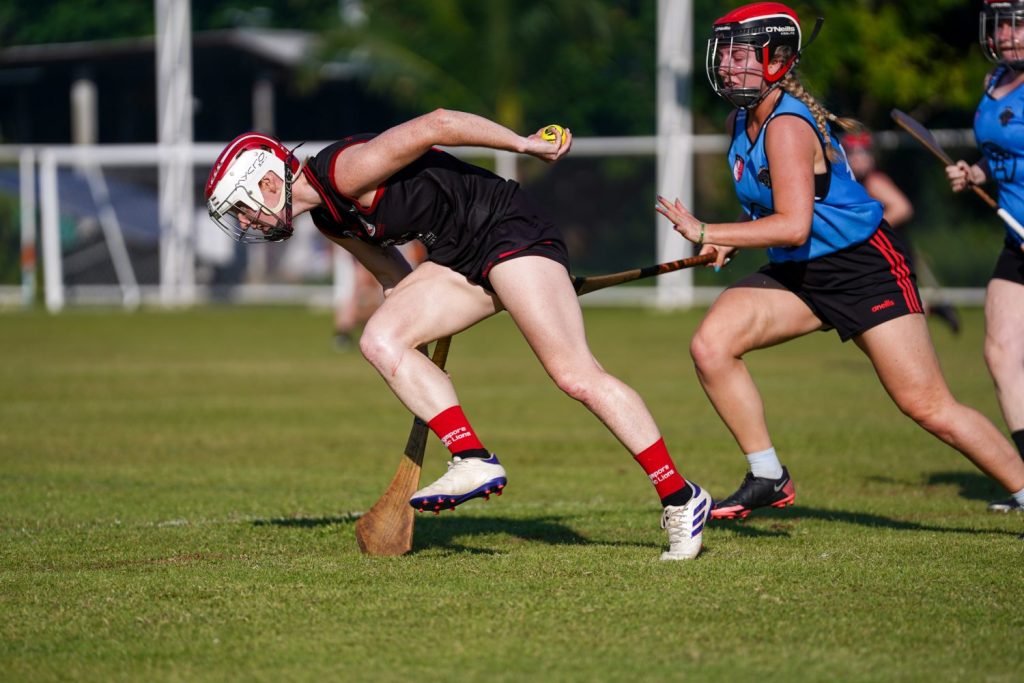
Today, close to 70 teams representing more than 40 nationalities are expected in Hong Kong for the anniversary edition on 21 and 22 November. Matches will take place at the HKFA Jockey Club Football Training Centre in Tseung Kwan O. The Asian County Board now oversees more than 25 clubs in 14 countries, from India to Japan, with over 1,200 registered players. Not bad for a tournament that began with eight teams in Manila. Three sports will feature: Gaelic football, hurling and camogie. Gaelic football is, as Cronin puts it, “a fast-flowing, high-scoring game”, with players using both hands and feet to move the ball and score over the crossbar or into the net. Hurling and camogie, the women’s equivalent, are played with a wooden stick called a hurley and a small leather ball known as a sliotar. Both have been played in Ireland for centuries and are recognised by UNESCO as part of the country’s Intangible Cultural Heritage.
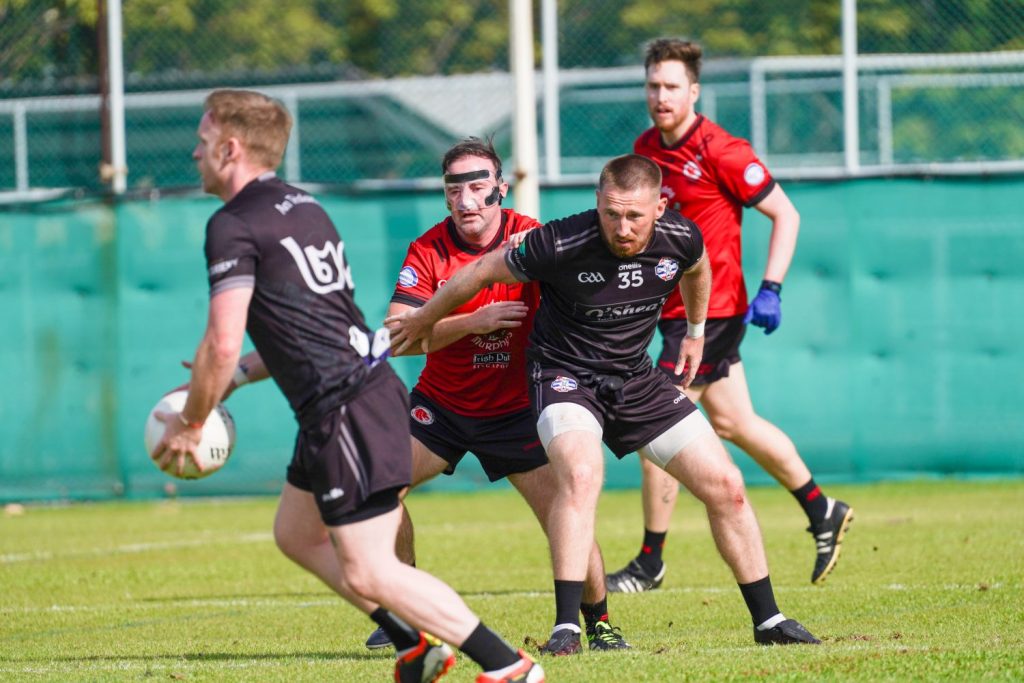
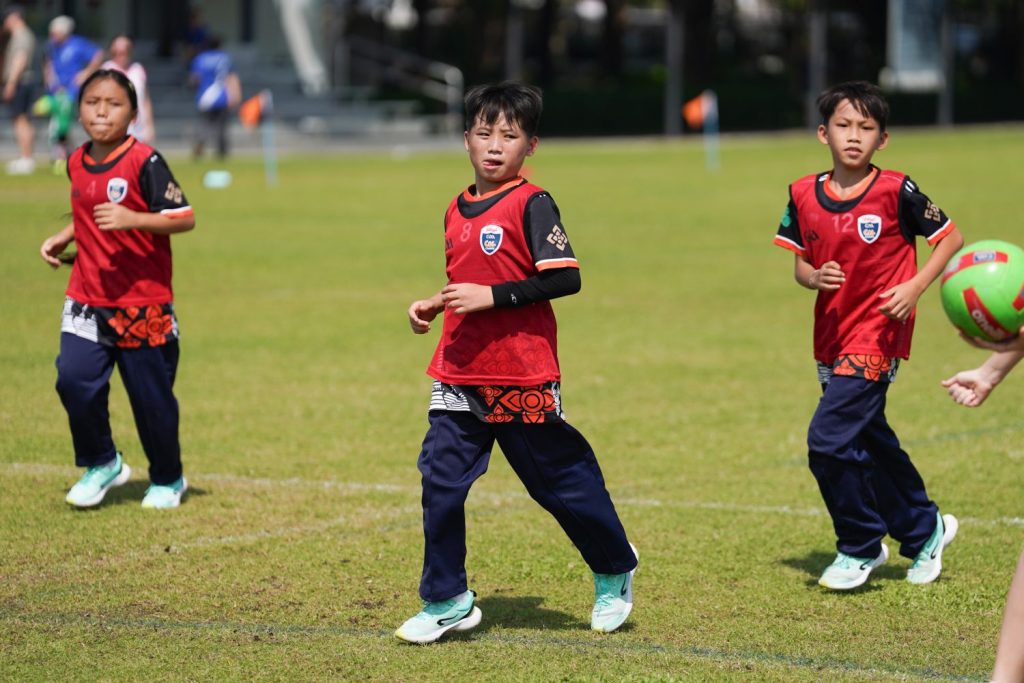
Never watched a match? Cronin’s advice is simple: come along. “Picture a high-energy mix of football, rugby and basketball played at incredible speed. You do not need to understand every rule to appreciate the joy, speed and skill on display. After ten minutes, you will understand why people become so easily hooked.” And plenty of people do, even without an Irish connection. In Hanoi, Dan Burke, the Asian County Board’s Children’s Officer, started a youth programme with the Viet Celts, initially involving just a handful of children. It has since grown beyond the club, earning him this year’s GAA International Gradaim an Uachtaráin, or President’s Award. Across Vietnam, Thailand, China and Hong Kong, many of the children playing are local. They have taken to the game, made friends and found a place in a team.
One player from Thailand has even taken the game all the way to Paraguay. After moving to South America with his partner, he went on to establish the country’s first GAA club. “It is proof that you do not have to be Irish to grow the game you love,” says Cronin. That is perhaps what makes the Asian GAA community so interesting. For someone arriving in a new country, a local club can be a lifeline: somewhere to meet people, make friends and feel a little less far from home. “The GAA has always been a home away from home,” says Cronin. And it isn’t just about the social side. Most clubs are run entirely by volunteers, while players generally pay their own flights, accommodation and registration fees to attend the Games. Getting everyone there takes some doing. Clubs organise fundraisers, find sponsors and often help teammates who might otherwise struggle to afford the trip.
The competition, of course, is only part of the story. Once the final whistle goes, the rivalries tend to disappear. On Sunday, everyone will get together for the banquet at the Hong Kong Football Club in Happy Valley. This year’s theme is the 1990s, the decade in which the Games began, and the clubs have been encouraged to dress accordingly. Cronin remembers the 2024 awards banquet particularly well: one player proposed to his partner on stage, in front of the entire Asian GAA community. Not quite your usual end-of-season awards ceremony. There will be another reason to celebrate this year. Around 20 to 30 members of the original group who played in Manila in 1996 are expected to make the trip to Hong Kong from Ireland and elsewhere, taking part in a Masters exhibition series. For many, it will be their first chance in years to meet again on the pitch. Cronin expects it to be an emotional occasion for many of them.
Thirty years on, Cronin believes the founders would be proudest not simply of how far the Games have come, but of what they have managed to preserve. People still give up their time, clubs still look after one another, and newcomers are welcomed with the same generosity that defined those first Games. Perhaps that is the tournament’s greatest legacy: not the scale it has reached, but the sense of belonging it has nurtured across three generations.