
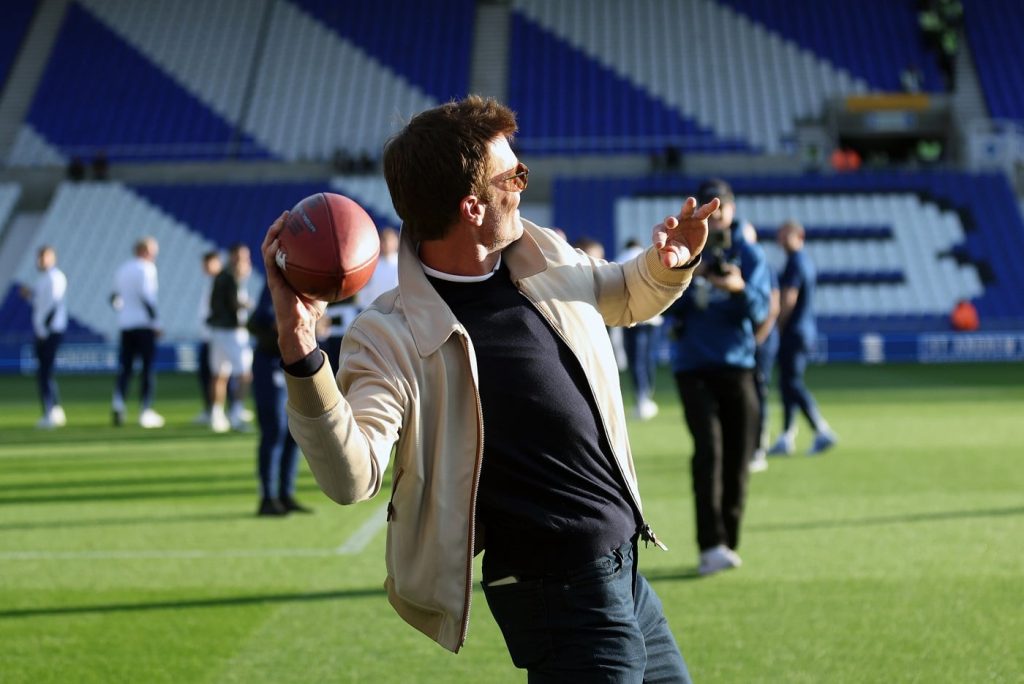
Investing in a fallen giant of English football, then walking away just as it begins to look like a serious contender for promotion to the Premier League. Tom Brady’s departure from Birmingham City is an unusual turn, particularly given the timing. The club is back among the leading sides in the Championship, its ambitions of a return to the top flight looking more tangible by the week. And yet the seven-time Super Bowl winner has officially brought his involvement as a minority shareholder to an end. According to The Athletic, there has been no falling-out, no major disagreement over the running of the club. More a question of priorities, and of a relationship that has run its course. Brady has plenty else to occupy him, most of it on the other side of the Atlantic.
He joined Birmingham in 2023, alongside Tom Wagner, owner and chairman of the Knighthead group. The idea was to help bring a sleeping giant back to life. The club needed investment, attention and, perhaps most of all, a reason to believe in itself again. It was not an especially smooth ride. Relegation to League One came first, followed by an immediate return to the Championship. Now Birmingham are top of the table. The Premier League, which once seemed a rather distant prospect, is back in view. Brady’s own world has become considerably busier. At 49, he has a ten-year deal with FOX as a television analyst, reportedly worth $375 million, which limits his freedom to travel during the busiest part of the English season. There is also his five per cent stake in the Las Vegas Raiders, his involvement with the WNBA’s Las Vegas Aces and a growing collection of commercial interests built around one of sport’s most recognisable personal brands. Birmingham was always going to have to compete for his attention.
And attention was becoming harder to come by. Brady’s last appearance at a Birmingham match was in April 2025, when City lost to Peterborough United in the Vertu Trophy final at Wembley. He still helped out where he could, including making calls to assist with the recruitment of new players. But he was never running the football operation, nor was he particularly involved in the decisions taken by head coach Chris Davies. His 3.3 per cent shareholding did not give him a vote on the board, either.
In the Instagram post announcing his departure, Brady said he would continue to support the club. There was little else. That does not mean his time in Birmingham counted for nothing. During the League One season, his presence brought the club a level of international attention it would otherwise have found difficult to attract. Amazon’s Built in Birmingham documentary helped keep that attention coming, while opening doors to new commercial partnerships and giving the club’s social media presence a considerable lift. Then there is the Powerhouse Stadium project. A £2.5 billion plan for a new ground and an entire Sports Quarter, it is perhaps the clearest indication of the scale of Knighthead’s ambitions. Birmingham is being asked to think rather bigger than the football club it has been for much of the past decade.
The sense now is of an organisation moving on to something else. The latest appointments behind the scenes are telling. Three former Manchester United executives have arrived: John Murtough as sporting director, Andrew Rudd as finance director and Liam MacManus as head of marketing. MacManus will be tasked with building the Keep Right On brand, a reminder that the club’s identity is not something to be manufactured from scratch. The training ground has been upgraded, too. One part of the Brady story remains there in the shape of Alex Guerrero, his long-time personal trainer, who continues to work with the club on physical preparation, recovery, injury prevention and nutrition. On the pitch, the work has been rather less about famous names. Davies has been putting together a team that can play football but also stand up to the Championship’s physical demands. It has taken time. There is now a clearer idea of what Birmingham are trying to be, and the club seems willing to back him.
They have the financial room to do business in January, having already tried to keep Ibrahim Osman after his positive loan spell over the summer. Davies wants goals, and plenty of them. His target is at least 70 in the league. Birmingham have brought in Scott Fry to work specifically on set pieces, an area receiving more attention than before. Alex Cochrane’s deliveries are already making a difference. It has not all been quite so comfortable. After a 3-0 defeat to Watford at the start of 2026, supporters turned on Davies. The football had become too predictable, too cautious. There was a sense that the team had lost its way. Wagner’s illness in February only added to the unease.
The response over the summer was to resist a major clear-out. Davies kept his job, and the transfer business was quieter than in the previous two seasons, when around 80 players had come and gone. Fifteen games into the campaign, the club finally looks settled. Not perfect, but settled. There is a difference. The academy is beginning to attract attention again, too. Birmingham produced Jude and Jobe Bellingham, and the development of young players is once more becoming part of the conversation around the club. Scouts from some of England’s biggest sides are taking notice. Brady’s departure might have mattered rather more had it come at another point in the rebuild. For now, Birmingham seem comfortable enough in their own skin to carry on without him. There is still a promotion race to negotiate, and nothing has been won. But the club has a team, a manager and a structure that look capable of taking it somewhere. Brady helped put Birmingham back on the map. He does not necessarily need to be there for what happens next.