
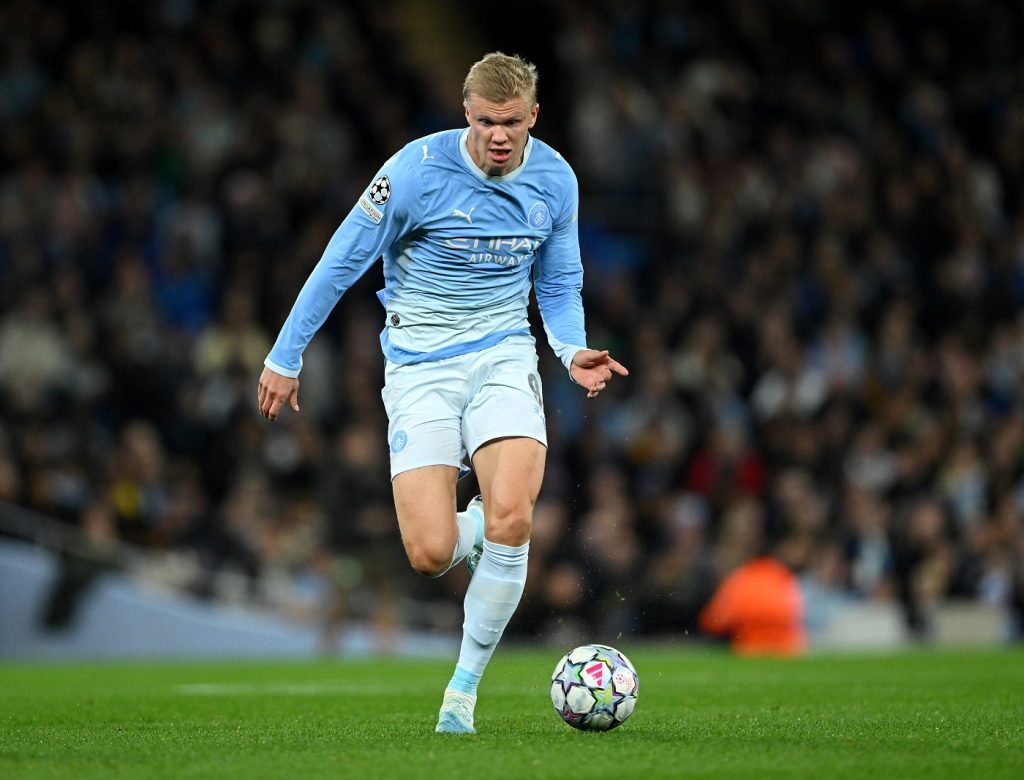
The two goals against PSG were not enough to spare Manchester City. Not for him, not for the club. But Erling Haaland found another threshold anyway: 61 goals in 60 Champions League appearances. Better than one a game. The old cliché about starting a match one-nil up with Haaland on the pitch turns out to be statistically precise. Instinct, composure, timing, understanding of the game—the list is familiar. Less noticed, perhaps, is his relationship with space. Specifically, his refusal to be caught offside.
An ESPN study into Premier League offside figures puts numbers to something rarely visible in real time. He simply isn’t caught. To measure this, they constructed an xOffside metric, factoring in pass trajectory, angle, defensive line depth and posture, and receiver location. Against that model, Haaland sits among the most disciplined players in the league at holding his line. Morgan Rogers at Aston Villa posts a similar rating, though as a non-striker, his opportunities to fall offside are naturally fewer.
The model has its blind spots. It cannot measure the space created when a backline drops early out of sheer panic. Nor can it capture the subtle mechanics of breaking a trap: blind-side slips, double movements, curved runs, or that habit elite center-forwards have of lingering behind the center-backs before surging forward as a winger breaks wide. Yet it pinpoints a distinct skill. Haaland once mentioned he was “in love with VAR” simply because it protects him from bad flags. In another interview, he put it plainly: being caught offside is the worst thing that can happen, because the chance is killed instantly. Stay onside, even a yard further back, and you still have a chance. A simple point. Considerably sharper when delivered by someone scoring more than a goal every ninety minutes.