
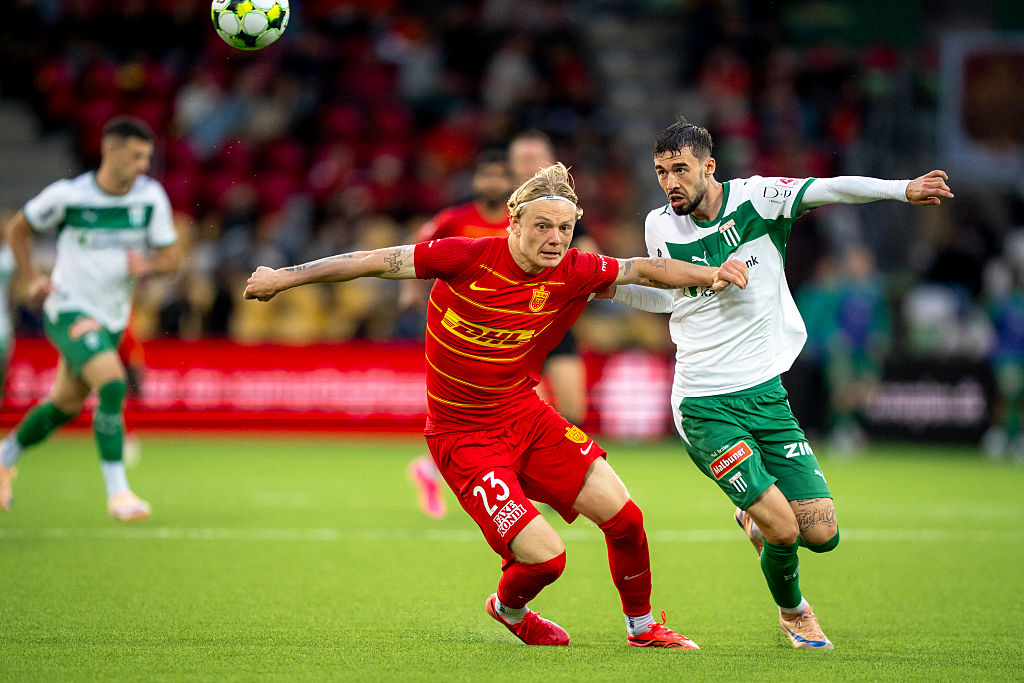
A club setting the standard. The premise is simple enough: maximum yield on minimal weight. FC Nordsjælland have quietly become a fixture of the European circuit—competing in the Conference League this term, with recent Champions League pedigree to boot—firmly established among international football’s most compelling outsiders. The red-and-whites simply cannot match the financial gravity of Copenhagen or Brøndby, yet there they sit alongside them, having proved more than capable of snatching the domestic title outright. It starts with clear-eyed self-awareness and an acute understanding of their place in the ecosystem.
“If we want to achieve something real, we have to do it with young players whose trajectory will quickly take them beyond Denmark,” sporting director Alexander Riget told the BBC. The logic requires breathing room: to stay competitive, Nordsjælland must clear immediate space for youth. Buying established quality on the open market is well out of reach, and a provincial Danish outfit is rarely a first-choice destination for a player in his peak years—another necessary dose of reality. That leaves the Danes with one real opening: Under-23s waiting to break through, expected to carry the team on the pitch in the process. The strategy holds up, and then some.
Beyond the football, the bottom line tells the real story: between 2015 and 2024, player sales brought in nearly €200 million. No single outlier distorts the figure, even if midfielder Caleb Yrenkyi’s €27 million summer move to Coventry set a new club record—a landmark fee in Farum, if modest by Premier League standards. Andreas Schjelderup and Kamaldeen Sulemana passed through the exact same pipeline. The club systematically move on the finest talent from their setup, but only after putting them through an all-round development programme.
Last season, teenagers accounted for 39 per cent of all competitive minutes—among the highest ratios anywhere on the continent. When put to the ultimate test in Conference League qualifying, six starting spots went to players under twenty-one. There is no hesitation in the selection. Confidence stems from total integration, starting at the training ground, where schooling, shared living, and football share a single campus layout. Nordsjælland sink €5.5 million annually into youth development against a first-team budget of roughly €10 million—a 1:2 ratio virtually unheard of at this level. Then there is the reach beyond Denmark. For over a decade, investment has flowed into satellite academies stretching from Ghana to Egypt. From there, elite prospects choose Denmark as their stepping stone into European football. Roughly half of that €200 million yield traces back to young African talent brought through the system, given a launchpad, and moved on—a mature strategy that keeps bearing fruit, and making room for the next in line.