
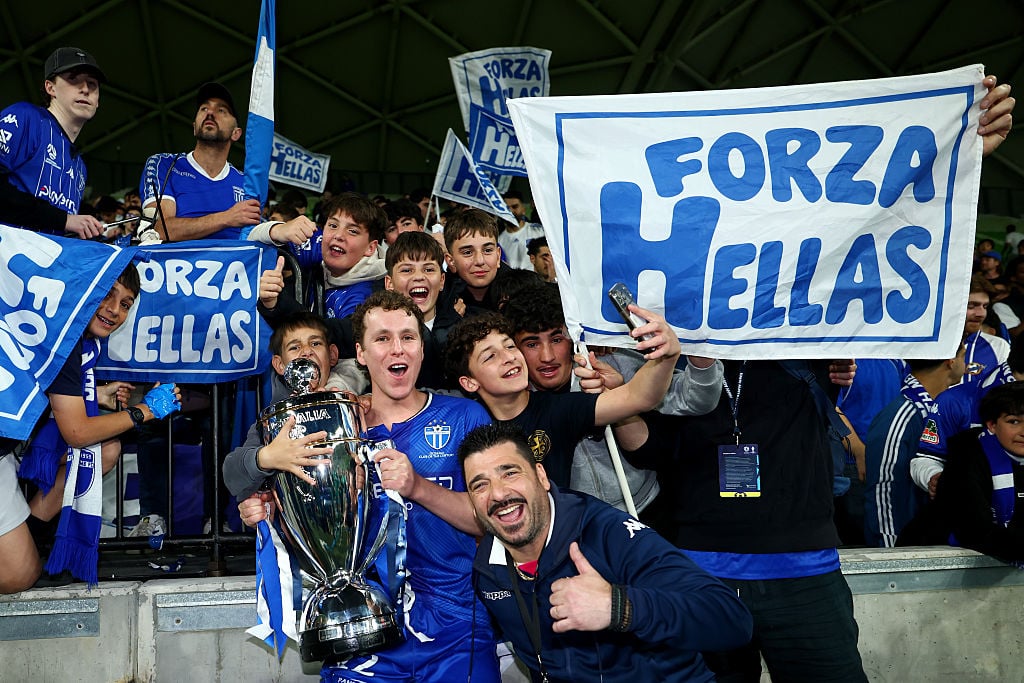
It is the past taking its revenge on the future, or perhaps just a sign that Australian football might finally be steering in a new direction. The Melbourne derby between South Melbourne and Melbourne Victory, with the national cup on the line, drew the most celebrated final crowd in the competition’s history: nearly 30,000 through the turnstiles—ordinary enough by European standards, but a record for Oceania. Never mind that one of the two sides on the pitch wasn’t even fully professional. South Melbourne is a club steeped in tradition, but ever since the A-League was founded in 2004, flattening the local hierarchy, it was shut out by new clubs created specifically for the occasion as part of ambitious commercial ventures that didn’t always pan out. Sydney FC was among those new-generation sides, making Alessandro Del Piero the poster boy of the entire movement, alongside Melbourne Victory itself. South was left off the guest list entirely, banished to semi-amateur satellite leagues shortly after.
The backstory matters, if only to grasp the sheer scale of the occasion. Pulling off a Steven Bradbury run—since we are talking about Australian miracles—South Melbourne found themselves in the Australia Cup final against all odds and statistical logic. No team from outside the top flight had ever managed to push this far in two decades of the competition, and waiting for them in the final was a modern giant in their crosstown rivals Victory. Both clubs have won four national titles, but in parallel universes and distinct eras, back when the league itself carried a different name and structure as the National Soccer League until 2004. Where Victory is a whiteboard project born in a boardroom, South Melbourne is living history—also known as Hellas, founded by the city’s vast Greek diaspora and still carrying that heritage today. Beyond old rivalries with teams like Marconi Stallions, another historic force swept away by the A-League, the club boasts surreal footnotes, none greater than Ferenc Puskás managing the blue shirts around 1990 with an honest defender named Ange Postecoglou in his squad, long before he would coach Australia or lead Tottenham in Europe.
Faded but precious snapshots, though the album needs updating with a vivid new photograph destined to go viral. Because it actually happened: South Melbourne ended up beating Victory in the most absurd way possible. 0–0 at ninety minutes, down a goal early in extra time, and then a 117th-minute equalizer from Maximilian Mikkola. Melbourne Victory had naturally started as overwhelming favorites, only to stumble into that classic mix of arrogance and misfortune—hitting the post twice and squandering several clear chances in front of goal. It was the only route to penalties given the technical gulf on the pitch, with South priced at 5–1 before kickoff. Then, from twelve yards, the fairytale completed itself as the tournament’s Cinderella side didn’t miss a beat to win 4–3. For South Melbourne, for Hellas, for the old game, it is an epochal result. But it is equally significant for the new establishment, forced to acknowledge that Australian interest extends far beyond the A-League and that the leap in quality promised by the modern franchise system wasn’t so vast after all. A verdict from both the pitch and the terraces that could well provide the catalyst to dismantle the A-League’s closed shop and open the door to a European-style system of promotion and relegation—even if, regardless of what comes next, this cup final remains one for the books.