
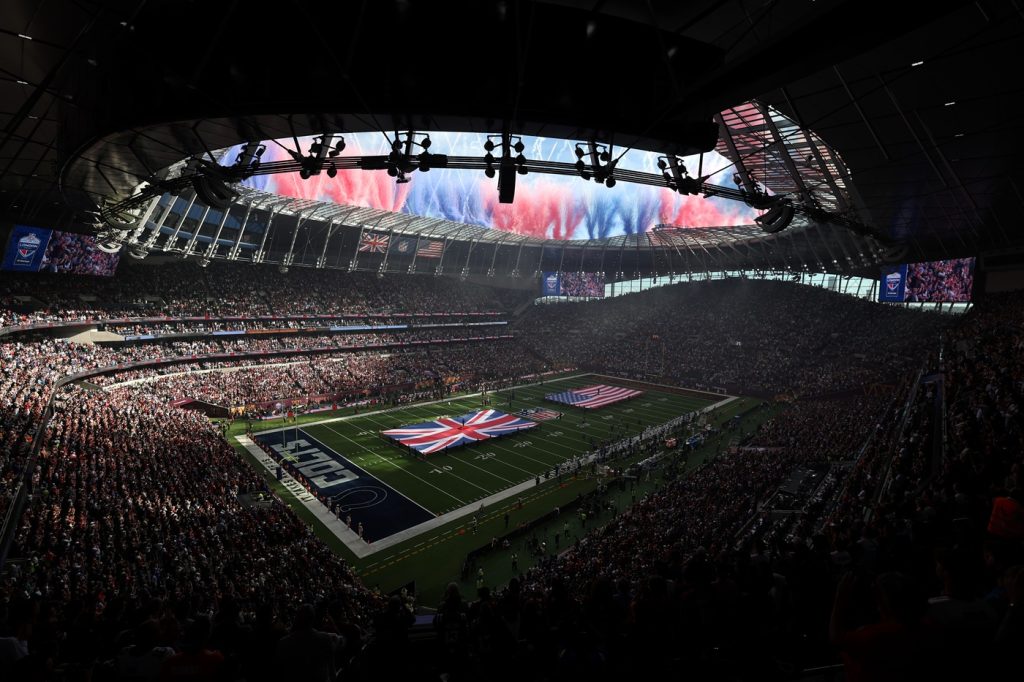
London has long been the NFL’s European home. Between Wembley and the new Tottenham Stadium, American football has made repeated trips to England and settled in well enough that every franchise, particularly those on the East Coast, is now willing to take the six-hour flight and forgo some of the revenue a home game would normally bring. That is the case with the Washington Commanders, who were technically the home team against the Indianapolis Colts yesterday, although the game was played at Tottenham Stadium rather than in Maryland. The change is not just logistical, but financial too. As Sportico has pointed out, NFL teams keep most of the ticket revenue from their regular-season home games. International games work differently. In the past, the league would pay the home team, at least on paper, a fee to offset the loss of gate receipts. That system changed in 2022: today, the NFL essentially covers a substantial share of the travel and accommodation costs for players and equipment. The question is unavoidable: how much does a team actually get from being the home side in London?
“It’s not a good deal,” Josh Harris, the Commanders’ owner, joked when he met fans at a London pub on Saturday, where the franchise had organised an event. “It’s negative in a lot of ways. But honestly, I’m not that focused on the short-term economics. I’m interested in being part of the NFL community and helping grow football internationally.” Mark Clouse, the Commanders’ president, took much the same view when he spoke at the same venue in front of around 2,000 fans. “I would describe it as an investment in the future of the league and the team,” he said. “That’s how we have to look at this experience.”
The NFL’s international ambitions have grown enormously over the past decade. In 2015, there were only three games played outside the United States, all of them in London. This year there are nine, an all-time record, spread across seven countries and four continentsNFL owners are willing to give up part of their revenue to play in London, helping the league in the process”. The league wants to establish itself in new markets and bring new fans to the sport, while international games also give it an extra television window in the United States. Commanders-Colts, for example, kicked off at 9.30am on the East Coast: another slot in the weekly TV schedule, and one that helps increase the value of the league’s broadcast rights.
For individual franchises, though, the picture is less straightforward. The money may not add up, but playing overseas brings other opportunities. American fans can turn the game into a different kind of away trip, while the team gets the chance to build a following on the other side of the Atlantic. There is a cost to that as well. During the week, both teams involved in the London game set up events for their supporters, with current players and former stars making appearances and taking part in pre-game activities. But international exposure can bring in some extra revenue too. By Saturday, for example, the Commanders had already sold much of the merchandise they had brought with them to Britain.
According to Sportico, the Commanders are worth $9.64 billion, making them the 11th-most valuable franchise in the NFL. Last season they generated around $719 million in revenue. In a normal regular-season home game, NFL teams generally keep 66 per cent of ticket revenue, while the remaining 34 per cent goes to the league and into its shared revenue pool. Other sources of income, such as concessions, merchandise sold at the stadium, parking and premium seating, remain overwhelmingly with the home team. It is from these areas, above all, that much of the lost revenue comes when a game is moved overseas.
Clouse did not want to go into detail about the financial support the NFL provides teams for international games. When the 17-game season was introduced, the league established that every team would have to play at least one international game every eight years. Since then, the league has moved towards a model in which it essentially covers the costs. “Let’s just say we all agree on one thing: we share and invest together to make this experience fantastic,” Clouse said. “We’re happy to do it and we’re excited to be here. And every time we play overseas, we see more and more fans excited about the idea of travelling to follow us.”
For now, most NFL teams play an international game less than once a season. The only exception is the Jacksonville Jaguars, who have a special arrangement with the league and play two “home” games in London every year. Harris, though, does not seem to regard an international trip as much of a sacrifice. If anything, being chosen to play overseas suggests that the league sees your team as one people want to watch. “You actually don’t have a choice,” he said. “The NFL just tells you: ‘You’re a good team, everybody wants to see you, you’re a fun team, go to London.’ It’s not up to you. What you can do is try to make the experience as good as possible for your fans, your community and your players.” Judging by the results, at least on that front, it seems to be working.