
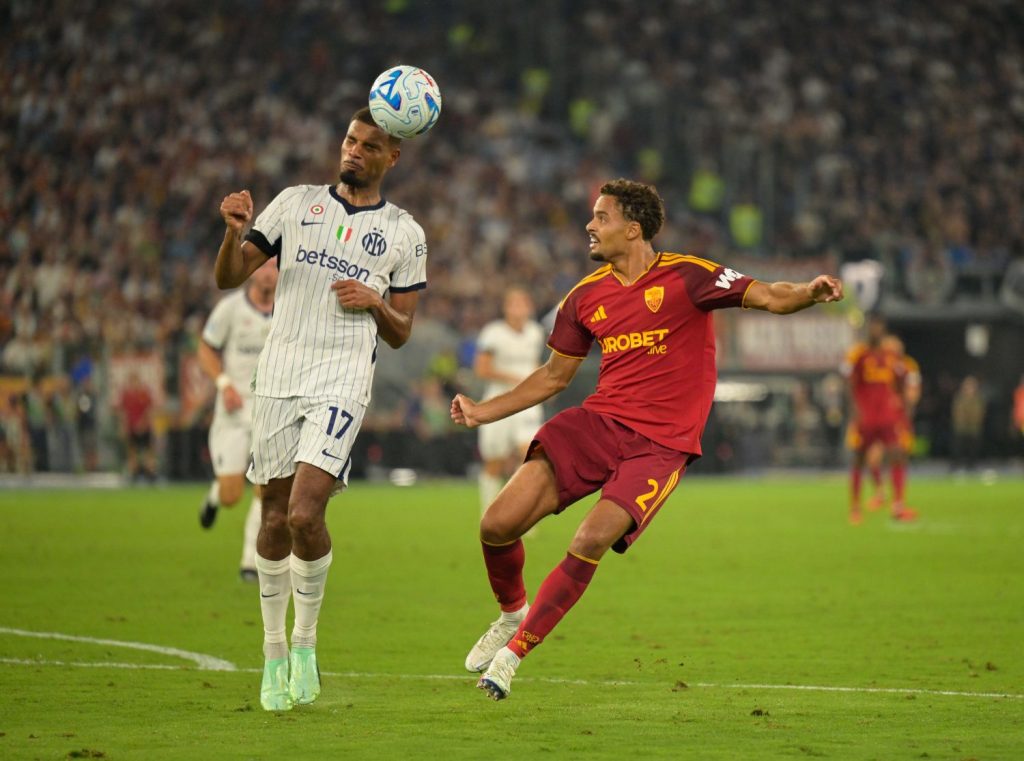
Roma-Inter left Inter with a few reasons to feel satisfied. At half-time, they were two goals down and, quite simply, looked to have a mountain to climb. Yet for the third time in Serie A this season, Christian Chivu’s side managed to find their way back into a game that had taken a very clear direction in the opening 45 minutes, showing after the break the personality and quality required to reopen a contest that had seemed all but decided. There is also a number that captures the scale of Inter’s response rather well. Since Chivu became Inter head coach, this is the sixth time the team have avoided defeat in Serie A after going two goals down. In the previous ten seasons, it had happened only six times. It is more than a statistic. It is a snapshot of a side that, even when it finds itself in a difficult game, has learned not to regard it as over. And yet almost the whole of the first half has to be put aside. Lautaro Martínez said as much, without much hesitation, after the game: “The first half needs to be erased, because the attitude wasn’t right,” he told DAZN. It was not so much a question of chances conceded or individual incidents, but of the space Inter allowed. They were second best technically, physically and tactically. Their distances were wrong, they were often late to second balls, communication between the lines was lacking, and a series of individual errors and missed assignments left them exposed.
Koné’s two goals were almost a perfect summary of the problems troubling Inter. Roma found the time and space to hurt them because Inter failed to read properly what was happening in front of their own penalty area. And when a team, however strong, gives an opponent that much freedom in the final five metres, the problem is no longer simply that of an individual defender; it concerns the whole system. That does not mean Inter were completely out of the game. The chances for Lautaro and Bisseck, along with Bastoni’s effort against the post, show that this was a side who could have pulled one back before the interval and, despite their difficulties, had opportunities not to go into the break with such a heavy deficit. The difference, though, was in the overall reading of the game: Roma were more intense, more alert, more precise in their decisions.
Then the game changed. Or rather, Inter changed. Lautaro’s goal to make it 2-1 came too soon for Roma to realise that the match had started again. The Inter captain seems finally to have left behind that old label of a player who struggles to score in big games. It is no longer really a subject, and this season has confirmed it with a different kind of consistency. The Argentine has become the technical and emotional reference point of a team that, when it needs someone to lead it, inevitably looks towards him. It did so again here. A true captain, Lautaro pulled his teammates back into a game that had seemed lost, in a manner befitting Sandro Mazzola. He gave the reaction its rhythm, raised the level of the team and turned the final stages into an open contest, one in which Inter continued to believe they could complete the comeback.
Only the final touch was missing. Thuram’s left-footed effort, which went just wide, could have turned an important comeback into a memorable one. It would have been the perfect ending to a game that instead leaves both teams with something to take from it: Roma have the satisfaction of having produced a first half of the highest level and the regret that they did not turn it into a victory, while Gasperini’s side also showed that they can overwhelm anyone when they manage to sustain those physical and mental levels; Inter leave the Olimpico knowing that they reacted to a start they cannot afford to repeat, and that they did so with emotional and physical force, individual inspiration and considerable intensity.
Perhaps that is the most interesting thing to come out of the Olimpico. Roma-Inter produced numbers and a feel almost reminiscent of the Premier League, above all in the ability of both teams to withstand the physical demands of the game while keeping their technical quality and attacking threat intact until the final whistle. Unlike, for example, the second half of Inter-Napoli, this was not simply a game of bursts, stretched teams and tactical structures falling apart. The level remained high even when those structures inevitably began to lose some of their connections. It was a match played to the last ball, in which technique did not disappear as fatigue set in. And perhaps that is the most encouraging sign for Inter: not playing well for 90 minutes is a problem, but being able to change the face of a game completely without losing composure or quality is something else. The comeback did not arrive, but from an evening that had seemed lost, Inter still managed to leave with a sense of satisfaction: something that goes beyond the point itself, important though it was.