
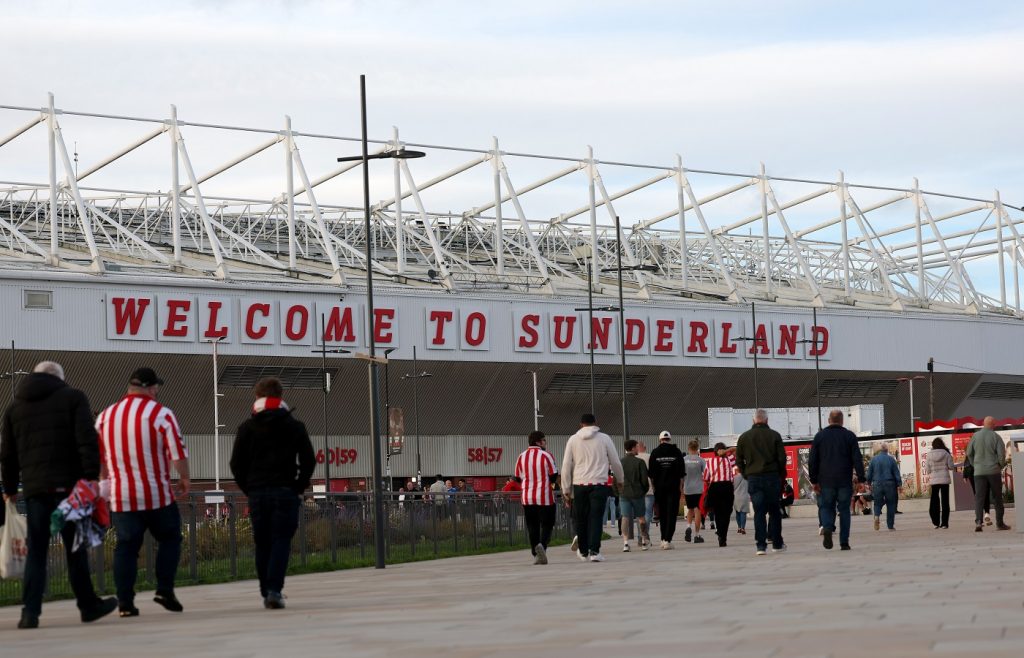
Sunderland is looking to the United States, but with a strategy that differs from those of the Premier League’s other major clubs. No glittering megacities such as New York or Los Angeles, at least for now: the aim is to find American cities where the history of a club born in one of the most industrialised parts of England might find fertile ground. Philadelphia, Pittsburgh and Detroit are the cities Sunderland has identified, all three shaped by factories, steel mills, heavy industry and a strong working-class identity.
As reported by Sports Business Journal, citing the Financial Times, CEO Tom Burwell outlined the strategy after Sunderland’s summer tour of the United States, which took the club to New Jersey, Pennsylvania and Tennessee. The trip was also a way of finding out where the Black Cats’ story might resonate most: “Our North American strategy,” Burwell said, “is to be very targeted, working with partners and distribution platforms, and tell our authentic story to people it can genuinely connect with.” The idea starts with Sunderland itself, a city built around industry, coal and shipbuilding, whose old economic model has given way over recent decades to a major process of urban regeneration.
It is that journey, from heavy industry to economic and social transformation, that the club wants to draw on as it builds a connection with American cities that have lived through something similar. During the tour, Philadelphia was the city that made the strongest impression on Sunderland’s leadership, while Pittsburgh and Detroit also produced a significant response. All three have deep sporting traditions, with teams that are closely bound up with the identities of their communities, which is precisely the kind of setting in which Sunderland believes it can find an audience interested not only in the Premier League but in the history of the club itself.
“I don’t think Los Angeles and New York will be our places,” Burwell admitted. It is a departure from the usual strategy of Europe’s biggest clubs, which in the United States tend to focus on the richest and most internationalised markets. Sunderland wants something more selective, built around its own identity, even as the search for new sources of revenue becomes increasingly important for English clubs. The Premier League’s new financial rules are changing how clubs can spend and have pushed even the more ambitious sides to look harder for commercial opportunities, while the summer produced another record for the English transfer market.
Sunderland is therefore trying to turn its history into an international product, including through ventures with a strong symbolic value. The club reached an agreement with the Elvis Presley Estate to sell its new pink-and-black away shirt at Graceland in Memphis, inspired by Elvis’s famous pink-and-black Cadillac. The link is hardly accidental: Sunderland supporters have long sung Can’t Help Falling in Love during matches, giving the connection a history of its own. Before it wins new supporters, Sunderland seems to have understood what it is actually selling them: not simply a Premier League club, but a story. A story of industry, decline, renewal and belonging that, on the other side of the Atlantic, could speak to some of the cities most deeply marked by the transformation of industrial America.