
For anyone who studies economics, or simply wants to understand it, profitability is one of the most important concepts there is. It is, after all, a way of anticipating the quality of an investment, of identifying, as scientifically as possible, the ones worth making and the ones best left alone. In football, one of the most unpredictable businesses there is, the main assets can gain or lose profitability within a matter of weeks, even days: those assets are, of course, the players, who remain human beings and are therefore affected by the fluctuations in their performances on the pitch. And yet, despite everything, there is one category of player that is considerably less exposed to these variations, one that can retain a high degree of profitability even when things are difficult: young talent.
That is why Lega Serie A is looking with ever greater conviction towards Under-23s, Under-21s and Under-20s. And that is why, in recent years, the playing time given to these groups has grown steadily. The figures tell the story: in the 2025/26 season, 25 players aged under 21 at the start of the campaign accumulated more than 1,500 minutes. That figure is entirely in line with those recorded in the other major European leagues, such as the Premier League and La Liga (24), and in some way reflects an interesting mix of strategic models. Among these Under-21s are Italians developed in club academies and promoted directly into the first team, such as Davide Bartesaghi, Pietro Comuzzo, Lorenzo Bernasconi and Giorgio Scalvini; players sent out on loan to gain experience, such as Marco Palestra and Jacobo Ramón; and youngsters who arrived from abroad at a very young age, including Tiago Gabriel, Nico Paz, Kenan Yildiz, Santi Castro and Brooke Norton-Cuffy.
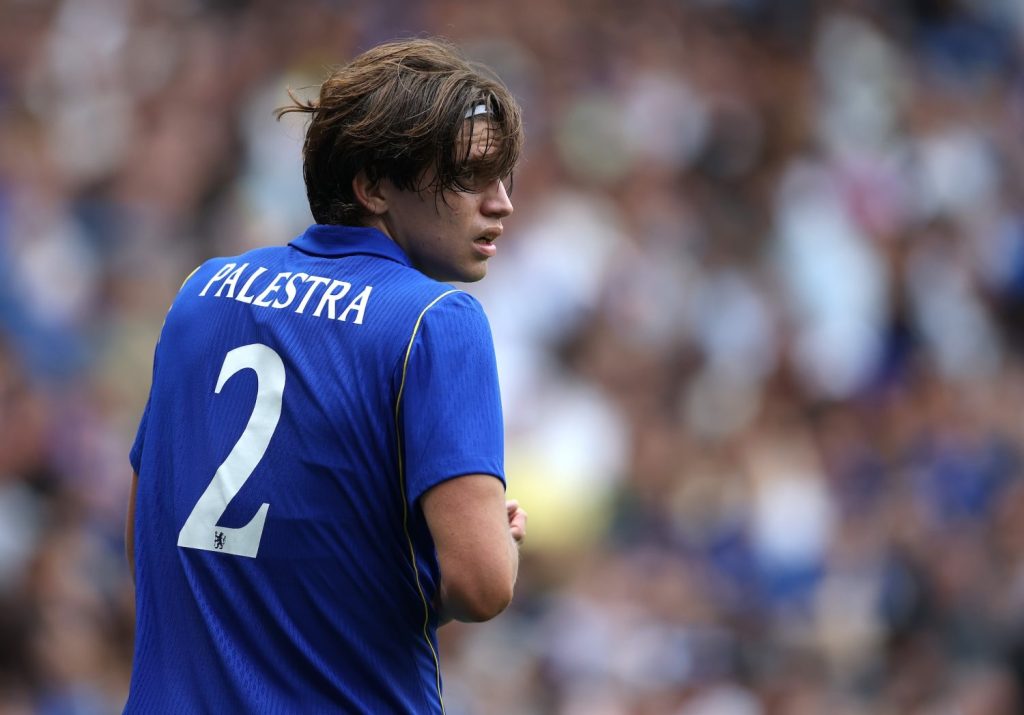
The trend became even more pronounced at the beginning of the 2026/27 season, in the opening games of a championship in which, finally, giving young talent a chance and keeping them on the pitch no longer seems such a reckless move. Almost every club in the top flight, each interpreting this market trend in its own way, has found a way to develop, and is continuing to develop, players still taking shape, potential stars of tomorrow. It is great news for the whole game, because our league is showing itself to be fertile ground, a competitive environment in which young players can emerge and be noticed by a wider audience. It also means entering the global market with serious credentials: Marco Palestra, for example, was signed by Chelsea after just one season as a leading player in Italy. He followed, even more quickly, the path already taken by players such as Matteo Ruggeri, who ended up at Atlético Madrid, Michael Kayode, who moved to Brentford, Destiny Udogie, signed by Tottenham, and Sandro Tonali, who moved first to Newcastle and then to Tottenham.
Tonali’s trajectory also brings this discussion of youth into the recent history of the Gran Galà del Calcio AIC: the former Milan midfielder won the “Best Young Player in Serie B” award at the 2018 and 2019 editions, before taking off and becoming one of the finest Italian players of his generation. Before and after Tonali, the same award went to four members of Italy’s Euro 2021-winning team — Lorenzo Insigne, Marco Verratti, Ciro Immobile and Domenico Berardi — as well as Samuele Ricci, Federico Gatti and Francesco Pio Esposito: all players who went on, in the seasons that followed, to establish themselves in Serie A, make their senior international debuts and earn a place among the game’s leading figures. The same is true of all the Under-23s who, season after season, have been included in the “Top 11”: Andrea Ranocchia (2011), Daniele Rugani (2015), Paulo Dybala (2016), Sergej Milinkovic-Savic (2018), Nicolò Barella (2019), Khvicha Kvaratskhelia (2023), Riccardo Calafiori (2024), Raoul Bellanova (2024), Joshua Zirkzee (2024), Marco Palestra (2026), Nico Paz (2026). This list of names and dates — the number of young players included in the seasonal “Top 11” has risen noticeably in recent seasons — should be taken as a kind of empirical evidence: Italian clubs know how to recognise talent and turn it into value, while Lega Serie A is a league in which value can be built. Technical value, human value and therefore, inevitably, economic value too.
This is where the idea of profitability fully reveals itself on the pitch and in the game itself: investing in young players proves to be what it is, an effective move in the short term and a forward-looking one at the same time, one that benefits clubs but also the wider game and the entire community, not only the sporting one. In this sense, the awards presented at the Gran Galà del Calcio AIC have a double value: they recognise the quality of this strategy, this vision, while encouraging it at the same time. After all, when you think about it, Tonali, Insigne, Verratti, Esposito, Barella, Calafiori and all the other young players honoured over the years were voted for by their teammates and opponents, so it is almost as if they had been “chosen” as the protagonists of the future by the most authoritative judges of all: their fellow professionals. Much like identifying a potential investment and seeing it prove promising, sound and rewarding. There is satisfaction in that.