
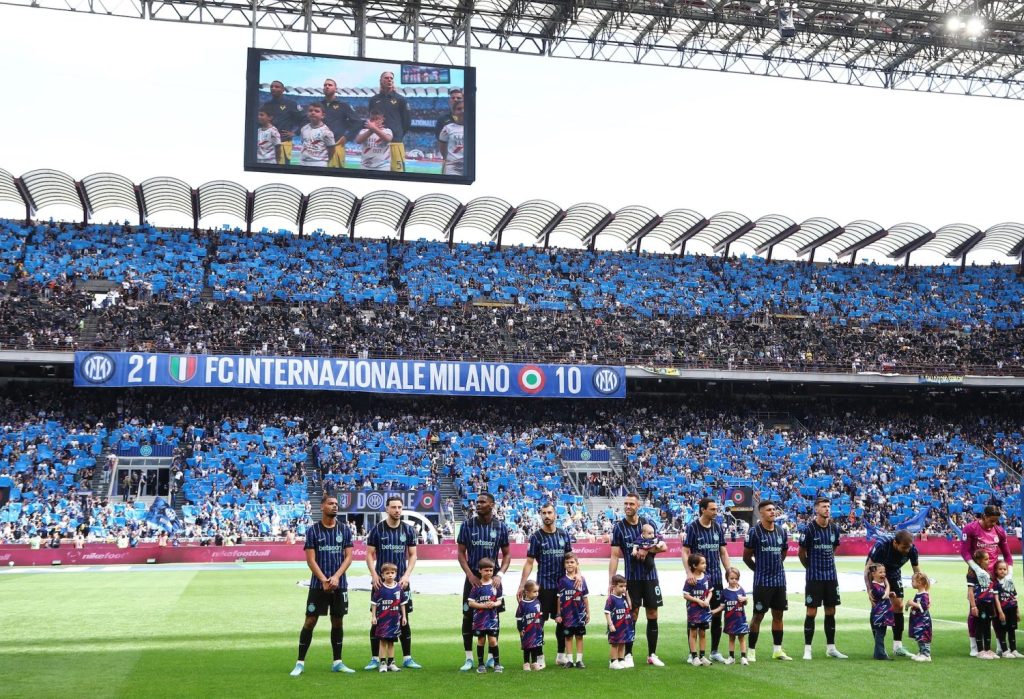
There are few Italian products capable of travelling the world with the same ease as Serie A. Every weekend, the league enters the homes of hundreds of millions of people, bringing cities and territories into view, fuelling conversations in dozens of languages and continuing to shape an image that extends well beyond football. To see it simply as a sporting competition would be limiting: Serie A is one of the country’s great cultural brands, a form of heritage where entertainment, economics and national identity meet. A few figures give a sense of the scale. Serie A now has a global community of 806 million fans, 24 million of them in Italy. The league reaches around 200 territories through more than 60 broadcasters, with a cumulative audience of more than 500 million viewers. Its international presence does not end in front of the television. On social media, Lega Calcio Serie A speaks every day to 45 million followers, publishing content in several languages and generating more than seven billion impressions over the last season. A league no longer lives only within the 90 minutes of a match. It lives in videos, on social media, in podcasts, in the conversations that accompany every round. Serie A is part of this global ecosystem without giving up its identity, holding a recognisable place within it and speaking each week to a community that reaches far beyond Italy’s borders.
That reach has effects far beyond the pitch. According to the FIGC’s ReportCalcio, the football system as a whole generates €12.4 billion in GDP, supports more than 140,000 jobs and produces more than €3.5 billion in tax and social-security revenues. Behind every matchday, a network comes into motion involving tourism, transport, restaurants, media, retail and services. Football is not simply a spectacle, but an economic ecosystem running through the country, with Serie A as its main engine. In Italy, we know what it means to belong to a city, a territory, a particular place. A club is never just a club: it tells the story of a city, a community, an industrial or cultural history. Few leagues can claim a geography so rich in different identities, capable of turning every matchday into a journey through Italy. It is a dimension that helps make the competition recognisable and compelling to an international audience, too.
The league continues to strengthen its relationship with its public. In the 2025/26 season, average attendance passed 30,000 for the third consecutive year, a figure not seen since the 1990s. At the same time, the commercial value of the competition is growing, supported by an increasingly broad network of international partnerships and football-related tourist spending of more than €1.3 billion a year. International investor interest says something about the potential that remains. In recent years, the ownership landscape of Serie A has changed profoundly: more and more clubs have entered the orbit of foreign funds and groups, attracted by the history of these institutions but also by the possibility of developing one of the few sporting products that brings together century-old brands, a strong sense of place and a global audience. The bet is on the long term, on the ability of Italian football to keep growing as an entertainment platform.
The value of a league is not measured only by the revenue it generates. There is also the ability to create belonging, to pass from one generation to the next, to turn a match into a collective ritual and a team into the symbol of a city. It is this meeting of local identities and an international outlook that gives Serie A a character unlike anything else in the Italian economy. Like few other Italian products, the league can become a story about the country itself. Every match carries cities, squares, traditions, dialects, rivalries, architecture and local cultures into the spectacle. According to ReportCalcio, 67% of international fans consider Serie A one of the symbols of Made in Italy. The league has become an instrument of soft power: a way for Italy to export not only football, but also its way of life, its culture and its heritage.
The challenge now concerns less and less what happens on the pitch and more and more everything around it. In Europe’s leading leagues, stadiums have become places open throughout the year, capable of hosting museums, concerts, events and experiences. They are no longer simply sporting infrastructure, but meeting points for tourism, culture and urban development. For Lega Calcio Serie A, this is one of the most interesting opportunities of the coming years: turning a passion that is already global into an experience that feels increasingly complete. The value of Serie A lies in its ability to represent Italy to the world, turning a football match into a story of cities, communities and culture. That is what makes the league one of the country’s most valuable contemporary forms of heritage: a place where entertainment, economics and identity continue to share the same pitch.