
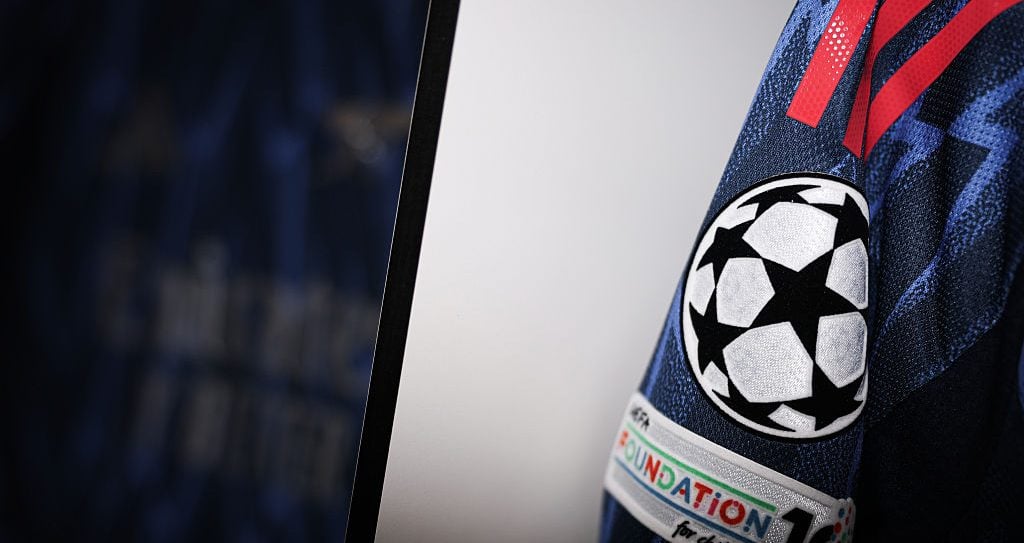
A trend that is increasingly in vogue, fueled by the ever more frenetic business surrounding the collectibles market. “An Americanism,” some might say, and in a sense they would be right: so-called “debut patches” — special patches sewn onto players’ jerseys when they make their debut in a new official competition — first took hold in the NFL, NBA and MLB. The big three sports at the heart of American sporting culture: football, basketball and baseball. The recently concluded World Cup, won by Spain, offered an opportunity to try the idea in football too: revenues through the roof, memorabilia selling for huge sums and the green light for other versions of the phenomenon. The next Champions League, for instance, could hardly sit this one out.
In fact, compared with some of the far more irritating experiments that have arrived from across the Atlantic — long live winter, which will spare us from any hydration breaks — debut patches are, all things considered, a brilliant and harmless idea at the same time. For anyone who doesn’t care, they remain an unobtrusive stitch beside the Champions League’s iconic starball. For compulsive collectors, though, they suddenly become a must-have. Yamal’s shirt, Bellingham’s or Haaland’s: something to own at any cost. Because the versions bearing the debut logo — white on a light-blue background — will be produced and worn in extremely limited numbers. Not to mention that this will be the season of debut patches themselves making their debut: hype on top of hype.
The novelty comes as part of the agreement between UEFA and Fanatics, the American collectibles giant now influential enough to shape the market itself. After the first round of the 2026/27 Champions League, on 8 September, the debut patches will be carefully removed from the shirts and transferred to Topps, itself a global leader in trading cards and controlled by Fanatics. There, they will be incorporated into a single collectible card, signed by the player himself and accompanied by a certificate of authenticity from the company. For anyone prepared to spend in the sector — and there are plenty: the global trading-card market is worth between $10 billion and $15 billion, and continues to grow — it is easy to see why the new collectible will be hard to resist.
After all, it has always been this way. Debut patches are a low-cost aesthetic flourish with substantial financial returns: that was how it began in baseball, before their success led to the initiative spreading to the NBA and NFL, which became its main reference points. Then came Formula 1, UFC and WWE. And football too, in MLS and even the Bundesliga — a pioneer in Europe in this respect. The agreement between UEFA and Fanatics comes as part of a broader commercial partnership, recently extended for several more years through to 2033. Who knows which special football card will send prices soaring: in basketball, a couple of years ago, a Prizm Black parallel — in other words, very, very, very rare — featuring Victor Wembanyama in his rookie season sold for $5.1 million. Who will go higher? All things considered, there is something to be said for holding on to the good old Panini stickers.