
One of the reasons the Premier League is the NBA of football is not simply the extraordinary wealth of its clubs, but their determination to improve the product by putting their faith in young, foreign managers with fresh ideas and innovative methods. Those managers, in turn, are drawn by the huge salaries on offer in England. A virtuous circle. This is how, over the past few years, the English top flight has ceased to be the preserve of the old-school English manager. The era of dugout legends such as “Big Sam” Allardyce, Harry Redknapp and Roy Hodgson is over.
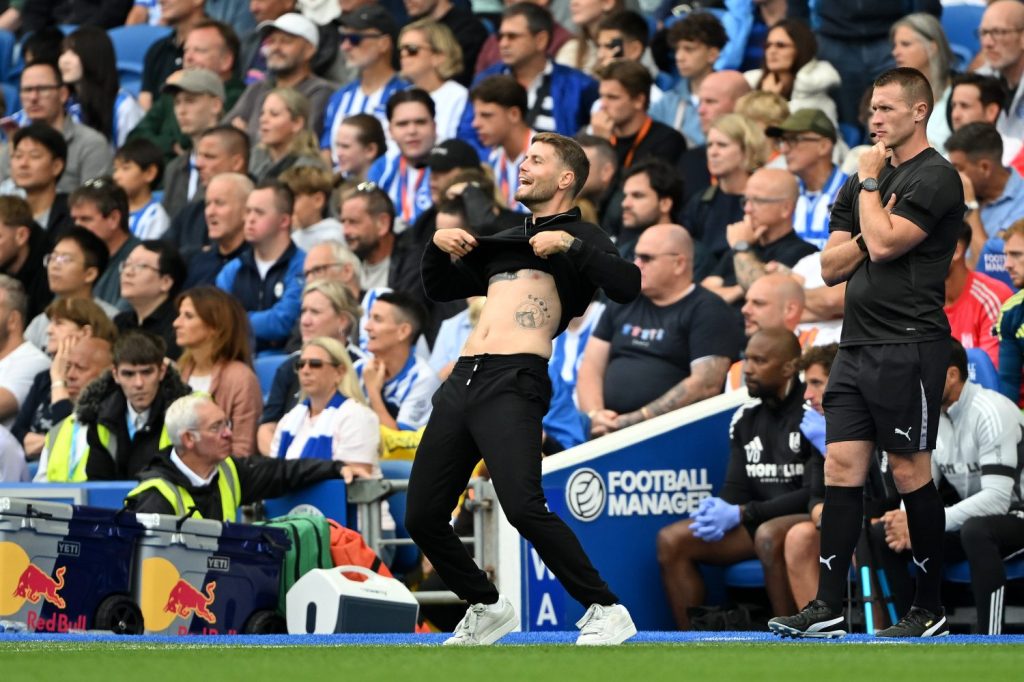
Of the older generation, only David Moyes remains, brought back a season and a half ago to rescue Everton from a table that was sending them into freefall. The Premier League now has fewer managers aged 50 or over than at any other point in the past twenty years: just four, and two of them have only recently crossed the threshold. Moyes, at 63 — three months younger than José Mourinho — is the only one over 60. Then there are Unai Emery, 54, Oliver Glasner, 52, and Régis Le Bris, 50. Beyond them, the majority are aged between 40 and 49. The two youngest are Matthias Jaissle, 38, and Fabian Hürzeler, 33.
This is not a coincidence so much as the result of two closely connected trends. At the beginning of the century, when Mourinho was taking his first steps as a coach, it was unusual for an elite manager not to have played football to at least a reasonable standard. Most therefore began their coaching careers at around 35. It is still a route followed by several top managers, including some now working in the Premier League: Andoni Iraola, Michael Carrick, Gary O’Neil and Álvaro Arbeloa, for example. But there is also a growing recognition, to borrow Arrigo Sacchi’s famous phrase, that a jockey does not have to have been a horse. Coaching, at least in England, is increasingly seen as a profession in its own right, one that demands skills very different from those required to play the game.
The examples are plentiful. Hürzeler came through the youth systems at Bayern Munich, Hoffenheim and 1860 Munich but, at 22, partly because of an ankle injury, decided to focus on a career on the bench. Jaissle was part of the Hoffenheim side that climbed rapidly through the divisions before winning promotion to the Bundesliga, but knee and Achilles injuries ended his playing career at 26. An early move into coaching seems particularly common in Germany: Thomas Tuchel and Julian Nagelsmann took much the same route.
Then again, older managers are becoming increasingly rare. That may be partly coincidental. The fact that this has happened just as many of their tactical traits — low blocks, direct football, a heavy emphasis on set pieces — have returned to the highest level of the game may be more than an ironic twist of history. The old has to disappear before it can be reinvented as new; what is fashionable cannot be embodied by a man in his sixties. There is another reason, too. Managing a modern football team is exhausting, and age and physical wear inevitably factor into the choices clubs make. Increasingly, they are looking elsewhere, following a new wind blowing in from afar and changing the Premier League.