
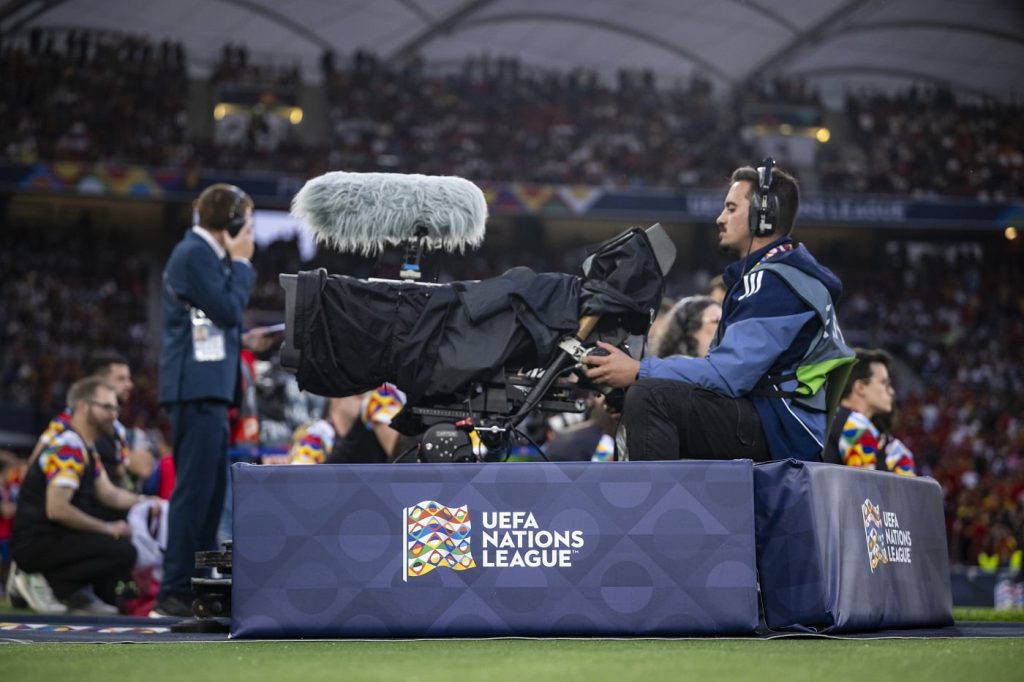
The idea is fascinating and would solve two problems at once: further increasing the technical and economic value of the Nations League and, above all, taking a swipe at FIFA. UEFA and CONCACAF have reportedly opened talks over the creation of a joint Nations League, a tournament that would involve all 96 national teams from Europe, North America, Central America and the Caribbean. It would also amount to another direct challenge to FIFA’s authority at a moment when world football is going through a period of considerable instability at the top.
According to the Guardian, after joining forces to call for Gianni Infantino’s removal amid the controversy surrounding plans to commercialise the World Cup, the two confederations are now working on an autonomous biennial competition. The tournament could be launched as early as 2028, after the next European Championship. The discussions are still at an early stage, but the idea would be to take the existing Nations League structures run separately by UEFA and CONCACAF and bring them together. The 96 national teams would be divided into several leagues, with a group stage followed by knockout matches and a Final Four to decide the title.
League A would naturally be the most prestigious. It would include Europe’s strongest national teams, who would find themselves facing opponents such as Mexico, the United States and Canada in official matches. It is an encounter with enormous commercial appeal, particularly if the games were played in the US or Mexico. UEFA and CONCACAF created their respective Nations Leagues in 2018, and the two competitions already use the same international windows. Organisationally, much of the machinery required to turn the two tournaments into one is already in place. Under the proposal currently being discussed, the league phase would be played during the September, October and November international windows. The knockout matches would come in March, while the finals would be concentrated in June.
One particularly interesting aspect concerns the relationship with FIFA. Since the matches would be played within international windows linked to the calendar of the organisation led by Infantino, it is not yet clear whether the new competition would require official ratification. That question could become secondary, given the deep institutional crisis currently facing FIFA and the growing pressure on its president. The details of the format still have to be defined, including the number of teams in each league. One certainty, though, is that all 96 federations belonging to UEFA and CONCACAF would take part in the competition. A significant share of the revenue would also be redistributed, with the aim of providing new resources, particularly to the smaller federations.
The commercial potential of the project is enormous. Europe’s major national teams would regularly play official matches in North America, a strategic market for global football. But the CONCACAF federations would also have plenty to gain from facing the strongest European sides. Mexico is perhaps the most significant case. The Mexican Football Federation, FMF, has reportedly become increasingly frustrated with the economic limitations of the CONCACAF system and has already held preliminary discussions about the possibility of leaving the confederation to join CONMEBOL, the South American confederation. That move, however, would also require FIFA approval. The prospect of regularly facing Spain, France, England, Germany and the other major European powers in official matches could change the calculations of Mexican officials. A transatlantic Nations League would give Mexico exposure and revenues difficult to match within the current CONCACAF landscape. The new tournament, moreover, would not be designed simply to add to the existing international commitments, but to replace them. Matches would also be organised according to geographical criteria, limiting travel as much as possible and reducing its impact on players.
The idea could, in time, become even bigger. The Asian Football Confederation, AFC, is also said to have expressed an interest in joining a global Nations League at a later stage. The structure currently under discussion would be flexible enough to accommodate Asian national teams, although this remains a more distant prospect, particularly because the AFC does not currently have its own Nations League.
UEFA and CONCACAF have been working together for some time, but their relationship has strengthened further since the emergence last month of the plans surrounding the commercialisation of the World Cup. The two confederations have taken an increasingly firm position against Infantino, considering his continued leadership of FIFA to be “unsustainable”. Their cooperation would not be limited to the creation of the new competition. UEFA and CONCACAF are also reportedly working on a potential alternative to Infantino ahead of the FIFA presidential election scheduled for March.
There have been several examples of this kind of cooperation in recent years. The Gold Cup, for instance, has featured invited national teams from other continents. The longstanding partnership with CONMEBOL has brought several South American sides into the tournament, while South Africa, South Korea, Saudi Arabia and Qatar have also taken part in the past. Now, though, the project is much more ambitious. No longer simple invitations, but a structured and permanent competition capable of regularly bringing two of the major blocs in world football into direct contact. A Nations League that, if it comes to fruition, would represent much more than a new tournament: another sign of the confederations’ growing autonomy from FIFA and a possible new balance in the governance of international football.