
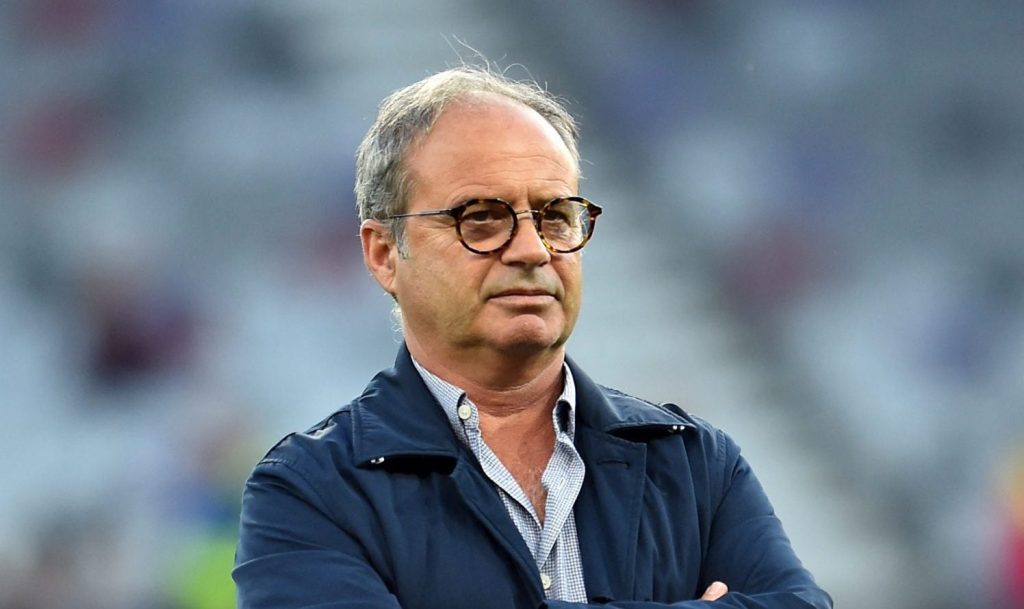
Monaco was the first masterpiece. Paris Saint-Germain is the latest. In between, Luis Campos has built a reputation as one of the most influential sporting directors in world football. The Monaco side of Mbappé, Bernardo Silva and Falcao was a team built on talent, intensity and imagination, a spectacular group that reached the Champions League semi-finals and took the French title away from the Qatari-backed PSG. Years later, alongside Luis Enrique, Campos helped construct the Paris Saint-Germain side that has dominated European football, winning the last two Champions League trophies. But the success is not built on intuition alone. Behind Campos’s work is a method shaped by detail, control and an almost obsessive attention to the smallest things. He described that approach during Primeira Pessoa, the RTP programme.
His scouting network reflects that mentality. Campos will sometimes send two scouts to the same match without either knowing the other is there. “Yes, sometimes I send two scouts to the same game without them knowing they’re watching the same match. I like comparing the information. I don’t allow them to share it, so they don’t influence each other. I want the evaluations to be as honest and authentic as possible. I call them my ‘super scouts’. Even when I’m choosing scouts, I’m scouting. I’m looking for special people.” Campos still prefers to see things himself. When he wants to watch a player closely, he is prepared to disappear into the crowd. “They call me the lone wolf because I have to protect a lot of information, as well as my own ideas. Sometimes I have to go completely unnoticed, even wear a disguise, to choose the right players and coaches. Today my face is known all over the world. I often go to matches wearing dark clothes and a cap, and once I even wore a fake moustache. I don’t worry about journalists recognising me. I worry about the players I’m watching. I never speak to them or their agents. When I want to remain anonymous, I buy a normal ticket and sit somewhere in the stadium rather than in the directors’ box. Only then can I really see how a player behaves.”
For Campos, talent is never just about what happens on the pitch. Before committing to a player, he wants to understand the person behind the footballer. Sometimes that means watching them away from the game entirely. “Spending a week eating together or going shopping with him helps me understand his psychological profile and whether he could create problems inside the dressing room. In one case, which I won’t name, everyone told me: ‘Luis, he will never become a great player because he doesn’t know how to handle money.’ So I arranged to meet him in a café inside a shopping centre full of luxury stores. I suggested we walk around while we talked. He went into the first shop, then the second, then the third, and spent a huge amount of money.”
Even a meal can become a test. “When I meet a player in a restaurant, I present the club’s project and the role we imagine for him. At that moment he should be completely focused. Sometimes, though, after five or six minutes, I see him put his head on his arms or lose concentration. That’s when I understand he may have problems focusing and may lack qualities that are essential in modern football.” Obsessive, perhaps. Effective, certainly. It is this approach that has made Campos one of the defining figures in European recruitment. Long before a player arrives at PSG, he may already have been studied, analysed and understood.