
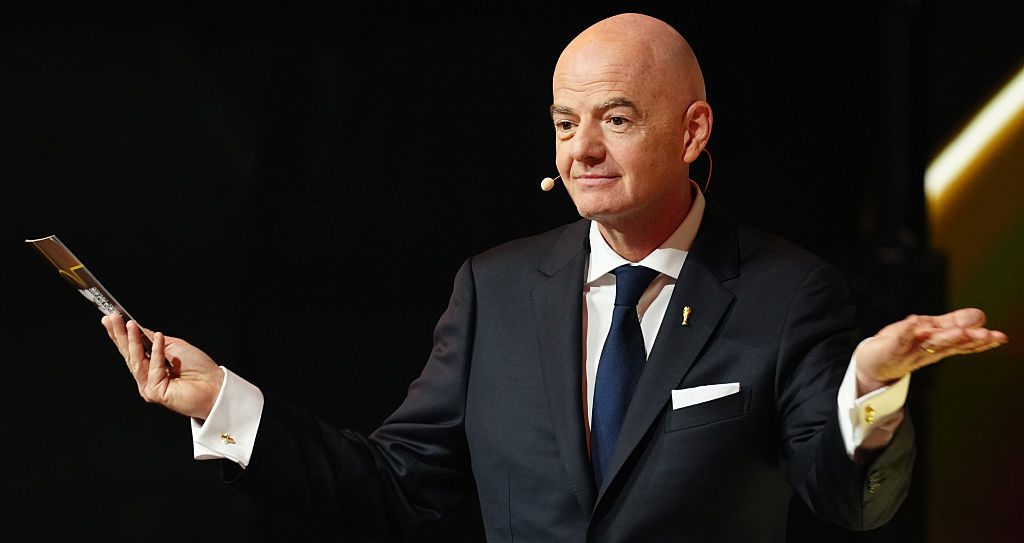
The Balogun case was not enough. Nor was splitting football matches into four quarters, with the World Cup final’s interval extended to 27 minutes of actual time. We are still in the same July in which Spain lifted the trophy, and Gianni Infantino has already found another frontier: FIFA itself could be put up for sale, and with it, by extension, the World Cup that has become the foundation of its global influence. Infantino’s latest proposal would involve selling 20% of FIFA’s shares to a group of private investors, selected through a newly created commercial company set up specifically for the operation. The value would be around 20 billion dollars. That company would then oversee the organisation of future editions of the World Cup, supported by a financing plan worth more than 4 billion dollars a year.
The problem, the one that stands out most clearly, is that politics sits among those private investors: specifically the family of Jared Kushner, Donald Trump’s son-in-law – and someone Infantino, as is well known, has a close relationship with. There is also the question of what FIFA itself has been until now: a non-profit association built around the world’s national federations, rather than a commercial enterprise. Infantino’s direction has been clear for some time. Football’s economic potential must continue to grow, with FIFA’s main commercial and organisational activities brought together under a separate company capable of pushing that potential even further. The president insists that the move would not affect FIFA’s independence or its ability to take decisions.
The response from football was immediate. Infantino’s comments, which confirmed the report first published by the Financial Times, opened another confrontation with UEFA – and another sign of the distance between the two institutions. European football’s governing body was direct: “Football does not belong to FIFA to be sold. This goes beyond every limit.” If the project moves ahead, UEFA has threatened to encourage its national associations to boycott future World Cups – an extreme scenario, but one that shows the scale of the rupture. CONCACAF also quickly expressed “strong concern over the initiative”. Then came the reactions from politics around the world.
Until now, Infantino has rarely changed course. He has continued to pursue his vision, leaving behind a long series of controversies without appearing particularly troubled by them. But football has its own boundaries. As the BBC noted, even the most ambitious projects eventually meet resistance. Perhaps the overturning of Balogun’s red card was not enough. The transformation of the World Cup could be. UEFA still has considerable influence, both inside football’s institutions and beyond them. The collapse of the Super League remains the clearest reminder. The project disappeared almost as quickly as it had emerged, defeated by the reaction it provoked. Even then, according to Ceferin and his allies, a line had been crossed. And those who crossed it found out what happens when football pushes back.