
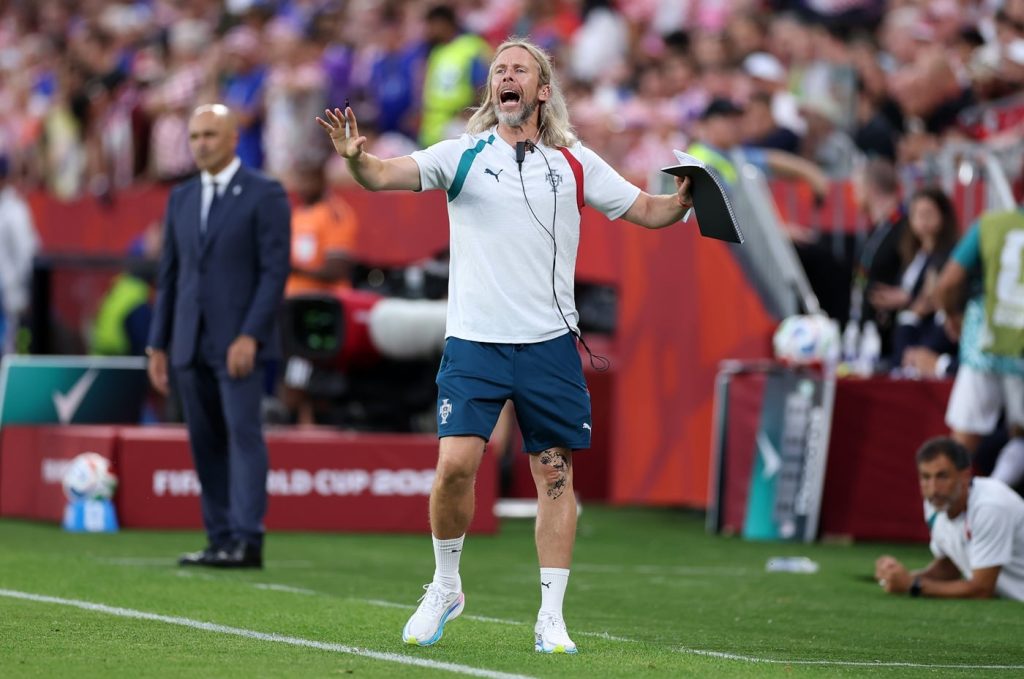
One of the most talked-about figures on the Premier League market isn't a footballer. It is Austin MacPhee, Aston Villa's set-piece coach, with Chelsea pushing to bring him to Stamford Bridge. English football has become obsessed with dead-ball situations. Since Arsenal showed they could score almost a third of their goals from set pieces, this part of the game has become one of the most closely studied areas in elite football, and specialists like MacPhee have become among the most sought-after figures in the sport. According to the British press, Chelsea and Xabi Alonso are ready to trigger the release clause in the 46-year-old Scot's Aston Villa contract. His arrival would reshape a coaching staff that is losing Bernardo Cueva, who is expected to move into a more strategic and less operational role. Not so long ago, knowing the manager and his assistant was enough. Now set-piece coaches are part of the tactical conversation. And part of the market. The Athletic, the BBC, Sports Illustrated and Marca have all written about MacPhee.
He arrives after five seasons in which he played a decisive role in the growth of Unai Emery's Aston Villa. The Birmingham club has become one of Europe's most effective sides from set pieces: in 2023/24, Villa scored more goals from dead-ball situations than any other team across Europe's five major leagues, while last season they finished level with Arsenal at the top of the Premier League standings in the same category. Those numbers explain why clubs have tried to take him away from Emery. His departure would leave a significant gap in a coaching staff that has become one of the most respected in Europe. MacPhee was one of the manager's trusted figures, turning corners, free-kicks and other set pieces into carefully prepared attacking weapons through rehearsed movements, coordinated runs and obsessive attention to detail.
His work accompanied Villa's rise from ambitious project to Champions League regular, with Europa League success and two qualifications for Europe's top competition along the way. Much of that influence was invisible on matchday, but it was present in every routine, every movement and every adjustment made before the ball was delivered. MacPhee's reputation has now moved beyond English football. In 2024 he joined Roberto Martínez's Portugal staff, with the national team coach publicly praising his methods. "He uses technology in an extraordinary way and helps us enormously with our preparation. It's a revolutionary change," Martínez said. Portugal did not fully turn that advantage into results at the most recent World Cup, where they were eliminated in the last 16, but MacPhee's presence confirmed the standing he has built in the field.
His possible move to Stamford Bridge belongs to the same wider shift. For years, set pieces were treated as something secondary, a solution when attacking play could not find another way through. That idea has disappeared. The success of specialists such as Nicolas Jover at Arsenal has encouraged clubs to invest in dedicated set-piece departments. Corners, free-kicks and throw-ins now receive the same preparation as attacking patterns and defensive structures, with video, data and software becoming part of the routine. The Premier League has been the clearest example. In a competition where margins are smaller and intensity is higher than almost anywhere else, a goal from a corner can change a match, rescue a season or decide a place in the table. Clubs know that. They are willing to compete for specialist coaches, activate clauses and offer projects that would once have seemed reserved for players.
Chelsea's interest in MacPhee belongs to that reality. Xabi Alonso is building a team designed to compete at the highest level, and every detail matters. The Scot would add another specialist to a structure built around finding advantages wherever they can be found. It is telling that, in the same summer dominated by major transfers such as Morgan Rogers', the name of a set-piece coach has also become part of the conversation. A few years ago, knowing the name of a set-piece coach was a detail for insiders. Today it can matter almost as much as knowing the name of the striker leading the line. Modern football is not decided only by talent. It is also decided by what happens around it. Austin MacPhee has become one of the clearest examples of that change.