
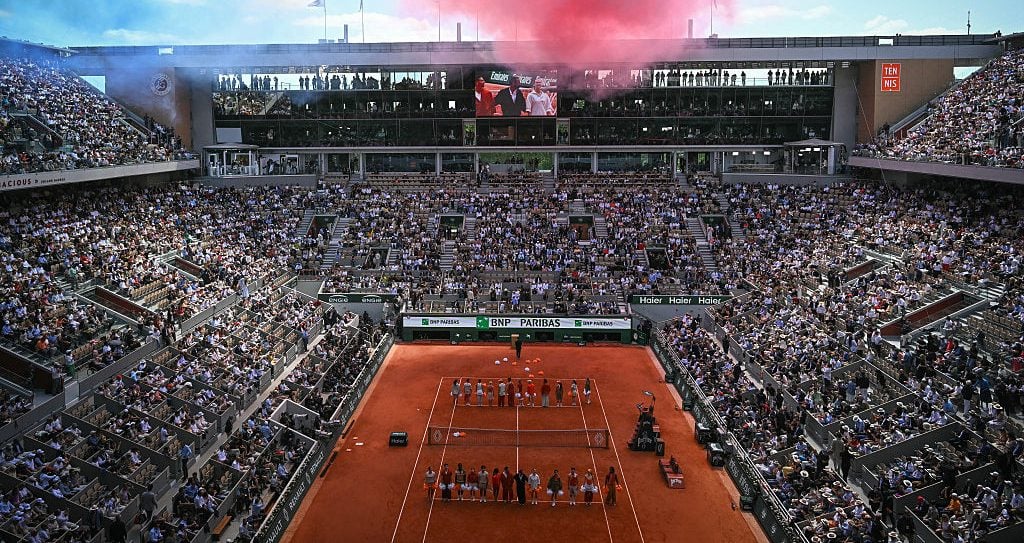
The French Open has gone first. From next year’s edition, the Grand Slam tournament will give participating players a significant share of the revenues generated by the event. It is a structural shift for tennis, driven by the same professionals who had entered into a genuine standoff with governing bodies over the distribution of the wealth produced by competitions that exist around them above all else. The Roland Garros decision marks a major step forward, alongside the steady rise in prize money. Now, as the Guardian notes, attention will turn to the other Grand Slam tournaments. Wimbledon and the Australian Open have until next year to consider their position; the US Open, with its next edition approaching, will have to address the issue sooner.
Much remains to be defined. Beyond the announcement itself, Roland Garros has yet to outline the precise terms of an agreement that is still being negotiated. But the approach in France already points in a different direction: there is recognition that players need support beyond prize money, including contributions towards pensions and healthcare. The focus is especially on those further down the ATP and WTA rankings, where earnings remain limited despite the demands of life on the professional circuit. Whether the other organisers will follow remains unclear. Only last month, Debbie Jevans, chair of the All England Club, which runs Wimbledon, openly rejected the players’ position, arguing that using tournament profits to determine prize money was “completely nonsensical”. The reaction was immediate, but the tournament continued as planned.
The US Open could be different. Even Jannik Sinner has threatened to boycott the event — at least the mixed doubles draw — if meaningful progress is not made on collective financial guarantees. Players are asking every Grand Slam tournament to distribute at least 16 per cent of its profits to them immediately, with that figure rising to 22 per cent by 2030. For organisers, the request would represent a significant change. Until now, the answer has been a constant increase in prize money, with every edition pushing figures beyond previous records. But that model may no longer be enough. Tennis is living through a period of global popularity unlike any before it, and the credit belongs above all to those who play. Not those who run the events.