
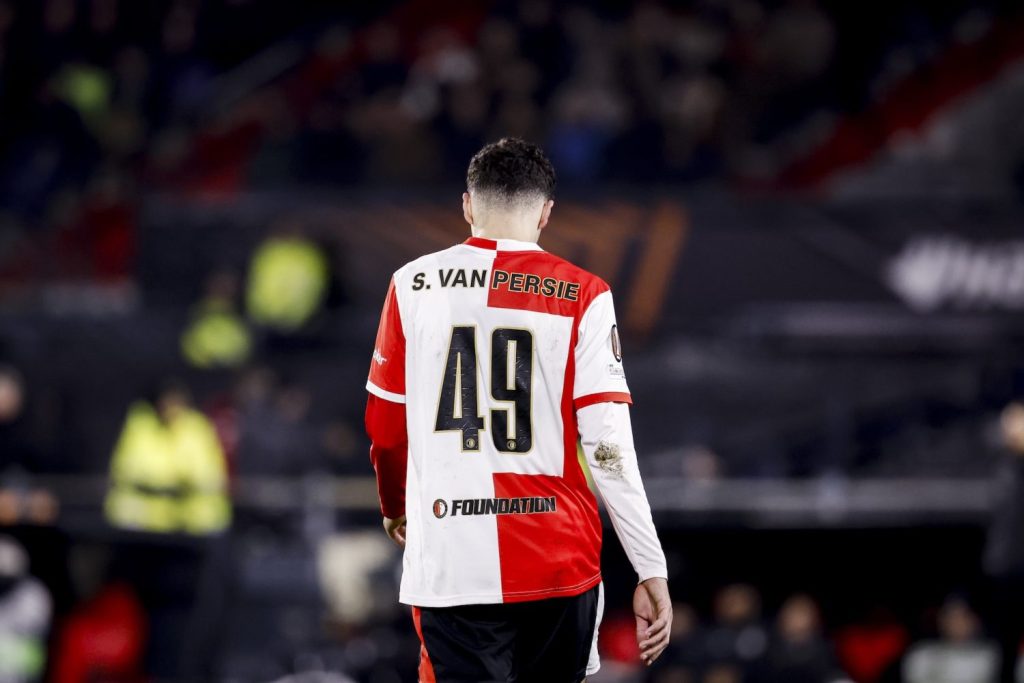
The Netherlands and Morocco is perhaps the sixteenth most anticipated and evenly balanced fixture of this World Cup. It could easily be a quarter-final, just look at the last World Cup in Qatar in 2022, where the Europeans exited at the quarter-final stage against Argentina and the African champions went all the way to the semi-finals before losing to France. Yet the match in Monterrey goes beyond the pitch. For years the two federations have been locked in a quiet battle to secure the best dual-nationality talent. Shaqueel van Persie, son of former striker Robin van Persie, has become the latest emblem of that tug of war. According to The Telegraph, the 19-year-old Feyenoord forward, born in the Netherlands, is close to choosing Morocco, the country of his mother Bouchra, turning down the chance to wear the Oranje shirt.
The anticipation around that decision only feeds a rivalry that has been building for years. The arguments are not new. Back in 2016 Marco van Basten openly criticised Hakim Ziyech’s decision to represent Morocco instead of the Netherlands, calling the former Ajax and Chelsea playmaker’s choice “stupid”. At the time, it still felt almost natural across parts of European football to assume that players with dual nationality would eventually end up choosing the country where they had grown up, often only after closing the door on a call-up from that system. The landscape has shifted. Rafael van der Vaart, reflecting on Rayane Bounida’s decision to leave Belgium for Morocco, still suggested that the strongest talents would continue to lean towards European national teams. That idea now feels increasingly out of step with reality.
Morocco’s rise has altered the balance. After the historic run to the semi-finals in Qatar, the federation has continued to invest heavily in youth development and women’s football. The Under-23 side have won the Africa Cup of Nations, the Under-20s are world champions, and across age groups the results have become consistent, visible, sustained. The senior squad is no longer framed as an alternative option but as a platform. Achraf Hakimi at Paris Saint-Germain, Brahim Díaz at Real Madrid, Noussair Mazraoui at Manchester United, names that sit comfortably at the highest level of European football. For younger players the choice is no longer about compromise. It is about access, visibility, competition. In the Netherlands and Belgium, where some of the largest Moroccan communities in Europe are rooted, the effect is increasingly visible. Players who once might have followed earlier trajectories now look elsewhere. Ibrahim Afellay, Khalid Boulahrouz, Marouane Fellaini, Nacer Chadli, names that once marked a different pattern of allegiance.
At the 2026 World Cup there are no players of Moroccan origin in either the Dutch or Belgian squads, while several of the most promising prospects have already committed to Morocco. Abdellah Ouazane, one of Ajax’s standout academy talents, made that decision at 16 and went on to feature in Morocco’s Under-17 Africa Cup of Nations triumph. The debate has long since left the pitch. In 2019 Ruud Gullit questioned whether it still made sense to invest in development systems that ultimately produce players who leave to represent another national team. In parts of Dutch public opinion it is framed through identity, integration, belonging. For the players themselves it remains something simpler, and less settled, a question of where the connection holds firm. The match in Monterrey sits inside that tension. Not only for a place in the quarter-finals, but for a rivalry that now runs through the choices of a generation still deciding where they belong.