
The rumour has been circulating for some time now, already doing the rounds during the first 2025 edition, increasingly difficult to dismiss. The FIFA Club World Cup is moving towards a model closer to the national World Cup, 48 teams. The money sits there, substantial, and everything bends around it. In recent days FIFA has reached an agreement with the European Football Clubs, the international organisation formerly known as the ECA, to establish a joint venture for the governance of the competition. An understanding that could accelerate the expansion project from 2029 onwards, opening more space for Premier League sides, and the usual group of Europe’s biggest clubs, more or less the same ones.
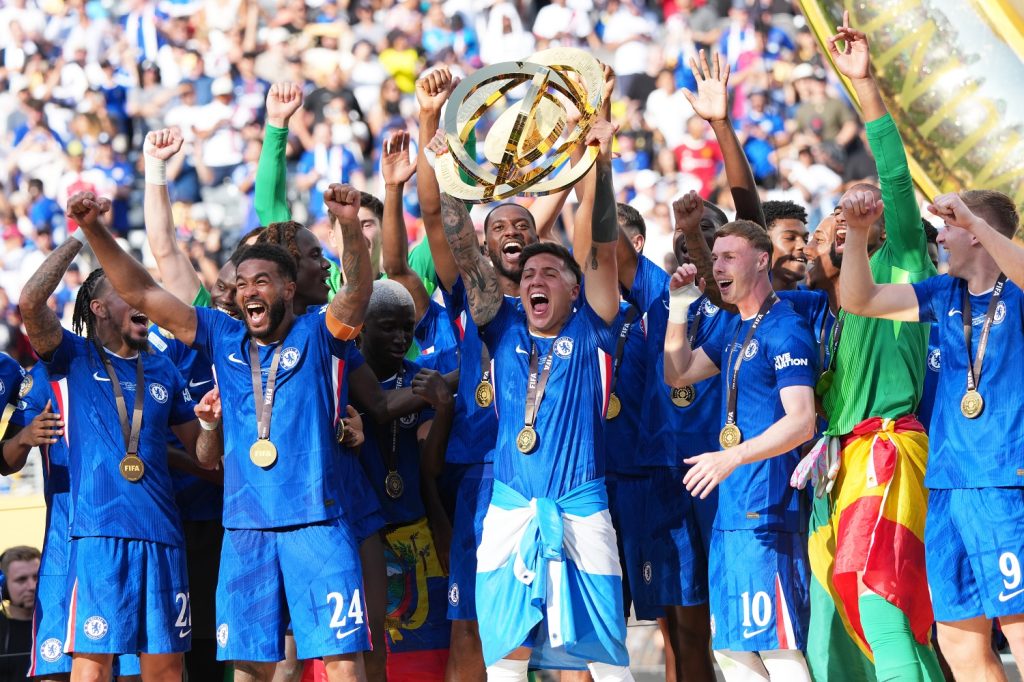
The commercial success of the inaugural 32-team edition has intensified pressure from leading European clubs. Chelsea, winners of the tournament staged in the United States, are said to have earned around €98 million, a figure that settles quickly into internal planning, and then does not leave. Last summer Europe was represented by 12 teams, compared to six from South America and five from CONCACAF. Several major clubs still missing. Liverpool, FC Barcelona, SSC Napoli among them, national champions at the moment the cycle was defined, or more precisely when it stopped being flexible.
The current access system privileges the four most recent Champions League winners and the eight highest-ranked clubs by UEFA coefficient, with a maximum of two clubs per country. A rule that has particularly affected English football. Liverpool, despite results that would normally have secured qualification, excluded by the national cap. Simple as that, in the end. According to reports from The Guardian, the European Football Clubs are now in favour of abolishing the limit. A change that would benefit clubs such as Arsenal, Liverpool and Manchester City, all consistently positioned near the top of the UEFA rankings, more or less always there.
The organisation also argues that a stronger European presence would increase the commercial value of the tournament. FIFA has faced difficulties in the sale of broadcasting rights, eventually closing a global deal worth one billion dollars with DAZN, but only after an equal investment from Surj Sports Investments, a fund backed by Saudi capital, or very close to it. The agreement between FIFA and the EFC marks a notable shift in relations between the two bodies. Before the first edition of the new Club World Cup there had been tensions over governance, with FIFA choosing to run the competition independently, more or less alone. The current direction appears closer to the UC3 model, which manages European club competitions alongside UEFA executives, or something structurally similar.
Led by Nasser Al-Khelaifi, president of Paris Saint-Germain, the EFC represents more than 700 European clubs and has recently welcomed back Real Madrid, suspended for five years following its involvement in the Super League project, and readmitted after the initiative was definitively abandoned, or simply ran out of room. FIFA is also closely observing the commercial results achieved by the EFC in UEFA competitions. Media rights and sponsorship revenues from the Champions League and other continental tournaments are projected to increase by around 25 per cent in the next four-year cycle starting in 2027, give or take.
Meanwhile, one of the EFC’s priorities remains the distribution of £185 million in solidarity payments for clubs not involved in the latest Club World Cup edition. The sum, promised by FIFA but not yet disbursed, continues to generate frustration across the game, different levels of it. If divided equally, each top-flight club would receive around £50,000, more or less symbolic. Although the £740 million allocated to sporting prizes has already been distributed, the six continental confederations have still not reached an agreement on how solidarity resources should be shared, or even framed properly.
Once this issue is resolved, attention will inevitably return to the future of the competition. And the central question remains the expansion of the Club World Cup to 48 teams, a project that could reshape the balance of international football as early as 2029, if the direction holds.