
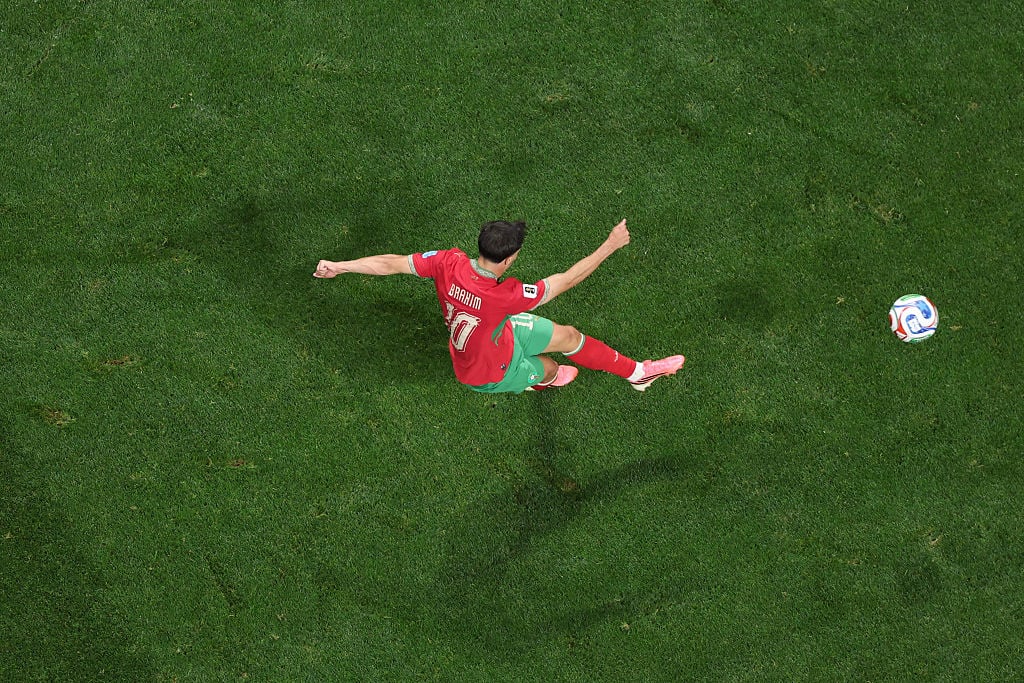
Nineteen Moroccan players out of twenty-six. Congolese numbers up to twenty. No African squad at this World Cup without European roots running through it, and it doesn’t quite read as a paradox anymore, not entirely, at least not the way it used to. The movement runs both ways now. Africa pulling back its children of the diaspora, Senegalese, Algerian, Egyptian origins carried through parents who left as economic migrants, lives that never fully settled into one geography, or maybe did, depending on how you look at it, Brahim Díaz, Ibrahim Mbaye.
“In the past, dual-nationality players arrived halfway through their careers, when they had already exhausted their chances in the country of birth,” Claude Le Roy tells L’Équipe, experience scattered across African national teams, eras that don’t quite touch, “now it has changed, Morocco, Algeria, Senegal, Cameroon, Ivory Coast, credibility has grown, these players choose earlier, at a formative stage, the country that feels closest, and families are convinced, when I called Malcolm Barcola to Togo at 19 his parents were my strongest allies, or at least among the strongest.” Bradley Barcola goes the other way into France, the choice almost absorbed by the trajectory itself, nothing particularly surprising there, in the end.
Youssouf Mulumbu, former captain of the Democratic Republic of Congo, sees no theory in it. “Players see results and are attracted by their country of origin. Less shame now in saying Congo. The Africa Cup of Nations has gained weight, and reaching the World Cup is easier than before, or at least less impossible than it used to be.” Nine, maybe ten places for CAF. In UEFA terms it opens the familiar argument around merit and balance, although that argument has been circulating for years without ever really settling, and inside African federations it functions differently, as leverage, investment pulled forward, structures forced into place that did not exist in the same way before.
Morocco sits inside that without exception status anymore. El Hadji Diouf returns to it, federations deserving credit, Morocco above all, facilities now equal to Europe, sometimes beyond, depending on the place and the moment. Another time entirely when he told Khalilou Fadiga not to let his son play in Senegal, given what they had known then. Now that distance has changed shape. Families moving more freely, diaspora returning on holidays, Mbaye knowing his family, Koulibaly the same, burial spoken of less as rupture than continuity, or something close to it.
Le Roy, now with the Republic of Congo, the other one, not the World Cup one in CR7’s group, speaks of return to origins. Not only Africa turning inward. Those who chose France, Matuidi, Mbappé, Tchouaméni, still tied elsewhere, invested in countries they do not represent, lines that remain open rather than resolved, and probably will stay that way. If another Morocco ’22 appears in this American tournament, it no longer reads as surprise. Just something that continues, or something very close to that.