
Kansas City has a population of just 500,000, the wider metropolitan area no more than 2.2 million. Significant, but not large. In the United States there are thirty metropolitan areas larger than the one straddling Kansas and Missouri.
And yet it stands as one of the key centres of the 2026 World Cup, at every level.
Lamar Hunt is part of it. A pioneer of American soccer, among the founders of the NASL and later MLS, an influential and visionary executive whose name now sits on the U.S. Open Cup, the country’s main domestic cup competition. Closely tied to Kansas City, where he moved the Dallas Texans and turned them into the Kansas City Chiefs, one of the NFL’s defining franchises.
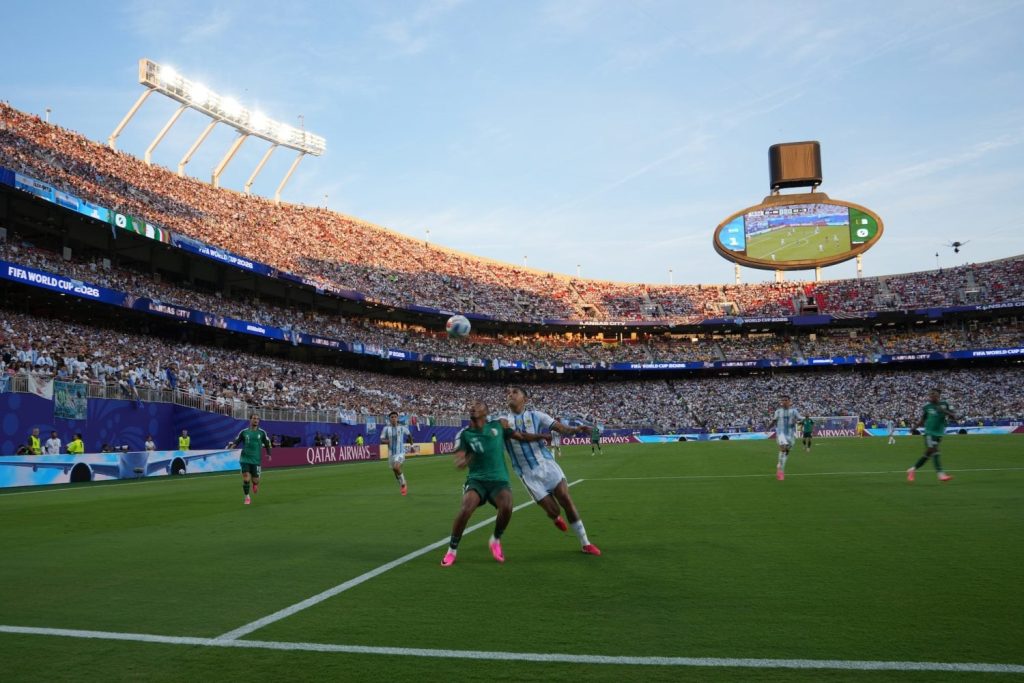
Local authorities and private investors followed. Large-scale investment in sporting infrastructure, drawn in by the gravitational pull of the football team. Figures cited by the Financial Times give a sense of scale: despite being the smallest host city in the tournament, Kansas City has already hosted Argentina and will host the Netherlands, Austria and Ecuador in the group stage.
There is more. The Chiefs’ stadium will stage a round of 16 match and a quarter-final, six matches in total. Four national teams — Argentina, England, the Netherlands and Algeria — have chosen to base themselves in North America in facilities built or upgraded with Kansas City positioned as a sporting hub.
Total investment in these facilities has reached $650 million, from public and private sources. The renovation of the Chiefs’ stadium alone accounts for $40 million. Most ticket revenue goes to FIFA, but the NFL franchise leadership and local institutions — with a $200 million budget allocated to organisation and World Cup-related operations — expect a positive economic impact.
Mark Donovan, president of the Kansas City Chiefs, said: “For us, being selected to host a quarter-final is a source of pride. Kansas City will be aligned with cities like Boston, Miami, Los Angeles.”
The city’s rise as a sporting centre is also linked to a broader move by the Chiefs, announcing their relocation from Missouri to Kansas from 2031. That same season will see the opening of the franchise’s new stadium, a $3 billion covered venue designed to host the Super Bowl and other national events.
Laura Kelly, governor of Kansas, said: “The decision by the Chiefs to move to Kansas puts our state in the spotlight and sends a signal to the world: we are about to benefit from a monumental investment that enhances Kansas’s reputation, creates well-paid jobs, and attracts tourists and young people.”
What has been built so far has been enough. Not inevitable, but enough for a World Cup.”