
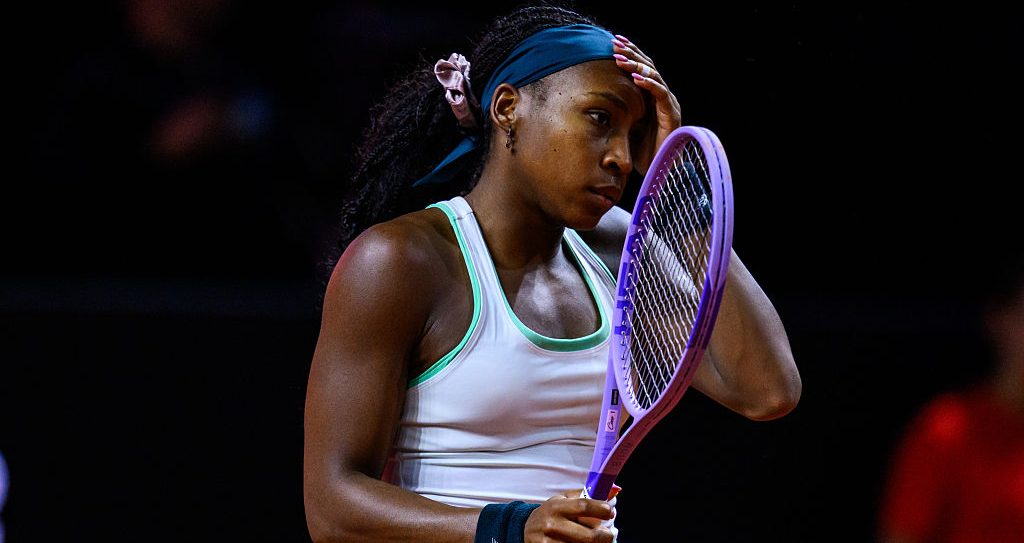
They will be highly paid athletes, some of them even millionaires. But in the end, they are primarily human beings. And being public figures does not mean having to completely give up any form of privacy, feeling the tentacled pressure of cameras on them: it is based on this principle that professional tennis has decided to take a step back in terms of media exposure. Thus, the upcoming Grand Slam tournaments – from Roland Garros to the US Open, passing through Wimbledon – have announced their intention to strengthen the safe zones behind the scenes where athletes will be protected from the greedy eye of broadcasters. Who naturally complain, in light of significant investments to stretch the spectacularization of the event to the extreme, increasingly in Big Brother mode. Yet even at the highest levels, there is a limit, and that limit the protagonists feel has been decidedly crossed.
The controversies particularly flared up following the last Australian Open, where Coco Gauff was caught in a bad moment of anger – with her racket paying the price – after being eliminated from the tournament by Elina Svitolina. The problem? The American believed she could vent away from prying eyes: instead, even those rooms in the Melbourne facilities were equipped with cameras, and those images quickly made their way around the world. “Maybe it’s time to reflect on this,” Gauff later said. “I feel that during this tournament the only private place I could count on was the locker rooms. I’ve had enough of the broadcasts. I simply believe that certain moments should not be aired.”
An accusation that found wide support among colleagues and industry insiders. “Are we tennis players or animals in a zoo?” Iga Swiatek wondered. Feelings from Avvelenata by Guccini – not even in the bathroom do I have my moment: paraphrasing Novak Djokovic, “I was surprised that there weren’t cameras even in the shower.” And the organizers’ explanation did little good, as they maintained until the end that they were “trying to maintain the right balance between the media portrayal of the personalities and skills of the players, combined with the intent to preserve their privacy and comfort.”
If in Melbourne the goal failed, the rest of the Grand Slam has made it clear that they understood the message and do not want to repeat the same mistakes. “We have taken all necessary measures to strengthen the respect for the privacy of the participating athletes,” announced Amélie Mauresmo, former tennis player and now director of Roland Garros. A spokesperson for Wimbledon added that the English tournament will review all areas subject to media access, informing players in due time and manner where they can feel safe. The same message comes from the US Open, which guarantees “an adequate number of camera-free zones, to ensure private and well-defined spaces for all athletes.”
In short, acknowledging the unanimous voice from the champions, the various organizing bodies have quickly backtracked, trying to show “that they care about the feedback from the athletes,” supported in this circumstance by the executives of the ATP and WTA circuits. As much as these days it is said that content is the true king of every main event, with economic incentives in hand, the final word still belongs to those who make these events possible by playing to win them themselves. And perhaps this should be a comfort for everyone.