
Given the state of Italian football, it is the kind of trajectory the Azzurri might look at with some interest. Assuming, of course, that Italy’s own billionaires were ever inclined to intervene.
Only two years ago, the United States were in a difficult moment. A disappointing Copa América campaign, Gregg Berhalter’s dismissal and a worrying lack of technical direction had created a sense of uncertainty ahead of a home World Cup. An appointment that could not be mismanaged.
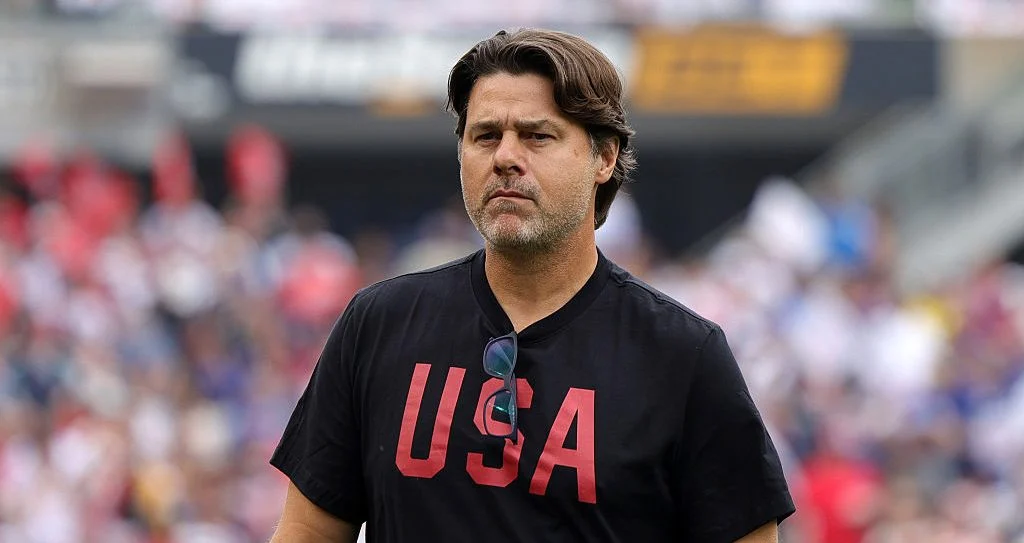
According to reporting by The Athletic, the process that led to Mauricio Pochettino’s arrival involved far more than a conventional coaching search. The Argentine, now in charge of a US side that opened its World Cup campaign with a convincing victory over Paraguay, was supported by a broader effort involving influential business figures, sponsors and donors determined to secure a coach with international pedigree for Christian Pulisic and his teammates.
The context was clear. The United States have never produced a generation of coaches capable of establishing themselves consistently at the highest level of the game, or of delivering a decisive breakthrough with the national team. Looking abroad became the most logical option. While Pochettino had never managed a national side before, his work at Paris Saint-Germain and Tottenham had made him one of the most highly regarded coaches in European football.
As the federation handled negotiations with the Argentine, a network of wealthy supporters worked in parallel to secure financial backing for the operation. Their aim was to assemble a package worth several million dollars per season.
“Without that outside support, we would never have been able to sign him,” the federation’s president admitted.
It is still too early to draw firm conclusions on the sporting side. In two years in charge, Pochettino has reached a Gold Cup final, lost to Mexico, and collected a number of encouraging results in friendlies, including a five-goal win over Uruguay. The World Cup will offer a more meaningful measure of progress.
What is already visible is that the United States arrived at the tournament with a renewed structure, both in personnel and in technical direction. The extent of Pochettino’s influence will become clearer with time.
A strong World Cup has become a matter of national interest. In a country where sport remains closely tied to identity, visibility and investment, a deep run would have consequences well beyond the pitch. The prospect of Pulisic carrying the United States beyond the quarter-finals — a stage they have never surpassed at a World Cup — also carries an economic dimension. Infrastructure, broadcasters and the wider football ecosystem would all stand to benefit from the momentum generated by such a run.
In that sense, much of the project still circles back to the coach. Judging by the resources mobilised to secure his appointment, there are influential figures in American football who see him as central to the country’s ambitions.