
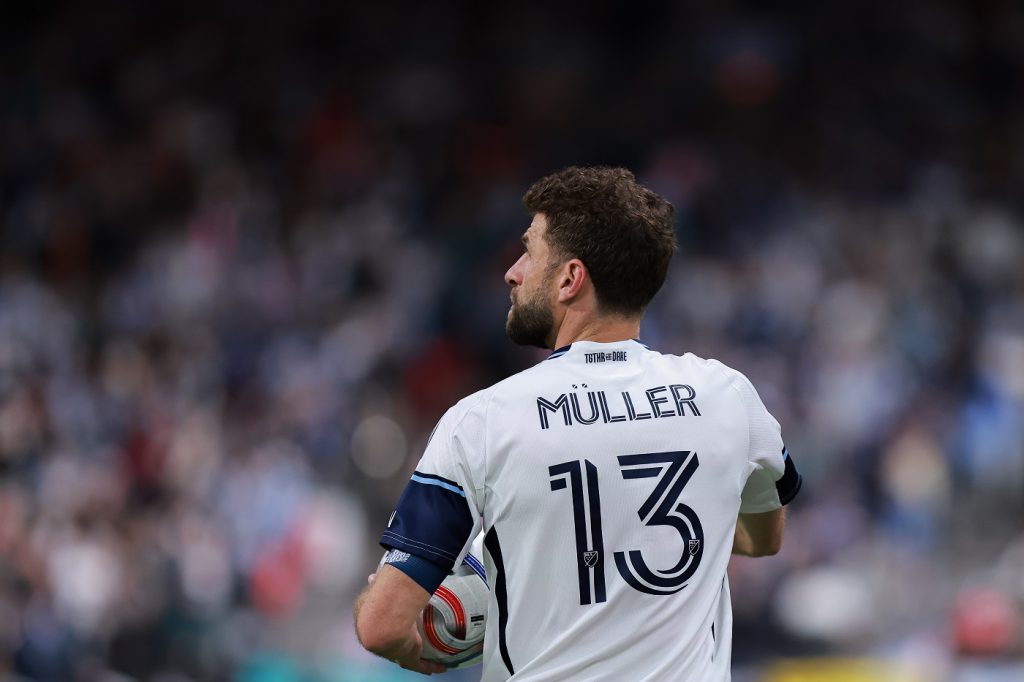
Las Vegas is the new frontier of American sports. On the other hand, we are talking about a city where money is certainly not lacking. And when leagues see the possibility of doing business in such a place, they certainly do not let it slip away. The first to look to Nevada was the NHL, which brought the Knights, then it was football’s turn, with the NFL relocating the Raiders from Oakland, and by 2027 a new NBA franchise will be born. Soccer, therefore, could not just stand by. The problem, however, is finding owners willing to move a team. The main candidates, for now, are those of the Vancouver Whitecaps, the club of Thomas Müller. They are doing very well on the field, but in terms of market and fan base, they certainly cannot compete with Las Vegas.
As analyzed by The Athletic and Sport1.de, a special committee composed of Major League Soccer owners met in recent weeks to discuss various scenarios for the Canadian club, including a possible relocation. Among the options on the table, as mentioned, is a move to Las Vegas. This would be the most favored destination among the possible ones. Sources close to the negotiations report that MLS has already been in contact with a group of investors interested in bringing a franchise to the Nevada city.
However, the consortium that recently presented the “Starr Vegas” project, a $10 billion plan along the Strip that also includes a 50,000-seat stadium dedicated to soccer, would not be involved. Besides Las Vegas, Phoenix would also be among the main candidates to host a potential relocation, while other markets like Indianapolis and Sacramento continue to express interest in joining MLS.
In MLS, there have been no relocations since 2006, when the San Jose Earthquakes were relocated to Houston, becoming the current Dynamo. In more recent years, an emblematic case was that of the Columbus Crew: at the end of the 2010s, the team was “saved” by a grassroots mobilization – called “Save The Crew” – which effectively prevented the move to Austin. Now a similar scenario is unfolding in Vancouver, where fans have launched the “Save The Caps” movement, bringing banners and protest messages to the stands of BC Place.
Meanwhile, the club continues to work on an internal solution. The lease for BC Place expires at the end of the year and the search for a new stadium remains open, while the process of selling the club is still ongoing. “Since December 2024, ownership has prioritized finding a buyer committed to keeping the team in Vancouver, but so far no solution has been found,” reads an official club statement. MLS, for its part, has not released any official comments. Any potential relocation would still need the approval of the league owners and involve the payment of a relocation fee, which could exceed $500 million, the amount paid by San Diego FC to enter MLS as a new franchise.
The president and CEO of the Whitecaps, Axel Schuster, has reiterated the desire to find a local solution: “We are not passively waiting. We believe we can find a solution. We will evaluate option A, B, C… to the end. But if one day we run out of letters in the alphabet, we may have to consider other paths.” In short: the Whitecaps say that Vancouver is a great place to be and they would like to continue playing there, but nothing can be taken for granted. Last December, the club signed a memorandum of understanding with the city to negotiate a new stadium and an entertainment district at Hastings Park until 2026, but since then there have been no updates.
The potential departure of the Whitecaps would represent a severe blow to one of the most historic clubs in North American soccer. Founded in 1974, they have gone through NASL, Canadian Soccer League, USL, and other competitions before entering MLS in 2011. Paradoxically, as mentioned, the corporate uncertainty comes at a rather bright moment in terms of results: Vancouver has won the last four editions of the Canadian Championship, reached the MLS Cup final last year losing to Lionel Messi’s Inter Miami, and also played in the final of the Concacaf Champions Cup. In 2026, the Whitecaps are still among the best teams in the league, just three points from first place in the race for the Supporters’ Shield and with an almost perfect home start at BC Place (seven wins and one loss in eight matches). But, while the results are favorable, doubts remain.