
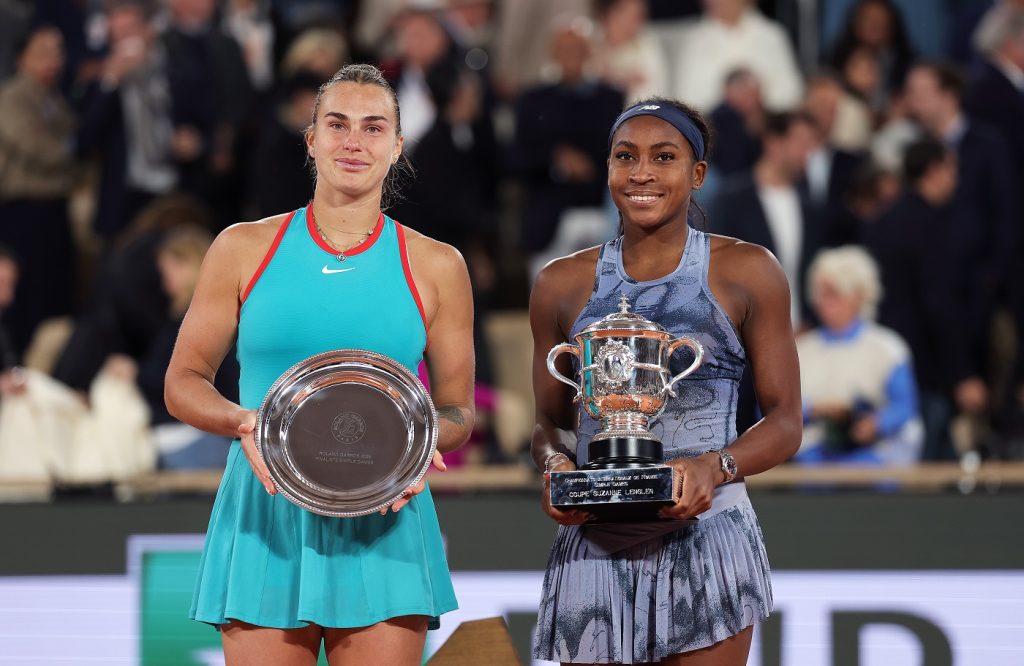
The issue of tournament prize money is undoubtedly the most discussed topic in the world of tennis. Everyone has talked about it, especially two of the most important players in the world, the number one in the WTA ranking Aryna Sabalenka and number four Coco Gauff, even suggesting the possibility of boycotting the most anticipated events of the year: the Grand Slam tournaments. But let’s go in order: it all started last week when some of the top male and female athletes in the ATP and WTA Rankings, who have been engaged for over a year in dialogue with the organizers of the Slam tournaments, expressed their disappointment regarding the prize money for the 2026 Roland Garros, deemed insufficient compared to the total revenue of the tournament.
In one of the press conferences before the start of the Italian Internationals, Aryna Sabalenka intensified the discussion: “At some point, we will reach a boycott,” said the Belarusian tennis player, explaining how it could be “the only way to defend our rights.” Sabalenka then emphasized how, especially in the women’s circuit, it is now easier to find common ground. Her words were echoed by Coco Gauff and Elena Rybakina. The American stated that she fully shares her colleague’s position: “If we all moved together, it’s a scenario I can see 100%.” The issue goes beyond the top players, particularly affecting all players who are not in the top 100 in the world: “Many of the top 200 in the world practically live tournament to tournament, day by day, while in other sports this does not happen,” Gauff stated.
The tangled issue remains the distribution of revenue. The prize money for the 2026 Roland Garros will rise to 61.7 million euros (+9.5% compared to 2025), but it will represent about 15% of the estimated revenues of the tournament: a share deemed too low by the players. In ATP and WTA tournaments – which, let’s remember, do not organize the Slam tournaments – the percentage goes up to 22%. Even this percentage is quite low: as reported by The Athletic, in American team sports like the NFL, NBA, and MLB, athletes receive almost 50% of the revenue. “With record revenues, the share allocated to players continues to decrease,” reads a statement signed by 20 top tennis players, including Sabalenka, Sinner, Alcaraz, and Gauff herself. The document also denounces the lack of consultation and investment in the well-being of athletes, referring to a system that “does not adequately represent those who are at the center of the success of the sport.”
For its part, the French Federation has assured its willingness to improve players’ conditions, seeking dialogue. However, the feeling is that for this year, at least, things will not change. As mentioned, the Slams are independent of the ATP and WTA, so they can decide autonomously on the prize money. The issue is decidedly delicate, especially when considering the taxes that players must pay on their winnings, especially in England for Wimbledon.
The requests made by the tennis players revolve around three main points: a larger share of revenue allocated to prize money, more investment in welfare, and a structured representation through the creation of a Slam Players Council. However, not everyone is pushing for drastic measures. Iga Świątek, ranked number 3 in the world, described the boycott as “an extreme option” while acknowledging the importance of unity among players and dialogue with the organizers. On the same line is Ben Shelton, who reiterated that athletes still lack “a seat at the table” in decisions regarding the most important tournaments. A historical precedent exists: in 1973, 81 players boycotted Wimbledon in solidarity with Nikola Pilić, who was excluded from the tournament. In the same year, Billie Jean King threatened to skip the US Open in the absence of parity in prize money. Until the start of the Roland Garros on May 24, there is time to remedy the situation, but the atmosphere remains decidedly tense.