
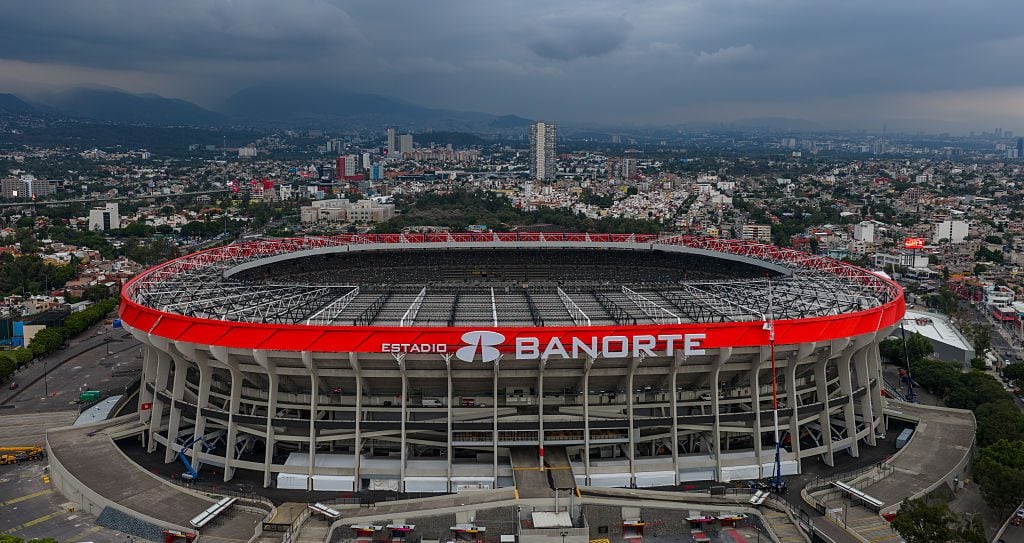
Few football stadiums in the world radiate more prestige than Mexico City’s Azteca. The match of the century, the goal of the century. And now that we are in a new millennium, another World Cup act worthy of this place is expected. A place that, in the meantime, has changed, renovated itself, rushing through a series of major restorations to deliver the venerable stadium for FIFA’s approval. The good news is that, with less than a month to go before the start, we are finally there. The bad news is that in order to be deemed suitable to host matches at the next World Cup, the Azteca – or rather, those who took charge of managing its renovation – has scorched the earth around it.
The news has travelled from Mexico all the way to Spain, where El País reports on the plight of the resident population in the Azteca neighbourhood. It is called Santa Úrsula de Coapa and it is a rather small residential area – around 11,000 inhabitants, compared with the stadium’s 87,500 seats – but just as cohesive, with a strongly working-class identity. And the problem, far more than in the other World Cups hosted by Mexico (1970 and 1986), is that the urban impact triggered by the stadium is degenerating beyond every forecast. At first glance, what stands out is an unprecedented cleanliness of the streets and the grand promotion of the event, the cover image with which FIFA and the local organizers intend to adorn themselves. Behind the scenes, however, things are decidedly disturbing, and reveal a long series of building abuses with concrete repercussions for citizens.
The World Cup appointment – and this was to be expected – has sent property values in the area soaring. The result is that new buildings have begun to spring up like mushrooms, without the necessary administrative permits and following the typical pattern of wrongdoing: investors buy plots of land for a few pesos, change their intended use with the connivance of local authorities – today Mexico is the 39th most corrupt country in the world, out of 180 analysed – and within a few months, once luxury tower blocks have been built, the financial value of that same area has increased a hundredfold. Dirty magic. And not only that: those paying the price are above all the residents of Santa Úrsula de Coapa and the neighbouring districts of Huipulco and Pedregal de Carrasco. Their humble homes pale in comparison with the imposing building complexes created for the World Cup – or, in the worst cases, are simply razed to the ground to make way for them: cases of eviction and unsustainable rent increases are now the order of the day.
The underlying problem is that the local population, naively hopeful of being able to draw at least some economic benefit – at least the crumbs – from hosting an event of such global magnitude, finds itself trapped in its own home. “These gentlemen are getting rich at our expense”, is the recurring complaint from citizens, without any beneficial fallout even in terms of infrastructure. The paradox, in fact, is that beyond the dazzling new buildings, the neighbourhoods in question remain poor and run-down, with many unresolved issues: above all, the lack of a mains water supply in most homes – the pre-existing ones, that is –, while one of the area’s most important wells has belonged to Televisa, the company that owns the Azteca, since 2019. Just a few months after the football World Cup was awarded to Canada, Mexico and the United States.
The discontent of the inhabitants around the historic stadium has been further aggravated by the total inaccessibility of the facility. If during Mexico ’70 or ’86 it was still possible for the local public to get into tournament matches thanks to word of mouth and the indulgence of some security staff, today control of the site by those in charge is absolute. For eighteen months of construction work, residents have had to endure massive air and noise pollution, with further problems in the water supply. And like ghosts they will have to watch from a distance the glamorous event taking place before their eyes. Speaking of aquifers: recent satellite surveys have found that the Azteca stadium is sinking at a rate of one and a half centimetres per month, precisely because of groundwater. It should not represent a critical issue during the weeks of the World Cup, but in the long run it will become one. The only (im)possible solution, local engineers bitterly note, is to “stop extracting water. And at that point we’ll drink tequila”.