
Looking at things from here, from Italy, there is no doubt: we are living in the golden age of tennis. Jannik Sinner has brought fans in our country beautiful triumphs and emotions never experienced before; alongside him there are many top-level male and female players, or players who in any case have what it takes to reach the top of the world rankings; the Italian national teams have won the latest editions of the Coppa Davis and Billie Jean King Cup; in a few days Turin will host the ATP Finals for the fifth consecutive edition and then it will be Davis’ turn in Bologna. Well, it can be said: a lot, an awful lot. Those who have always followed the game, however, will be able to confirm how this feeling of constant development, feverish interest, and absolute excitement goes beyond Italy. In short, to put it in a few words: tennis has never been so attractive, so followed, so rich, and this is true globally. The numbers say it — those relating to live spectators, commercial and television deals, prize money — growing exponentially, as do the media narratives. And executives confirm it too, that is, the institutional figures who hold up the multiverse of tournaments and rankings.
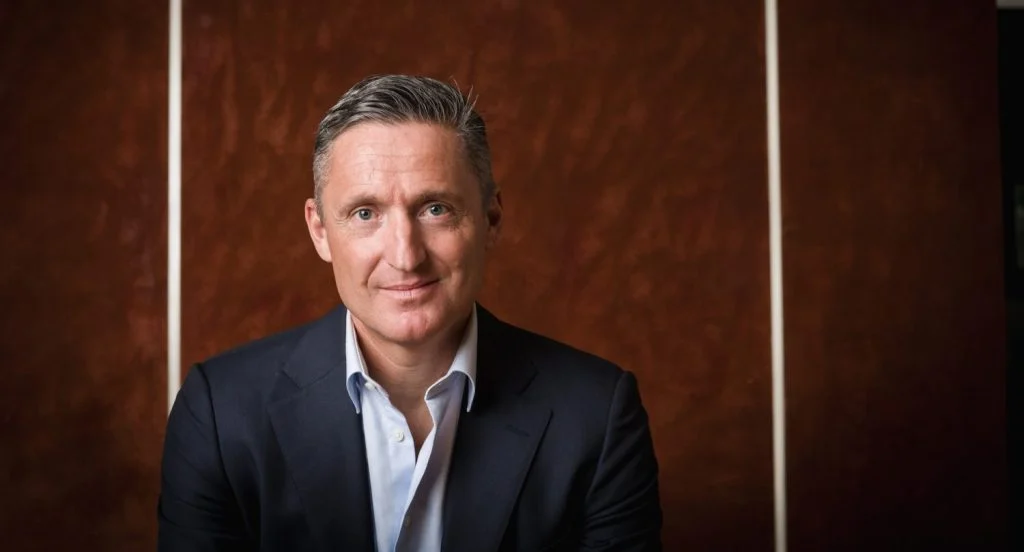
Andrea Gaudenzi, former Italian number one (as well as world number 18) and ATP chairman since January 1, 2020, is inside this revolution. In fact, he is one of its protagonists: he prepared it, he felt it explode, he is riding it with impactful measures — first and foremost the reform of nine Masters 1000 tournaments, which from this year last 12 days. And now, naturally, he wants to bring it to completion, solving the problems that remain and creating a tennis that is fairer, more competitive on the market, but that respects the soul of the game and the needs of those who play it. He explains it himself, starting from his own experience on court: «I was on the ATP Tour for 13 years, I traveled a lot, I can say I know what it means to play tennis. In addition, I feel tied to tradition and to the classic rules, I would struggle to imagine a total upheaval. At the same time, however, after retiring I was exposed for 15 years to other worlds, to other sectors, gaming, music, financial services: an experience that introduced me to many other aspects. And that made me understand how sports, now, are competing with video games, with platforms, with entertainment. In short, they have become an entertainment product. And so we have to innovate».
And how can tennis innovate today?
First of all, we need to start from the things that work: whoever invented tennis more than 100 years ago was a genius, the one-on-one battle, on equal terms and on a large court, is an incredible entertainment experience. And so the product we have in our hands is strong, but we need to find a better way to govern it, commercialize it and manage it. At the moment there is too much fragmentation.
In this sense, the One Vision project is an attempt you are pursuing with conviction.
Yes, the first phase set itself the goal of putting things in order, I called it getting our house in order, and the results are there for everyone to see. Phase two will be more complex, because it presupposes the alignment of all governance bodies: without a single line between ATP, WTA and the Slam tournaments, it is hard to imagine cross-cutting changes. The examples of the NBA and Formula One, which have total control of their product, show that this is the right path for growth. On and off the court.
From a practical point of view, but also a commercial one, has the reform and lengthening of the Masters 1000 tournaments had an impact?
The numbers tell us that there has been an impact and that it has been positive. We have recorded significant growth in sponsorships, tickets sold, and broadcast revenues: the number of spectators, those who watch tennis live or on television, is always the most important thing to measure. Then of course, it is a change and so there is a need to fix some things; some players experienced and commented on this transformation without much enthusiasm. In fact, we asked something different of them: to prioritize the 1000 tournaments along with the Grand Slams. But I believe their hesitations are tied to what makes tennis unique: the need to think about many different calendars.
In what sense?
Tennis has ruthless mathematics: unlike practically all other sports, half of the entrants in a tournament play only one match in that same tournament. 75% of the entrants play only two. And so the top players, who almost always reach the semifinals or final, end up having a very different schedule compared with those who occupy seventh or eighth place in the Ranking. In turn, players below 25th position have a schedule all their own, and so on down the ranking. This is where the complexity comes from: yes, perhaps there really are many tournaments on the calendar, but it is also true that many players need to play more. At the same time, the top players can choose and therefore manage their commitments.
In fact, no other sport works this way…
The only analogy that comes to mind is golf: golfers too, like tennis players, are real independent contractors. I was one for 13 years, I know there are advantages and disadvantages. But I believe we are working in the interest of the game and of the players.
Including those with a lower ranking and who therefore struggle to earn significant sums?
Of course. We set ourselves the goal of being transparent about everything. First of all, about expectations: in our view, professional players are around 250-300, that is, those entered in the qualifying rounds of a Slam tournament. And it is starting from this number that, since I arrived, we felt Prize Money needed to be raised: in 2020 it was 12 million, now it has almost tripled. Another aspect on which we have been transparent, and which has therefore generated trust among tennis players, concerns profits: for 35 years the business was in the hands of the tournaments alone, no one knew the real earnings. Now, instead, the figures are public, we are in an era of genuine profit sharing between tournaments and players.
In tennis too, as in many other sports, players are becoming professionals earlier and earlier, more and more often as teenagers. How does the ATP intend to safeguard younger players?
Obviously the ATP only comes in later; the beginning of a career is in the hands of the Federations, of junior tournaments. As chairman, and based on my experience, I have set myself the goal of helping players so that they continue to train and educate themselves, in parallel with their career on court. Advising them and offering them online university plans, mentorship programs, job placement. Careers in tennis are wonderful but short, it is also necessary to prepare for what will happen afterward.
So, Sinner and Alcaraz were two wonderkids, and now they are the undisputed masters of world tennis. As ATP chairman, how do you see their current dominance? Is their rivalry at such a stratospheric level a good thing, or is there a risk that the public will end up getting bored?
I agree that a four-way rivalry could be better than a two-way rivalry, it would guarantee more variety. But I must say that, for the public, it would also be disorienting to have a different number one every year, different winners for all the Slams or the Masters 1000s. At the moment things are this way and we can control them only up to a point. Then perhaps what happened in the time of Federer and Nadal will happen, when Djokovic drew level with them and Murray and Wawrinka also entered that circle: I think of a Fonseca who in one or two years, to give an example, comes along to break the monotony. Changes are welcome and so are young players who take us into the future.
What will the tennis of the future be like? Or rather: how does Andrea Gaudenzi imagine it?
For us it is fundamental that the strongest tennis players in the world face each other in the best events, in the most attractive cities and in the most beautiful and welcoming infrastructures. And that is why our idea is to give priority to the Masters 1000s, so to about ten tournaments plus the four Slams and the Finals. Then naturally there will be the other tournaments to enter for players who need to get on court, the 500s, the 250s, but the goal remains to create a product capable of going to market in a clear and defined way. Right now that is not the case, there is the ATP, the WTA, the Slams, also the ITF with Davis: everyone goes to market separately. Spectators who want to watch tennis are forced to ask themselves: what do I do now? How many subscriptions do I need to take out? Where do I have to go? Which tennis do I have to watch? We return to the need for unified governance. In the future, then, the ambition is to convince all these actors, including the Slams, to work all together.
And what will the tennis of the future be like in terms of content and entertainment?
We need to think differently compared with the past; children and young people today have many alternatives to become passionate about, beyond sport. And so we have to think about things that go beyond what happens live, short formats like highlights, or content that tells the players’ stories. We have to try to create culture, to enter people’s lives. We are also lucky because tennis players touch the whole world.
So, precisely: which markets are you thinking of expanding into?
At this moment we are very strong in Europe and in the United States, where tennis may not be the most popular sport but is still in the Top 5 of the most followed. Asia is the market where there is the greatest room for growth, and indeed a new Masters 1000 in Saudi Arabia has been announced. Africa also has potential, but there are very significant obstacles to overcome.
And Italy? After all, Andrea Gaudenzi is still an Italian, even if he is the ATP chairman…
Italy has taken an extraordinary path: a champion like Sinner can neither be built nor, still less, programmed on an industrial level, but having five-ten players in the top 100 is the result of great work. I must congratulate Binaghi, he has created a decentralized system made up of many tournaments, with many strong coaches and teachers: a perfect ecosystem for raising talent. And in which to play great tennis.
Like the tennis we see at the ATP Finals.
The fact is that Italy has shown it can organize major events and deliver results. It must be said that with the Finals we arrived in Turin in 2020: I was not yet ATP chairman, but I remember that we were coming from the beautiful experience of London and that there were doubts. And instead the city, the Piedmont region and the whole country responded magnificently. And they continue to do so even today, everyone is very happy to go to Italy. Of course, then there was the explosion of Sinner and so we were also lucky, but the public has always played its part, even before Jannik’s arrival. This shows that there are also other decisive factors, when you want to enter a golden age for tennis: work, dedication, passion for this sport.
How did Gaudenzi nurture his passion for tennis? Who were, or who are, the tennis players he loved the most?
Like all great fans, I went through different phases: as a child I adored Borg, then I fell in love with Lendl, later I became a player and I wanted to beat the best. In terms of style, I have to admit, the opponent who fascinated me the most in my day was André Agassi.
And what about Gaudenzi’s career, instead? What remains?
I shouldn’t say it, but the 1998 Coppa Davis final is the thing that moved me the most, together with the semifinal played in Monte Carlo 1995 against Muster.
And as an executive?
The thing that has given me the most satisfaction and that I believe will remain is having convinced the tournaments to provide transparency on revenues. If you unite everyone’s interests, you have hope of growing in the future.