
Eight days before kick-off, every head coach of every qualified nation has now confirmed their final squads. The list is complete. So is the map.
What emerges is already visible in the margins of the data. Morocco could, in theory, field an entire starting XI of players born outside its borders, and still have options on the bench. France, depending on how one reads place of birth, effectively overlaps with several national teams at once. These are only the most obvious cases, leaving aside the structural oddity of Curaçao — formally part of the Kingdom of the Netherlands, but football-wise fully independent — where the entire squad is made up of players born in the Netherlands.
Call them diaspora players, naturalised internationals, or simply footballers representing a country different from the one listed on their birth certificate. There are 289 of them at this World Cup. A record figure for this stage of the tournament cycle, though not necessarily a surprising one. If anything, the direction of travel is already familiar.
The scale varies sharply by federation.
Curaçao sits at one extreme: 25 players born abroad, all of them in the Netherlands. Then comes the Democratic Republic of Congo, with 20 internationals born outside the country they represent. Morocco follows with 19, then Bosnia with 17, Algeria and Haiti with 16 each.
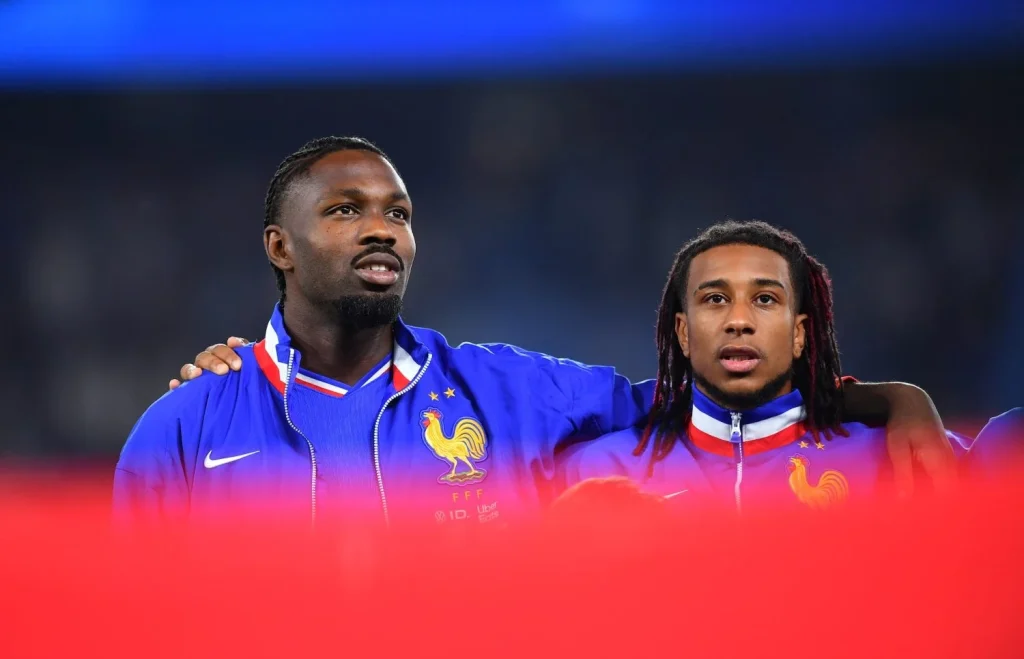
Some of the names are central, not peripheral. Hakan Çalhanoğlu for Turkey, Michael Olise for France, Erling Haaland for Norway, Nico Paz for Argentina. All born elsewhere — Germany, England, England and Spain respectively — now embedded at the core of their national teams.
In a few cases, the geography is inherited rather than chosen. Marcus Thuram, Giuliano Simeone and Alessandro Circati — the only players in the tournament born in Italy — all come from football families whose careers required constant movement. For most others, the pattern is different: migration routes, second generations, or simply careers shaped by mobility across continents.
France remains the central reference point. Seventy-six players born on French soil will represent other nations at this tournament. The Netherlands follow with 40, then England with 24 and Germany with 22. The pattern is uneven but consistent: large talent pools, combined with historical migration flows and, in some cases, post-colonial links that continue to structure eligibility choices decades later. By contrast, very few players in this category were born in Brazil or Argentina.
The system produces different effects depending on who is reading it.
For some federations, it expands possibility. Without access to players developed abroad or eligible through ancestry, teams such as Morocco, Croatia or Senegal would struggle to reach the same competitive level. For players, it opens another route into international football — one that can reconnect them with family histories or provide opportunities that were not available in their country of birth.
Achraf Hakimi and Brahim Díaz, both developed in Spain, ultimately chose Morocco. Kalidou Koulibaly, Riyad Mahrez and Aaron Wan-Bissaka made similar decisions in different directions, aligning their international careers with heritage rather than geography.
There is also the inverse pattern, visible particularly in France over the past decades: players born in the country choosing to represent France rather than ancestral nations, forming the backbone of its most successful teams.
The two logics now sit alongside each other. One expanding outward from Europe. The other returning inward to it.
The World Cup sits somewhere between the two.