
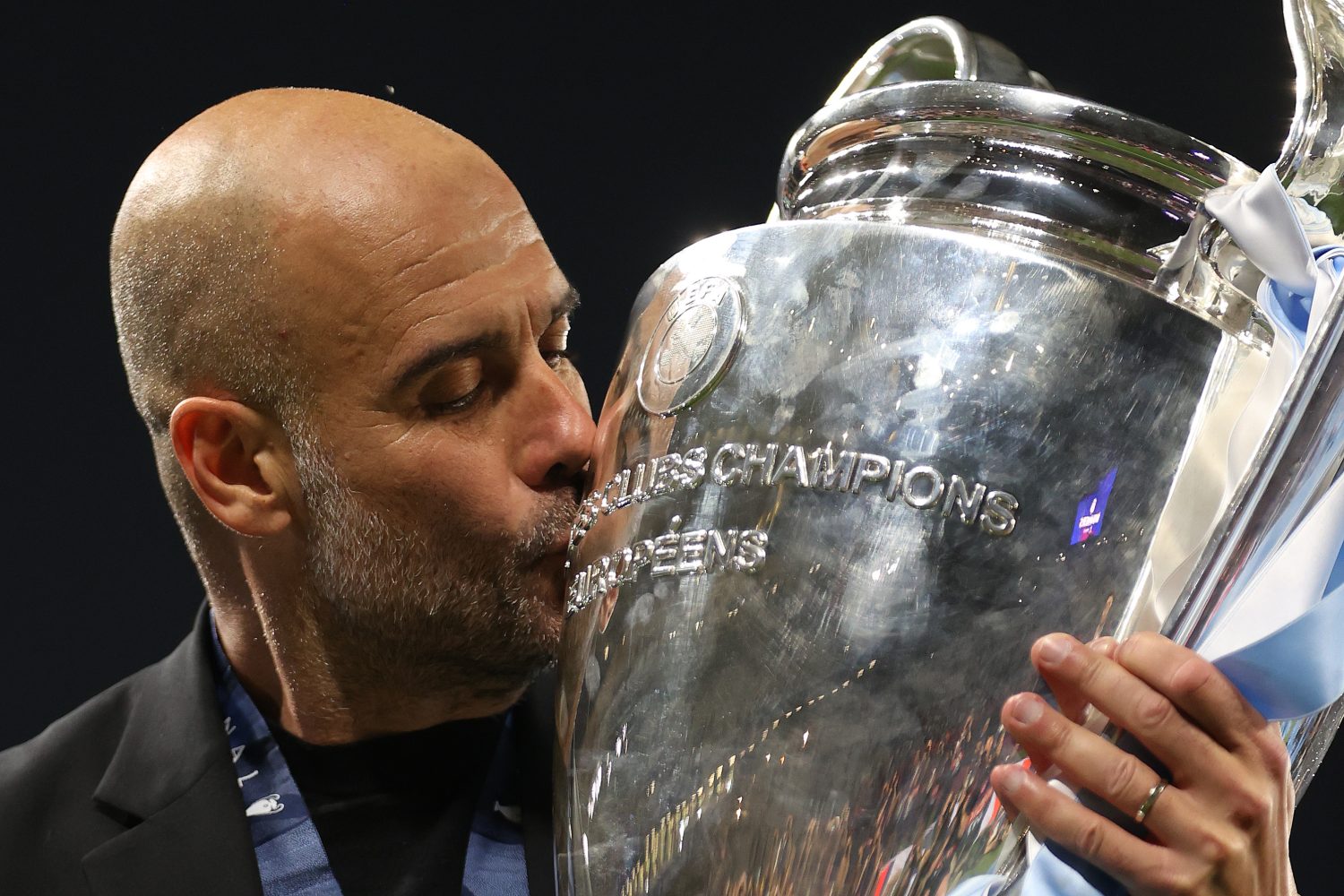
If a coach like Pep Guardiola says that «it is the right moment to say goodbye», then you have to trust him. Ten years ago he picked up a Manchester City in search of prestige, in a Premier League practically without any lasting masters – otherwise, fairy tales and merits aside, it does not happen that Leicester becomes champion of England. Today that team has become a global top club, capable not only of routing the competition at home, in the most balanced – in theory – and most upwardly levelled Premier League ever, but by now also established as a winner in Europe, after a history made of lean years, in the shadow of the legendary aura of the neighbours in the Red Devils shirt. There. If in these times a child draws close to football and, thinking of Manchester, City comes to mind well before United, the credit is all that of a visionary strategist of this sport.
It must be said, 20 trophies in ten seasons are an enormity. Especially if you take a look at the Citizens’ trophy cabinet before Pep: only some sporadic domestic successes up to the Seventies, then the forceful return under the very rich Emirati presidency and the first recent thrills – first “Agueroooooooo!” and then the title won after Gerrard’s slip in Chelsea-Liverpool. But back then City was still an underdog club, a team with enormous economic means that nevertheless struggled to translate them into technical supremacy: until the middle of the 2010s it was expected that City would dominate, instead it won in fits and starts.
But then Guardiola arrived. With the pedigree of the saviour, of the ideologue, of the architect of the triumphs of Barça and Bayern. The start was not the easiest: a third place, with no titles on the record. More than a year of running-in, however, it was the antechamber of dominance. From 2018 to 2024 his Manchester City wins six Premier Leagues out of seven, amid records of points, goals and seasonal victories. In this decade it never finishes off the podium. And above all it becomes the team to beat: as if in the current context in Italy Napoli rediscovered itself as hegemonic for an eternity – footballingly speaking. Or as if a sage of basketball arrived in Los Angeles, the city of the Lakers, and won the NBA at the helm of the Clippers. Guardiola managed it on the pitch. Certainly the almost unlimited funds of a club that has “bugged the system” had a weight – the accusations of violations of Financial Fair Play continue not to be lacking. But above all with the ideas, with a team forged on the pitch piece by piece.
The definitive step up in quality is marked by the journey in Europe: Pep led City to conquer the Champions League – also reaching another final, and a stable presence among the top four – with a reservoir of players who had never done it. The only one who had won one in his career, before arriving in Manchester in 2017, had been Danilo – without even occupying a leading role in the team’s hierarchies. The second player, only from this season, was Donnarumma, but with a City that has by now learned through its own experience how to go all the way. It is perhaps the most impressive figure of this parabola. While PSG, also bankrolled by the sheikhs, spent and splashed out among Ibra, Messi or the Neymar of the moment, Guardiola’s Citizens relied on De Bruyne, Rodri, Gundogan or Haaland. Superstars in the making or already established, with all the stigmata of champions, but still in search of definitive consecration. And of someone who could lead them to absolute greatness.
The emblem of this watershed is the summer of 2017. France is shocked by the unprecedented triumph of Monaco in Ligue 1 at the expense of the heavily favoured PSG. There are above all two rising stars of that team: Bernardo Silva and Kylian Mbappé. The brain and the goalscorer. In the summer they are both destined for a lucrative sale: guess which of the two goes to PSG – «If you can’t beat your opponent, buy him», a maxim certainly not shared by Pep – and which instead to Manchester City? On one side a disorganic sequence of big names. On the other an organic philosophy of football, made of possession, territorial supremacy and a mentality that is unscratchable even in the face of difficulties. This last component was perhaps the most difficult to instil in a group of players – think of De Bruyne, of Kompany – who struggled to hit the target on the national team front too. But the coach never went against his own nature. He swept away the competition at home. Only at that point, without biting off more than he could chew, did he really go on the assault of Europe. Winning it at the second attempt. With a goal by Rodri, what’s more: the most Guardiola-like of Ballon d’Or winners.
So if today Pep, leaving Manchester City with tears in his eyes (on the eve of his last of 592 matches on the bench, with over 70% of victories), declares that «the club has incredible players and is ready for a new chapter», these are not words of circumstance. But a manifesto that must be listened to all the way: «We won a lot because I stayed a long time, but I stayed because the club protected me, for the trust and the synergy that there were. We created a standard, expectations, a way of doing things». Under Guardiola’s guidance a very strong legacy was created, forming talent starting from the raw material and leading a considerable potential to its maximum explosion. It was difficult to ask for more. And that this weighs more than any trophy, it is not only City’s history that says it. Just look precisely at that of PSG, which since it stopped playing the neurotic adolescent in front of the console, imitating instead the technical and programmatic approach of Pep’s Citizens – targeted investments, the ball given to the young, a group cultivated over time and a very great coach on the bench – has started to win in Europe too. Becoming by now the big side to beat. The day on which Luis Enrique leaves Paris, we can say it well in advance, he will deserve the same praise. The praise that today must be given to a man who is rightly tired, and sportingly second to none.