
The team at the top of the rankings comes as no surprise. Those just behind it, much less so.
The authoritative financial magazine Forbes has published its latest report on the world’s most valuable football clubs, measuring only brand value — in other words, what a club would be worth in a hypothetical sale under current market conditions.
It is therefore no surprise that the list is led by the most powerful and glamorous club of them all: Real Madrid, followed by a cluster of Premier League sides that have effectively become football’s NBA in terms of commercial scale, organisational structure and global marketing power.
So far, so predictable. But beyond England, a more striking picture emerges: the most valuable clubs after the Premier League belong to Major League Soccer.
But let’s take things in order.
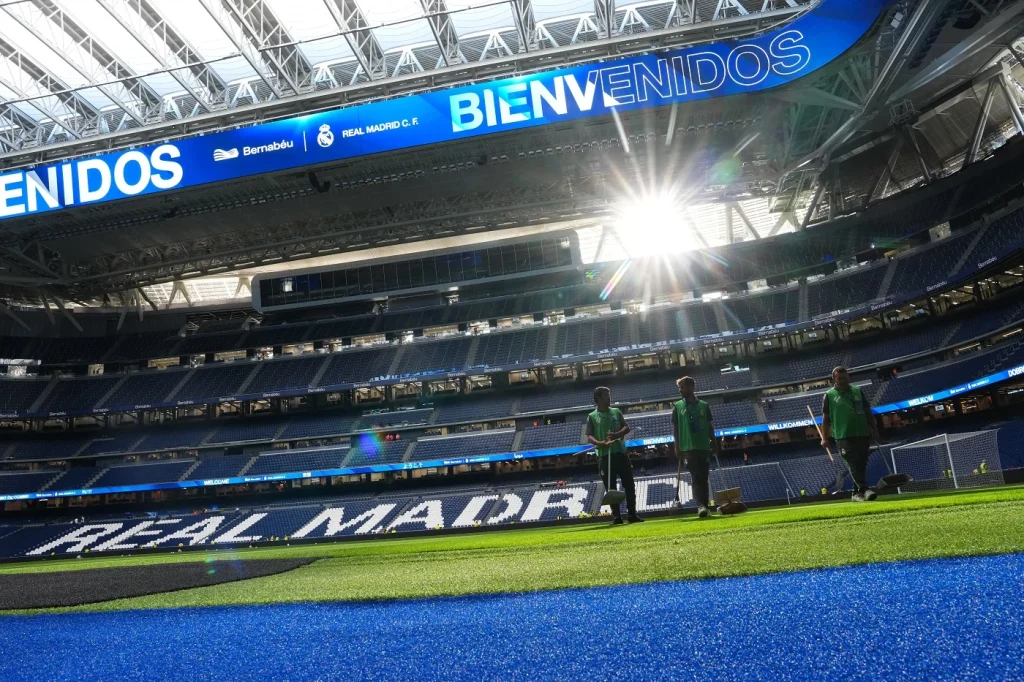
Despite two seasons below their usual sporting standards, Real Madrid continue to dominate the financial landscape. Los Blancos remain the most valuable football club in the world, reaching a record valuation of $9.5 billion and holding top spot for a fifth consecutive year.
The 30 most valuable clubs in the world are now worth a combined $87 billion, a year-on-year increase of 21%.
Real Madrid lead the ranking with a $2 billion gap over second-placed Barcelona, valued at $7.5 billion.
In the 2024–25 season, Real Madrid generated $1.265 billion in revenue — the highest ever recorded by a sports club. That figure even surpasses the $1.23 billion posted by the Dallas Cowboys of the NFL, long considered the global benchmark for sports business.
A remarkable achievement, particularly given that Real Madrid did not win either La Liga or the Champions League in the past two seasons, and were eliminated in the quarter-finals of Europe’s premier competition.
Behind the two Spanish giants sits Manchester United on $7.2 billion.
Completing the top ten are Liverpool, Paris Saint-Germain, Bayern Munich, Manchester City, Arsenal, Chelsea and Tottenham.
In numerical terms, the Premier League dominates the ranking, with eleven clubs inside the top 30 — ahead of Major League Soccer, which is represented by seven teams: Inter Miami, LA Galaxy, LAFC, New York City FC, Atlanta United, Seattle Sounders and Austin FC, all placed between 17th and 30th.
Driving this shift is, above all, the growing appetite of American investors. More than half of Premier League clubs are now owned by US-based individuals or investment funds.
In Serie A, North American ownership is also increasingly present — at Inter, Milan, Roma, Fiorentina, Parma, Verona, Bologna and newly promoted Monza — while in Spain, the acquisition of Atlético Madrid by Apollo Sports Capital has further reinforced the trend.
According to industry sources, the increasingly limited access to major sports franchises in the United States is pushing investors towards European football, where valuations are still perceived as relatively accessible.
And Italy?
Among Italian clubs, Juventus remains the most valuable, ranked 12th with a valuation of $2.4 billion, followed by Milan, Inter and Roma. Notably absent is Napoli.
According to reports from the United States, the club from Naples has received an offer of around $2.3 billion from an American investment fund — a figure that, if confirmed, would represent a rare outlier in the European football market.
Despite steady growth in valuations, European football is still considered less profitable than the major North American leagues. Promotion and relegation, the absence of a salary cap and lower levels of commercialisation all weigh on profitability.
This also explains why Real Madrid, despite generating higher revenues than the Dallas Cowboys, is still valued below the NFL franchise’s estimated $13 billion valuation.
The outlook, however, remains positive, driven by rising revenues from continental competitions and a wave of infrastructure investment.
The Champions League is preparing for a new broadcasting cycle, with revenues expected to rise by around 20% from 2027 onwards. At the same time, several clubs are either building or renovating stadiums on a major scale.
Following the redevelopment of the Santiago Bernabéu and Camp Nou, Manchester United and both Milan clubs are also working on new stadium projects, expected to be completed by 2032.
Football’s business continues to expand at pace. And Real Madrid, despite recent sporting setbacks, remains the defining reference point of the global football economy — a dominance built not only on trophies, but on the ability to transform a football club into one of the most powerful brands in world sport.