
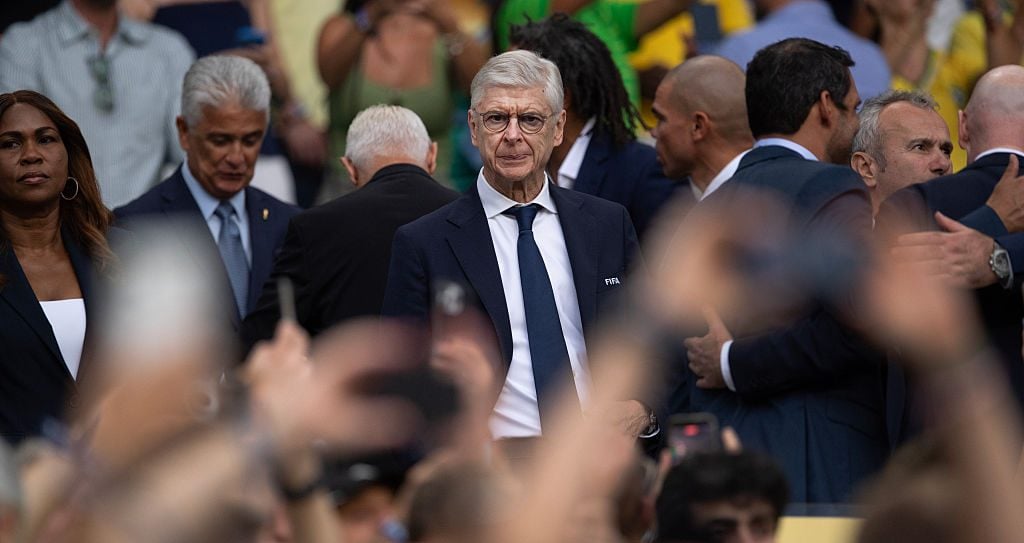
Redrawing the geometry of offside. Arsène Wenger, the former Arsenal manager, has long argued for a fundamental change to the offside law: the flag would only go up when an attacker’s entire body, rather than any part of it, was beyond the last defender. A matter of centimetres, half a metre at most. Yet enough to change the way football is played, from the positioning of defensive lines to the occupation of space. Canada’s Premier League, the country’s top division and the second most important professional league in North America after MLS, put the proposal to the test over the course of its most recent season, which has just ended. After months of monitoring the results, the verdict was not quite what many had expected. Wenger himself was among those taken aback.
The first setback came from the IFAB, football’s law-making body, which greeted the Canadian experiment, the first trial of its kind in a professional league, with little enthusiasm. Offside decisions fell by around 54%, just as anticipated. Across 112 matches, there were also 13 additional goals, an increase of more than 10%, that would have been ruled out under the existing law. The less welcome findings concerned the way teams adapted. Defensive lines dropped by an average of three metres over the course of the season, a significant shift that brought its own complications, particularly at set pieces. Perhaps an inevitable response to a change of this kind.
The Canadian Premier League was also testing Football Video Support, a more limited version of VAR that gives coaches two challenges per match on certain decisions, much like in basketball and volleyball. That experiment has been received considerably better. The offside proposal, however, has run into a much firmer response. The IFAB does not believe there is sufficient evidence to extend the trial into the 2027/28 season. Wenger, it seems, has also had reason to reconsider. He had been one of its most prominent advocates, not merely as a former manager with a particular interest in the game, but as FIFA’s Chief of Global Football Development, a position he has held since 2019. The pilot had been approved by the IFAB in collaboration with FIFA. For now, the proposal is going no further.