
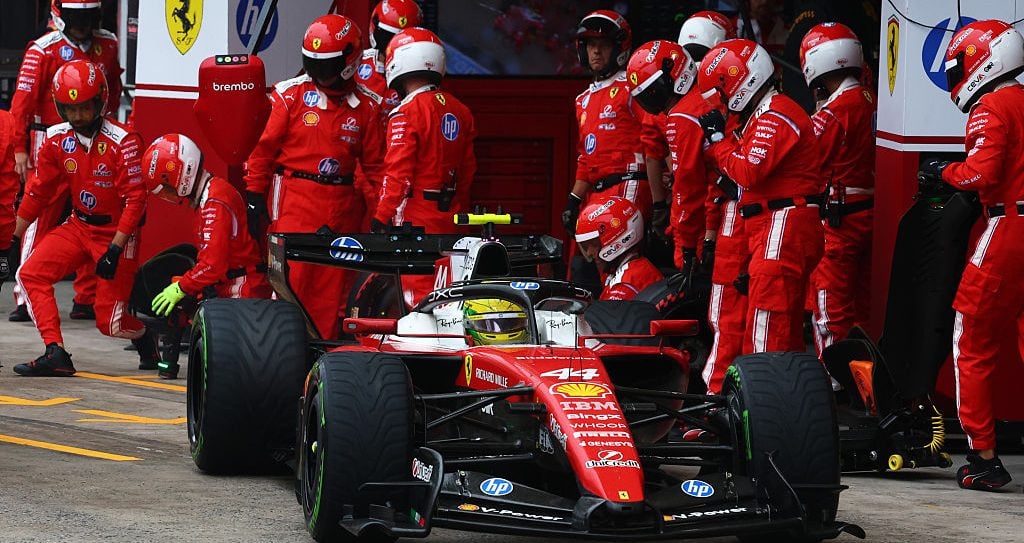
A gold mine on wheels and tarmac. Formula One’s commercial and media footprint is growing at an extraordinary rate. There is little doubt about that. What is striking, year after year, is the pace of that growth, given how high the figures already were to begin with. The same goes for the teams themselves, each a technological and financial powerhouse. Just how valuable have they become? Sportico’s annual team valuations offer a measure. The combined figure is staggering: more than $50 billion, or €45.5 billion. Roughly the GDP of Estonia.
Ferrari, naturally, leads the way. The Maranello team is valued at €7.5 billion, a 28% increase on 2025. An extraordinary sum, and yet the smallest year-on-year rise of any team on the grid. The gap is closing. More than anything, the figures point to the sheer scale of a sport whose overall value is beginning to dwarf the fortunes of its individual competitors. Mercedes comes second, fresh from the constructors’ title and the success of Kimi Antonelli, at €7 billion, up 32%. Expect that figure to climb again by this time next year. McLaren completes the top three, valued at €5.7 billion, a rise of 33%.
Every other team is now worth more than €2 billion. On average, only NBA and NFL franchises command higher valuations. Red Bull stands at €5 billion; Cadillac, the newest arrival, has already reached €2.5 billion and is closing in on Haas. Haas, in fact, is the fastest-growing team in the ranking, its value up an extraordinary 67% on 2025. Perhaps the most striking figure of all. There is still plenty of room for growth across the grid, with the commercial potential of all eleven teams far from exhausted. As Sportico notes, the trajectory is exponential: the combined value of Formula One’s teams has risen by 197% since 2023. Just three years. An entirely different commercial and technological landscape.
The sport’s golden age is all the more striking when set against the other major players in sports entertainment. Over the same three-year period, the NHL has grown by 85%, the NFL by 81%. The biggest increase belongs to the WNBA, up a remarkable 346%, albeit from a much lower starting point. Football, notably, has no place among these extraordinary growth stories. Few properties can match Formula One’s combination of commercial reach, sponsorship appeal and global visibility. The travelling nature of the Grand Prix calendar certainly helps. So does the pace of technological innovation, bringing ever more fans, old and new, into the sport. Ferrari remains out in front, a global superpower and a status symbol quite apart from its results on the track. But there is a great deal more to Formula One now.