
In 2014, Toto Wolff tried to bring a young karting prodigy into the Mercedes fold. Max Verstappen was on the verge of making the move into single-seater racing, but chose Red Bull instead. It offered a more direct route to the top, with a better-established junior programme and, crucially, a second team in Formula 1 through which young drivers could make their way onto the grid. That missed opportunity became one of the starting points for a project that Mercedes and Wolff would spend the following years developing: a system for identifying, nurturing and preparing young talent, eventually finding its fullest expression in Andrea Kimi Antonelli. In the space of five years, Antonelli went from his single-seater debut to becoming a Formula 1 world champion. Nine years of investment, patience and painstaking work. It is hardly a blueprint that can be applied wholesale – every driver has their own particular qualities and calls for an approach that can adapt to them – but it offers a fascinating insight into what it takes to build a champion in modern motorsport.
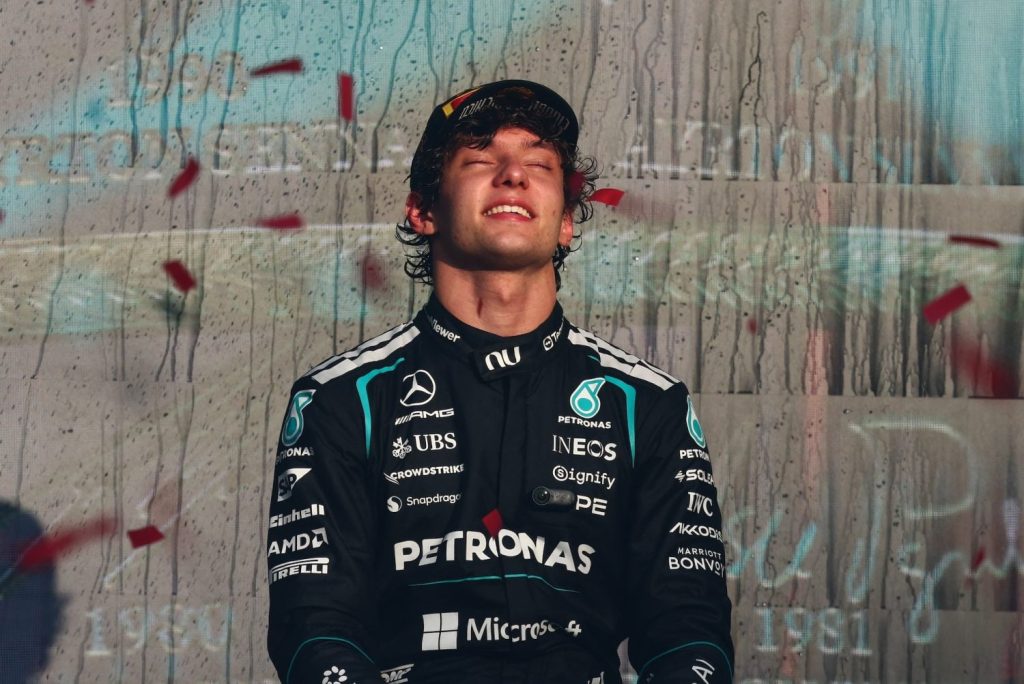
For Wolff, Antonelli also represented a chance to make good on the opportunity he had missed with Verstappen. After reviving the Mercedes Junior Programme in 2016, with fresh technical, financial and human resources, the team set about matching Red Bull in an area that had long been one of its greatest strengths: producing world-class drivers from within its own ranks. Last year, Mercedes fielded an all-Academy line-up for the first time, with George Russell alongside Antonelli. This season, the investment has begun to pay off in spectacular fashion, with the Italian taking the world title in a championship in which he has set a succession of records for precocity, culminating in his becoming the youngest world champion in Formula 1 history.
Speed was the first thing that set Andrea Kimi Antonelli apart when he entered the world of karting. That might sound obvious, but in his case it extended well beyond what he could do on a circuit. He was quick to learn, quick to understand a car and unusually adept at extracting its full potential. Dino Chiesa, one of the most respected figures in karting and a man who helped set Lewis Hamilton and Nico Rosberg on their way, remembers it well. “Antonelli could set the benchmark from the very first free practice sessions. If a lap took one minute, he would immediately do a one-minute lap, while the others might be doing 61 seconds. By the end of the weekend, he would still be doing one minute. The others would have gradually caught up, but it had taken them four or five days to get to where he had been on the first day.”
Mercedes had been watching. Its interest, led by Driver Development Advisor Gwen Lagrue, began in 2017. A year later, with Wolff’s approval, Antonelli was offered a place in the team’s Academy. Lagrue has a clear idea of what makes a young driver worth investing in. “You can usually spot a young driver’s racing DNA on track straight away. But take the five best drivers in the international Mini category and look only at their talent, at what they show on the circuit, and the differences between them are very small. What separates them is personality, character, attitude and the ability to keep questioning themselves. We attach equal importance to all these things. That’s where we start: developing what is already there and working on what needs to improve, always taking the individual driver’s characteristics into account.”
Antonelli’s three years in the junior single-seater categories, from F4 through Formula Regional and on to F2, were marked by a carefully judged mixture of progression and restraint. After winning Italian F4 in 2022, just a year after making his debut in the category at the Red Bull Ring, three weeks after his fifteenth birthday, he wanted to skip Formula Regional and move straight into F3. Mercedes thought otherwise. FREC was an important step in preparing drivers for F3, and the statistics backed up the decision: more than 75 per cent of recent F3 champions had come through the Formula Regional European Championship. Antonelli duly won that title in 2023, but it was far from a straightforward campaign. He had to wait until the eighth round for his first victory, in a race overshadowed by the fatal accident involving Dilano van ‘t Hoff. A fierce battle with Martinius Stenshorne followed, with Antonelli eventually securing the championship two rounds before the end of the season. Even then, there was a reprimand waiting for him. With the title already secured, he was stripped of pole position after an infringement under yellow flags, an incident that could have cost Prema the constructors’ championship.
It was a reminder that, for Mercedes, race wins and championship titles mattered, but they were never the whole story. By then, Antonelli’s talent was attracting attention well beyond the team that had first identified him. Interest in the young Italian was growing, but his family remained firmly behind Mercedes. Wolff has repeatedly described their support as one of the defining factors in the development of Antonelli’s career. “His father always told us and everyone else the same thing,” he said. “You gave us the opportunity, and that’s why we’re staying with you.”
Having resisted the temptation to move Antonelli into F3 ahead of schedule, Mercedes took a different view in 2024. It decided to move him up two categories at once, placing him directly into F2 with Prema. The time had come to accelerate his development and expose him to a considerably tougher challenge. It was a gamble, but a calculated one. That season brought a series of technical changes to the category, expected to shake up the competitive order and narrow the gap between rookies and more experienced drivers. The changes proved particularly difficult for Prema, previously one of the dominant teams in F2. The car struggled, and Antonelli’s results suffered. He won twice and finished sixth in the championship, although he still scored 113 points more than team-mate Oliver Bearman.
Wolff, meanwhile, was looking beyond F2. The priority was to prepare Antonelli to replace Lewis Hamilton at Mercedes, giving him as much exposure to Formula 1 machinery as possible before his arrival on the grid. F2 provided valuable race mileage, experience and racecraft. But Mercedes was paying even closer attention to his performances in its TPC programme (Testing of Previous Cars), which allowed him to drive F1 cars from previous seasons. At Spielberg, he tested the 2021 W12. At Imola, Silverstone, Montmelò and Spa-Francorchamps, he drove the ground-effect W13 from 2022.
Ahead of the Italian Grand Prix at Monza, rumours emerged that the FIA might grant him a special dispensation to race before turning eighteen, potentially allowing him to replace Logan Sargeant at Williams. Wolff had other ideas. Rather than rushing him into a race seat elsewhere, Mercedes stuck to its own plan. Antonelli took part in first practice at Monza in Russell’s W15, and would later do the same in Mexico in Hamilton’s car before joining the end-of-season test in Abu Dhabi. He immediately posted some impressive lap times, before losing control at the Parabolica and hitting the barriers.
For Wolff, the moment had come to show his hand. The groundwork had been laid, the gamble carefully managed. From 2025, Antonelli would replace Hamilton at Mercedes. The Monza crash also brought home the need to protect a major investment. Formula 1 is not a forgiving environment. Wolff faced accusations of taking an unnecessary risk and promoting the young driver too soon. Antonelli, meanwhile, was already being described as not ready. He was stepping into an Italian sporting landscape where Ferrari commands an extraordinary share of the attention, and where the kind of allegiance to an individual driver seen in MotoGP has never really taken hold. The scrutiny would be immediate. There would be little room for error.
A year later, Monza again. Another pivotal moment in a career already marked by sudden leaps forward. There had been the relief of his first Formula 1 podium in Canada, which he himself described as “liberating”, followed by a worrying loss of form during the opening races of the European season. It was the year of McLaren’s dominance, with only Verstappen and Red Bull able to mount anything resembling a sustained challenge. Mercedes, meanwhile, found itself chasing, hampered by greater tyre degradation than its rivals and persistent problems with the car’s balance. After a disappointing ninth-place finish, the atmosphere in the garage turned sour. Wolff lost his patience and told his protégé to wake up. Antonelli responded with fourth place at the following race in Azerbaijan, then podiums in Brazil and Las Vegas. More than the results themselves, it was the change in his driving that caught the eye. He had taken another step forward, reaching a level comparable with Russell. The previous season, Russell had outscored Hamilton within the team, but he had also spent three years at Williams before earning his place in the Mercedes line-up.
The scale of Antonelli’s progression is closer to Verstappen’s than to the more conventional route taken by most young drivers. Verstappen went directly from F3 to Formula 1, although he did so with Red Bull’s second team, then known as Toro Rosso. Every driver has their own circumstances, and every career follows its own course. In Antonelli’s case, the rest is recent history: the first victory in China, the Grand Chelem in Monte Carlo, and the remarkable comeback at Monza, where he started nineteenth and finished first. All delivered with the same extraordinary ease that has been part of his driving since his karting days. It is worth returning to Dino Chiesa. “The thing I love about Kimi is that when he’s leading, he doesn’t feel the pressure. He seems calmer and more relaxed out in front than when he’s behind, fighting in the pack. I noticed it when he was still racing karts. I think pressure is the last thing he feels.”